THE ADVENTURE COLLECTIVE® · Independent discovery and booking for outdoor travel

Cross the High Atlas, walk ancient gorges, then sleep beneath the Sahara stars on this private 3-day circuit from Marrakech to Merzouga. Expect canyon walks, a camel trek at sunset, and homestays that introduce Berber hospitality.
Cross the High Atlas, walk ancient gorges, then sleep beneath the Sahara stars on this private 3-day circuit from Marrakech to Merzouga. Expect canyon walks, a camel trek at sunset, and homestays that introduce Berber hospitality.
A low sun gilds red sandstone and the wind writes new ridges across the dunes as the convoy leaves Marrakech behind. Travelers move through the High Atlas, over the Tizi n'Tichka pass, and down into valleys where walnut trees and fortified kasbahs keep the memory of caravan routes alive. By the second day the landscape opens to towering cliffs and finally to the orange sweep of Erg Chebbi; camels pick their way while the horizon loosens into night-sky clarity.
Verified experiences and guided adventures in the surrounding area.
Operated by Eco Morocco Travel · Merzouga, Drâa-Tafilalet
A low sun gilds red sandstone and the wind writes new ridges across the dunes as the convoy leaves Marrakech behind. Travelers move through the High Atlas, over the Tizi n'Tichka pass, and down into valleys where walnut trees and fortified kasbahs keep the memory of caravan routes alive. By the second day the landscape opens to towering cliffs and finally to the orange sweep of Erg Chebbi; camels pick their way while the horizon loosens into night-sky clarity.
This route traces layers of geology and human history: folded metamorphic rock in the Atlas, clay and volcanic formations around Ouarzazate, then wind-sculpted sand deposited over millennia. Ait Ben Haddou — a UNESCO kasbah — recalls the caravan economy and film crews who later used its architecture. Local Berber communities remain the cultural spine of the region, offering homestays and shared meals that reveal daily rhythms and craft traditions.
Expect a mix of paved and dirt roads, canyon walks at Todra and Dades, and a one-hour plus camel trek onto the dunes at Merzouga. Nights vary from family-run guesthouses to a nomadic-style desert camp under open skies. Practical notes: travel light but bring layers for large day–night temperature swings, carry 2–3 liters of water per day, and plan for multiple hours in a vehicle between stops. Sunrise and sunset on the dunes are the best photographic windows and the quietest moments for walking off the camel path.
Book with time for acclimatization in Marrakech and confirm dietary or mobility needs; a local guide greatly improves logistics and cultural access.
moderate.
3 days.
Suitable for travelers who can handle several hours of vehicle travel, short canyon walks, and a 60–90 minute camel trek; no special fitness required but mobility on uneven ground helps.
Yes—small groups and private arrangements accommodate families, but long vehicle transfers and overnight camp conditions may be tiring for very young children.
Two dinners and two breakfasts plus accommodation in a guesthouse and a nomadic desert camp are included; specific meal requests should be noted at booking.
Camel treks are typically 60–90 minutes across Erg Chebbi at a slow pace; mounting can be awkward for some but guides assist and the ride is low-intensity.
Travel insurance that covers medical evacuation is recommended; no special permits are required for the standard itinerary, though passport details are collected for bookings.
The route follows historical trans-Saharan connections; kasbahs like Ait Ben Haddou marked trade and defensive networks used by Berber communities for centuries.
The Sahara’s dunes and oases are fragile—minimize campfire impact, avoid disturbing dune vegetation, and support local guides who practice water and waste conscious tourism.
Eco Morocco Travel operates guided outdoor trips and adventures with an emphasis on safety, stewardship, and memorable experiences.
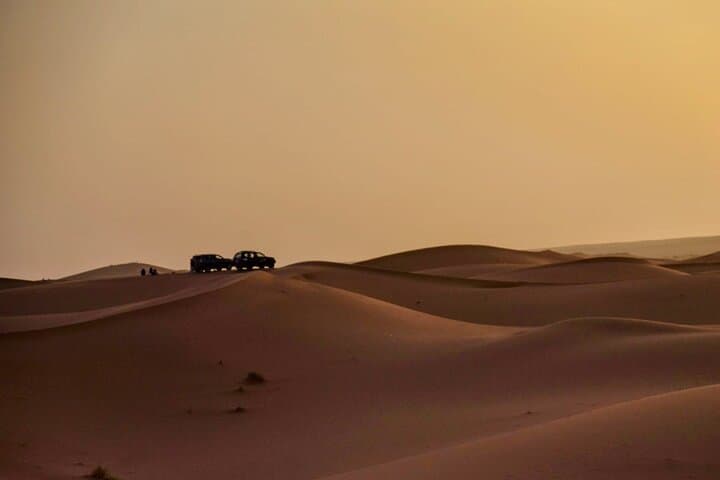
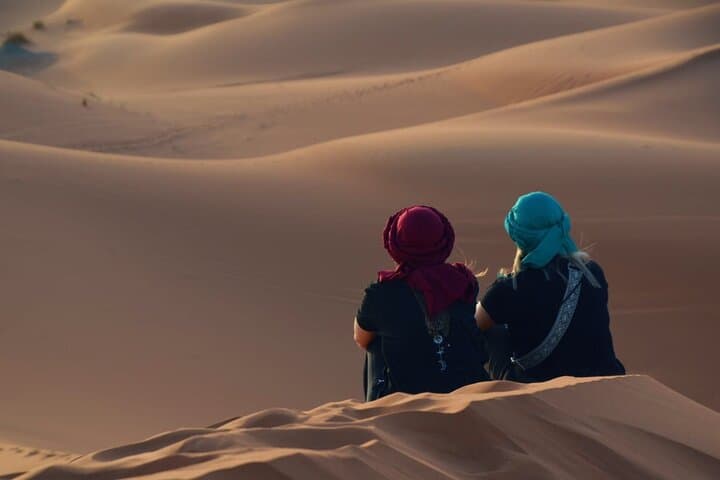
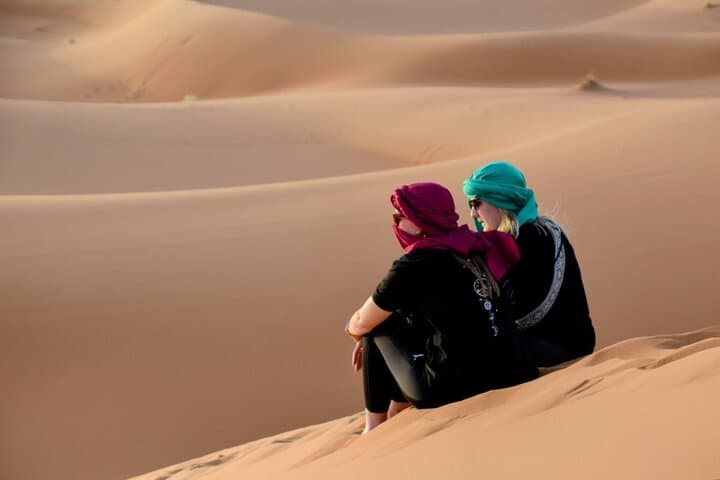
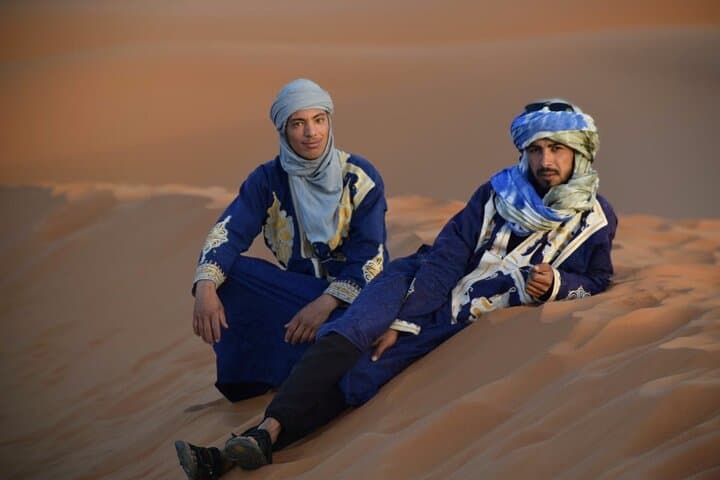
A low sun gilds red sandstone and the wind writes new ridges across the dunes as the convoy leaves Marrakech behind. Travelers move through the High Atlas, over the Tizi n'Tichka pass, and down into valleys where walnut trees and fortified kasbahs keep the memory of caravan routes alive. By the second day the landscape opens to towering cliffs and finally to the orange sweep of Erg Chebbi; camels pick their way while the horizon loosens into night-sky clarity.
A low sun gilds red sandstone and the wind writes new ridges across the dunes as the convoy leaves Marrakech behind. Travelers move through the High Atlas, over the Tizi n'Tichka pass, and down into valleys where walnut trees and fortified kasbahs keep the memory of caravan routes alive. By the second day the landscape opens to towering cliffs and finally to the orange sweep of Erg Chebbi; camels pick their way while the horizon loosens into night-sky clarity.
This route traces layers of geology and human history: folded metamorphic rock in the Atlas, clay and volcanic formations around Ouarzazate, then wind-sculpted sand deposited over millennia. Ait Ben Haddou — a UNESCO kasbah — recalls the caravan economy and film crews who later used its architecture. Local Berber communities remain the cultural spine of the region, offering homestays and shared meals that reveal daily rhythms and craft traditions.
Expect a mix of paved and dirt roads, canyon walks at Todra and Dades, and a one-hour plus camel trek onto the dunes at Merzouga. Nights vary from family-run guesthouses to a nomadic-style desert camp under open skies. Practical notes: travel light but bring layers for large day–night temperature swings, carry 2–3 liters of water per day, and plan for multiple hours in a vehicle between stops. Sunrise and sunset on the dunes are the best photographic windows and the quietest moments for walking off the camel path.
Book with time for acclimatization in Marrakech and confirm dietary or mobility needs; a local guide greatly improves logistics and cultural access.