THE ADVENTURE COLLECTIVE® · Independent discovery and booking for outdoor travel

A three‑day private jeep tour from Tbilisi into Tusheti delivers high mountain roads, stone villages, and short alpine hikes. Expect dramatic passes, simple guesthouse nights, and guided access to villages like Diklo and Dartlo.
A three‑day private jeep tour from Tbilisi into Tusheti delivers high mountain roads, stone villages, and short alpine hikes. Expect dramatic passes, simple guesthouse nights, and guided access to villages like Diklo and Dartlo.
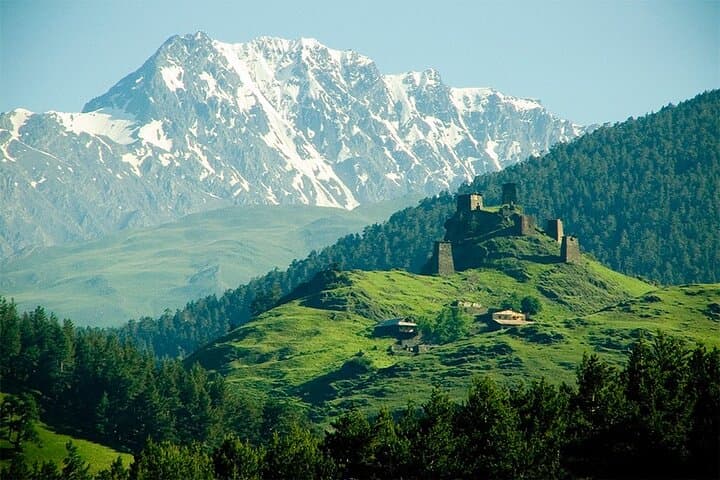
Wind and dust lift off the jeep as it climbs from the Kakheti lowlands toward the skeletal skyline of the Greater Caucasus. By midmorning the road pins you to the window: switchbacks, scrub, and then the Gombori Pass at 1,670 m opens a first wide view of river-cut valleys. Over the next three days the landscape sharpens—stone villages perched on ridgelines, crumbling medieval towers, and the long, exposed run-up to Abano Pass where the air thins and tyres search for purchase.
Verified experiences and guided adventures in the surrounding area.
Operated by ushba travel · Tusheti (Dartlo/Diklo area), Kakheti
Wind and dust lift off the jeep as it climbs from the Kakheti lowlands toward the skeletal skyline of the Greater Caucasus. By midmorning the road pins you to the window: switchbacks, scrub, and then the Gombori Pass at 1,670 m opens a first wide view of river-cut valleys. Over the next three days the landscape sharpens—stone villages perched on ridgelines, crumbling medieval towers, and the long, exposed run-up to Abano Pass where the air thins and tyres search for purchase.
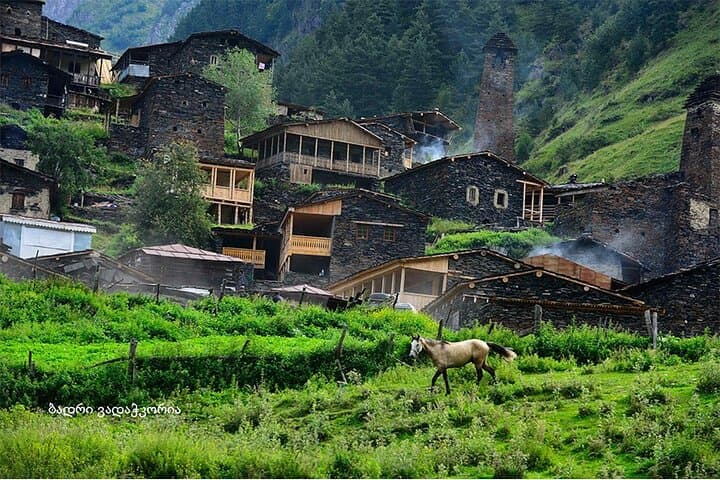
Tusheti’s history is visible in its architecture: 11th‑century churches near Alaverdi, defensive towers in Diklo, and the ancient roads that connected high pastures. Geologically the region is a collision zone—folded limestone and metamorphic ranges cleaved by fast rivers—so valleys are steep and soils shallow, favoring short, tough grasslands and resilient stone settlements.
Culturally, visitors encounter shepherding lifeways still tied to seasonal pastures; villages like Dartlo preserve 19th‑century stone houses and narrow lanes that invite short hikes. Practically, this is a jeep-dependent, multi-day trip: expect long transfers (Tbilisi–Tusheti by 4x4), short to moderate village hikes (2–4 hours, 200–500 m gain), lodging in basic guesthouses, and rapidly changing mountain weather.
Plan for sturdy boots, warm layers, and sun protection; travel windows are best June–September when passes are open. Respect local rules in Tusheti Protected Areas, carry cash for village purchases, and anticipate rough roads—this is an immersive, tactile mountain trip where the vehicle is as much part of the experience as the trails.
moderate.
3 days (approx. 72 hours).
Suitable for people with basic fitness: able to walk 2–4 hours with short steep sections and handle vehicle transfers.
Yes—access to Tusheti from the lowlands requires a high-clearance 4x4 driven by someone experienced on steep, unpaved mountain roads.
The most reliable window is June through September when high passes like Abano are generally open and village tracks are accessible.
Daily walks are mostly short to moderate (2–4 hours) on uneven terrain; they’re accessible to travelers with basic fitness but expect some steep sections and altitude.
Accommodation is basic guesthouses or village homestays in places like Diklo and Dartlo—rooms are simple, warm, and locally run.
Tusheti sits on historic highland routes with medieval towers and churches (Alaverdi Monastery dates to the 11th century; Ujarma Castle has ancient origins).
Tusheti is a protected area—visitors should stick to trails, avoid open fires, and minimize waste to protect fragile alpine pastures and traditional village life.
ushba travel operates guided outdoor trips and adventures with an emphasis on safety, stewardship, and memorable experiences.


Wind and dust lift off the jeep as it climbs from the Kakheti lowlands toward the skeletal skyline of the Greater Caucasus. By midmorning the road pins you to the window: switchbacks, scrub, and then the Gombori Pass at 1,670 m opens a first wide view of river-cut valleys. Over the next three days the landscape sharpens—stone villages perched on ridgelines, crumbling medieval towers, and the long, exposed run-up to Abano Pass where the air thins and tyres search for purchase.
Wind and dust lift off the jeep as it climbs from the Kakheti lowlands toward the skeletal skyline of the Greater Caucasus. By midmorning the road pins you to the window: switchbacks, scrub, and then the Gombori Pass at 1,670 m opens a first wide view of river-cut valleys. Over the next three days the landscape sharpens—stone villages perched on ridgelines, crumbling medieval towers, and the long, exposed run-up to Abano Pass where the air thins and tyres search for purchase.
Tusheti’s history is visible in its architecture: 11th‑century churches near Alaverdi, defensive towers in Diklo, and the ancient roads that connected high pastures. Geologically the region is a collision zone—folded limestone and metamorphic ranges cleaved by fast rivers—so valleys are steep and soils shallow, favoring short, tough grasslands and resilient stone settlements.
Culturally, visitors encounter shepherding lifeways still tied to seasonal pastures; villages like Dartlo preserve 19th‑century stone houses and narrow lanes that invite short hikes. Practically, this is a jeep-dependent, multi-day trip: expect long transfers (Tbilisi–Tusheti by 4x4), short to moderate village hikes (2–4 hours, 200–500 m gain), lodging in basic guesthouses, and rapidly changing mountain weather.
Plan for sturdy boots, warm layers, and sun protection; travel windows are best June–September when passes are open. Respect local rules in Tusheti Protected Areas, carry cash for village purchases, and anticipate rough roads—this is an immersive, tactile mountain trip where the vehicle is as much part of the experience as the trails.