THE ADVENTURE COLLECTIVE® · Independent discovery and booking for outdoor travel

Move from sunrise at Angkor Wat to root‑entangled corridors at Ta Prohm on a private three‑day itinerary that pairs major monuments with quieter jungle temples and a Tonle Sap boat trip. Expect long walking days, uneven stone, and rich historical context delivered by a local guide.
Move from sunrise at Angkor Wat to root‑entangled corridors at Ta Prohm on a private three‑day itinerary that pairs major monuments with quieter jungle temples and a Tonle Sap boat trip. Expect long walking days, uneven stone, and rich historical context delivered by a local guide.
Dawn light slides across the moat and the five towers of Angkor Wat throw long, slow shadows as the first tour groups advance along the causeway. On a private three-day tour the pace loosens: you move from polished bas‑reliefs into tangled roots at Ta Prohm, and from the formal axes of Angkor Thom to the collapsed corridors of Beng Mealea where the jungle seems to be rewriting the architecture.
Verified experiences and guided adventures in the surrounding area.
Operated by Tour Guide-Siem Reap · Siem Reap, Siem Reap
Dawn light slides across the moat and the five towers of Angkor Wat throw long, slow shadows as the first tour groups advance along the causeway. On a private three-day tour the pace loosens: you move from polished bas‑reliefs into tangled roots at Ta Prohm, and from the formal axes of Angkor Thom to the collapsed corridors of Beng Mealea where the jungle seems to be rewriting the architecture.
The monuments here were raised by the Khmer Empire between the 9th and 12th centuries, carved from sandstone and laterite, and aligned with celestial and hydraulic systems that controlled rice production. Tonle Sap—Southeast Asia’s largest freshwater lake—shapes local livelihoods; seasonal flooding turns riverbanks into floating villages and feeding grounds for waterbirds. Cultural life in Siem Reap centers on temple stewardship, traditional arts, and adaptive reuse of colonial and Khmer buildings into guesthouses and workshops.
Practical guidance is straightforward: secure an Angkor Park pass before arrival or on day one, and plan early starts to avoid midday heat. Expect uneven stone, roots and occasional mud—sturdy closed-toe shoes and respect for local temple etiquette are required. Hydrate frequently and pack insect repellent for Tonle Sap boat trips and jungle temples.
A private guide customizes the route—favoring quieter morning visits to Banteay Srei or a late afternoon boat on Kompong Khleang—and provides historical context that brings carvings and urban layouts to life. This three-day rhythm balances marquee monuments with lesser‑visited corners, giving both panorama and patience: a compact, transportable education in Khmer space and riverine life.
easy.
3 days (approx. 8–10 hours/day including transfers).
Comfortable walking fitness; able to handle repeated short hikes, steps and uneven terrain across long days.
Yes—most Angkor Park sites require a pass (1/3/7‑day options). Your guide can help purchase it on day one if it’s not prearranged.
Yes—this private tour is rated easy and can be paced for families and older travelers, though expect lots of walking and some uneven ground.
The listed tour includes private transport and hotel pick‑up/drop‑off; admission to Angkor Park is not specified and should be confirmed with the operator before arrival.
Drones are restricted in Angkor Archaeological Park—get explicit permission from authorities and your operator before flying; many areas prohibit drone use entirely.
Angkor’s core monuments were erected by Khmer rulers between the 9th and 12th centuries; Angkor Wat itself was constructed in the early 12th century under King Suryavarman II and combines Hindu cosmology with complex hydraulic engineering.
Angkor is managed as a protected area—stay on marked paths, avoid touching carved reliefs, and support local conservation by hiring certified guides and using local services.
Tour Guide-Siem Reap operates guided outdoor trips and adventures with an emphasis on safety, stewardship, and memorable experiences.
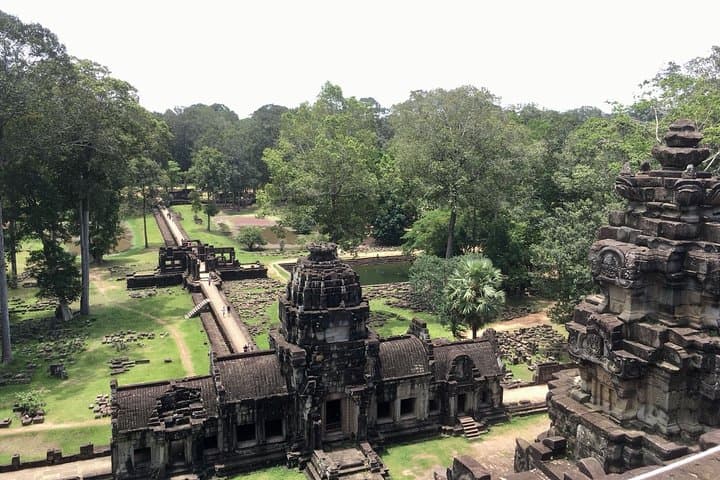
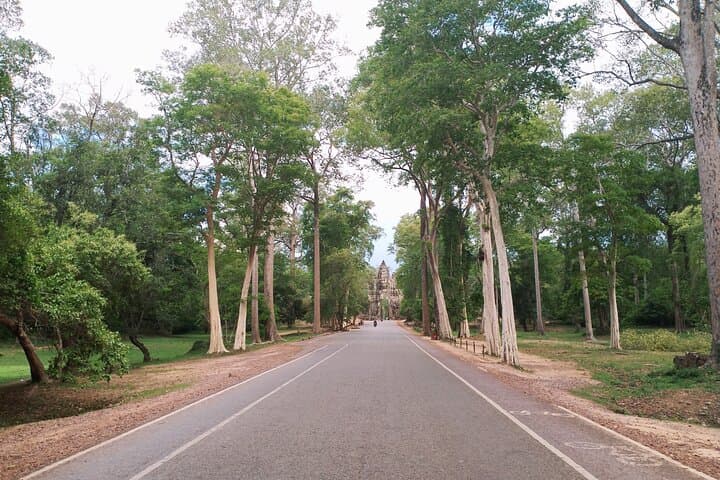
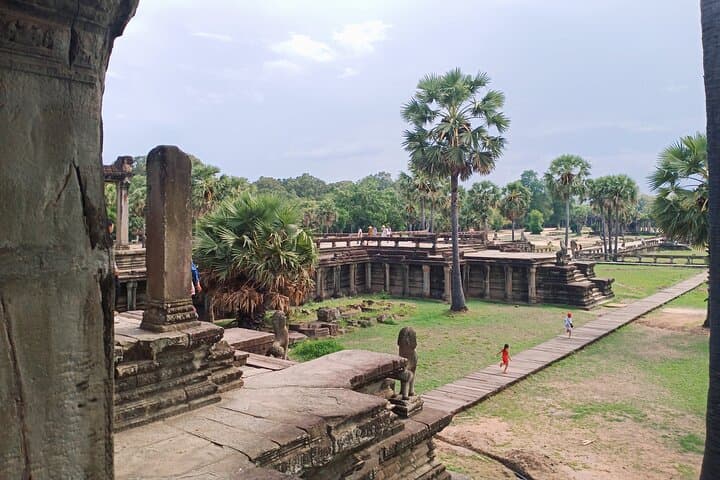
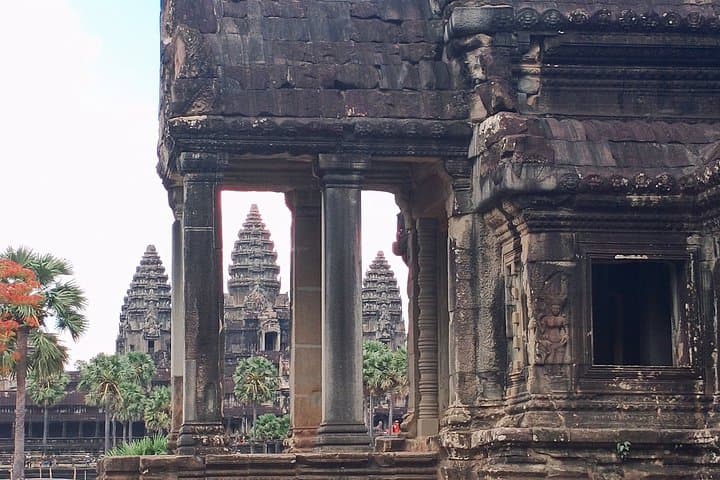
Dawn light slides across the moat and the five towers of Angkor Wat throw long, slow shadows as the first tour groups advance along the causeway. On a private three-day tour the pace loosens: you move from polished bas‑reliefs into tangled roots at Ta Prohm, and from the formal axes of Angkor Thom to the collapsed corridors of Beng Mealea where the jungle seems to be rewriting the architecture.
Dawn light slides across the moat and the five towers of Angkor Wat throw long, slow shadows as the first tour groups advance along the causeway. On a private three-day tour the pace loosens: you move from polished bas‑reliefs into tangled roots at Ta Prohm, and from the formal axes of Angkor Thom to the collapsed corridors of Beng Mealea where the jungle seems to be rewriting the architecture.
The monuments here were raised by the Khmer Empire between the 9th and 12th centuries, carved from sandstone and laterite, and aligned with celestial and hydraulic systems that controlled rice production. Tonle Sap—Southeast Asia’s largest freshwater lake—shapes local livelihoods; seasonal flooding turns riverbanks into floating villages and feeding grounds for waterbirds. Cultural life in Siem Reap centers on temple stewardship, traditional arts, and adaptive reuse of colonial and Khmer buildings into guesthouses and workshops.
Practical guidance is straightforward: secure an Angkor Park pass before arrival or on day one, and plan early starts to avoid midday heat. Expect uneven stone, roots and occasional mud—sturdy closed-toe shoes and respect for local temple etiquette are required. Hydrate frequently and pack insect repellent for Tonle Sap boat trips and jungle temples.
A private guide customizes the route—favoring quieter morning visits to Banteay Srei or a late afternoon boat on Kompong Khleang—and provides historical context that brings carvings and urban layouts to life. This three-day rhythm balances marquee monuments with lesser‑visited corners, giving both panorama and patience: a compact, transportable education in Khmer space and riverine life.