THE ADVENTURE COLLECTIVE® · Independent discovery and booking for outdoor travel

Experience sunrise at Angkor Wat, face towers at the Bayon, jungle-logged Ta Prohm and the floating communities of Tonle Sap on a private three-day circuit. This tour stitches together the archaeological highlights with cultural insights and practical logistics for long days in the park.
Experience sunrise at Angkor Wat, face towers at the Bayon, jungle-logged Ta Prohm and the floating communities of Tonle Sap on a private three-day circuit. This tour stitches together the archaeological highlights with cultural insights and practical logistics for long days in the park.
You stand before Angkor Wat before dawn: a low mist unrolls across the moat, the stone towers dark against a thinning sky. The first light slides over bas-reliefs and pools, and the place seems to wake with purpose — not passive, but patient, urging you to move through its history.
Verified experiences and guided adventures in the surrounding area.
Operated by About Cambodia Travel & Tours · Siem Reap, Siem Reap Province
You stand before Angkor Wat before dawn: a low mist unrolls across the moat, the stone towers dark against a thinning sky. The first light slides over bas-reliefs and pools, and the place seems to wake with purpose — not passive, but patient, urging you to move through its history.
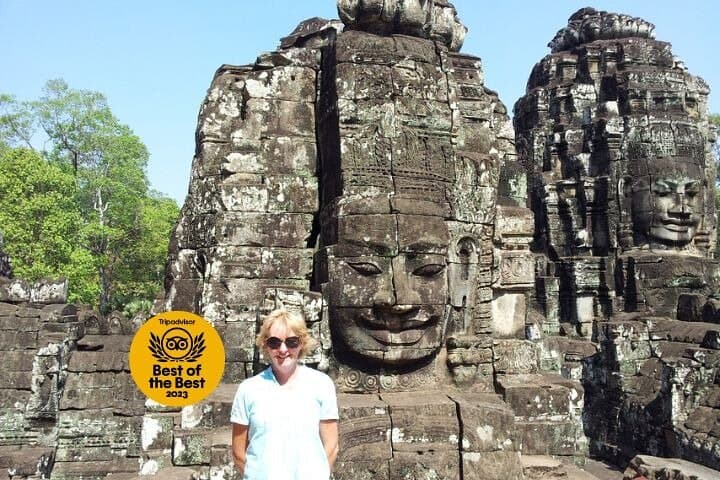
This three-day private itinerary threads the major circuits of the Angkor Archaeological Park (roughly 400 km²) with a quieter visit to the Tonle Sap floating villages. Expect long, flat drives of 20–60 minutes between sites and lots of walking on compacted laterite, sandstone causeways and steep temple stairs; Angkor Wat’s central tower rises about 65 m. You’ll see early inscriptions at the Roluos group (Bakong, Preah Ko, Lolei), the enigmatic Bayon faces in Angkor Thom, the tree-cradled galleries of Ta Prohm, and the delicate pink sandstone carvings of Banteay Srei. Tonle Sap’s seasonal flood pulse changes the shoreline dramatically; the floating villages move with it, fishing boats and stilt houses adapting to the lake’s rhythm.
Local culture is immediate: village markets, stilted homes, and handicraft initiatives that support artisans. Archaeology here spans the 9th–13th centuries and reflects shifts from Hindu kingship to Mahayana Buddhism under Jayavarman VII.
Practical guidance: plan pre-dawn starts for sunrise, wear closed-toe walking shoes with good grip for steep, uneven steps, bring sun protection and at least 2 liters of water per day, and carry small bills for donations and purchases. Temperatures can be high; pace your visits and use shade breaks. A private guide speeds navigation of the park and its ticketing rules, letting you focus on the stones and the stories they hold.
moderate.
3 days (approx. 72 hours).
Light to moderate fitness; able to walk 3–6 miles per day on uneven surfaces and climb steep temple stairs.
An Angkor Pass is required for entry and is typically purchased separately at the official ticket center; check if your operator includes it or arrange to buy it on arrival.
Plan to arrive 45–60 minutes before official sunrise to secure a vantage point and clear the checkpoint lines; your guide will advise the exact pickup time.
Yes, but the lake’s water level swings seasonally; during the wet season (roughly June–October) boats go deeper into flooded forests, while in the dry season villages sit on longer stilts and some areas are harder to reach by boat.
Many parts are stroller-accessible but uneven temple grounds and steep stairs limit access; private transfers and infant seats can usually be arranged.
Angkor’s monuments were built between the 9th and 13th centuries, with major shifts in religion and capital planning under rulers such as Indravarman I, Yasovarman I and Jayavarman VII.
Visitor numbers and climate-driven hydrology stress the park and Tonle Sap; support certified guides, avoid touching carvings, and favor locally run conservation-friendly initiatives.
About Cambodia Travel & Tours operates guided outdoor trips and adventures with an emphasis on safety, stewardship, and memorable experiences.

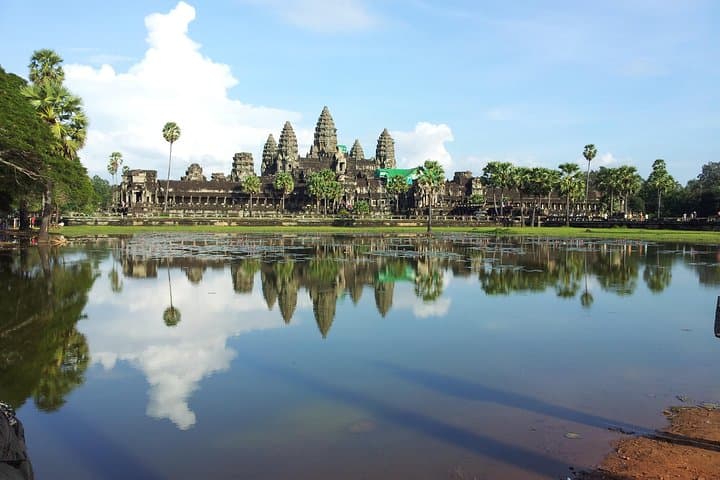
You stand before Angkor Wat before dawn: a low mist unrolls across the moat, the stone towers dark against a thinning sky. The first light slides over bas-reliefs and pools, and the place seems to wake with purpose — not passive, but patient, urging you to move through its history.
You stand before Angkor Wat before dawn: a low mist unrolls across the moat, the stone towers dark against a thinning sky. The first light slides over bas-reliefs and pools, and the place seems to wake with purpose — not passive, but patient, urging you to move through its history.
This three-day private itinerary threads the major circuits of the Angkor Archaeological Park (roughly 400 km²) with a quieter visit to the Tonle Sap floating villages. Expect long, flat drives of 20–60 minutes between sites and lots of walking on compacted laterite, sandstone causeways and steep temple stairs; Angkor Wat’s central tower rises about 65 m. You’ll see early inscriptions at the Roluos group (Bakong, Preah Ko, Lolei), the enigmatic Bayon faces in Angkor Thom, the tree-cradled galleries of Ta Prohm, and the delicate pink sandstone carvings of Banteay Srei. Tonle Sap’s seasonal flood pulse changes the shoreline dramatically; the floating villages move with it, fishing boats and stilt houses adapting to the lake’s rhythm.
Local culture is immediate: village markets, stilted homes, and handicraft initiatives that support artisans. Archaeology here spans the 9th–13th centuries and reflects shifts from Hindu kingship to Mahayana Buddhism under Jayavarman VII.
Practical guidance: plan pre-dawn starts for sunrise, wear closed-toe walking shoes with good grip for steep, uneven steps, bring sun protection and at least 2 liters of water per day, and carry small bills for donations and purchases. Temperatures can be high; pace your visits and use shade breaks. A private guide speeds navigation of the park and its ticketing rules, letting you focus on the stones and the stories they hold.