THE ADVENTURE COLLECTIVE® · Independent discovery and booking for outdoor travel

Board a private, biologist-led 2-hour whale watching cruise from Puerto Colón and listen to whales and dolphins on a hydrophone while cruising Tenerife’s deep coastal shelf. Small-group, educational trips focus on respectful observation and include photos and live commentary.
Board a private, biologist-led 2-hour whale watching cruise from Puerto Colón and listen to whales and dolphins on a hydrophone while cruising Tenerife’s deep coastal shelf. Small-group, educational trips focus on respectful observation and include photos and live commentary.
The boat slips out of Puerto Colón and the Atlantic opens like a dark, moving plain. Salt and diesel mix in the air, gulls quarrel above, and the captain eases the eight-metre hull toward where the sea is most alive. Within minutes the marine biologist on board points to a spray on the horizon; a pod answers with a surfacing chorus. The hydrophone goes into the water and sound—clicks, whistles, distant songs—fills the cabin, making the invisible animals audible.
Verified experiences and guided adventures in the surrounding area.
Operated by Whale Watch Tenerife · Costa Adeje, Santa Cruz de Tenerife
The boat slips out of Puerto Colón and the Atlantic opens like a dark, moving plain. Salt and diesel mix in the air, gulls quarrel above, and the captain eases the eight-metre hull toward where the sea is most alive. Within minutes the marine biologist on board points to a spray on the horizon; a pod answers with a surfacing chorus. The hydrophone goes into the water and sound—clicks, whistles, distant songs—fills the cabin, making the invisible animals audible.
Tenerife's southern shelf drops quickly, creating nutrient-rich upwellings that attract short-finned pilot whales and several dolphin species. Historically a working sea for fishermen and sailors, these waters have shifted from extractive use to wildlife observation over the past decades, and local operators emphasize regulated, close-but-respectful approaches.
Expect a factual, educational outing: the guide explains cetacean behavior, local currents, and why the island’s geology—volcanic slopes meeting deep water—creates reliable sighting zones just a few miles offshore. The tour also touches on Canarian fishing culture and the practicalities of modern marine tourism.
Practically, arrive 15 minutes early at Pantalán No.3 in Puerto Colón where there’s parking, restrooms and cafés. The trip is private for up to ten guests and lasts two hours; sea state can change the mood from tranquil to brisk, so dress in layers and bring sunscreen. Hydrate beforehand, consider motion-sickness prevention if you’re sensitive, and keep camera settings ready—the operator sends tour photos afterward. The experience is as much about listening as looking: the ocean often announces its life before you see it.
easy.
2 hours.
Suitable for most fitness levels; you should be able to step aboard a small boat and stand for short periods
The captain and biologist adhere to local regulations and best practices—approaches are careful and conservative to avoid disturbing animals; distance varies with behavior but the crew will position for observation without harassment.
Yes—this private trip accepts all ages, but children should be supervised and elders or very young guests should be prepared for boat motion.
If the operator cancels for safety or bad weather you are entitled to a full refund when cancelled at least 24 hours in advance, or the operator will reschedule depending on availability.
The operator offers a sightings guarantee policy; while wildlife can’t be promised, the crew uses local knowledge and sonar/hydrophone tools to maximize chances and often returns photo evidence after the tour.
Tenerife’s coastal economy historically centered on fishing and inter-island trade; whale-watching emerged as a conservation-minded alternative as cetacean protections and tourism grew in the late 20th century.
Operators in the area follow Canary Islands guidelines to minimize disturbance—small-group limits, regulated approach distances, and educational hydrophone use reduce stress on animals.
Whale Watch Tenerife operates guided outdoor trips and adventures with an emphasis on safety, stewardship, and memorable experiences.
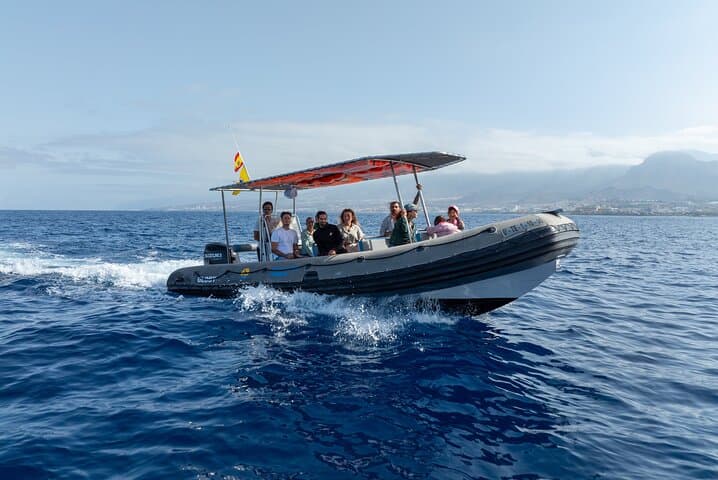


The boat slips out of Puerto Colón and the Atlantic opens like a dark, moving plain. Salt and diesel mix in the air, gulls quarrel above, and the captain eases the eight-metre hull toward where the sea is most alive. Within minutes the marine biologist on board points to a spray on the horizon; a pod answers with a surfacing chorus. The hydrophone goes into the water and sound—clicks, whistles, distant songs—fills the cabin, making the invisible animals audible.
The boat slips out of Puerto Colón and the Atlantic opens like a dark, moving plain. Salt and diesel mix in the air, gulls quarrel above, and the captain eases the eight-metre hull toward where the sea is most alive. Within minutes the marine biologist on board points to a spray on the horizon; a pod answers with a surfacing chorus. The hydrophone goes into the water and sound—clicks, whistles, distant songs—fills the cabin, making the invisible animals audible.
Tenerife's southern shelf drops quickly, creating nutrient-rich upwellings that attract short-finned pilot whales and several dolphin species. Historically a working sea for fishermen and sailors, these waters have shifted from extractive use to wildlife observation over the past decades, and local operators emphasize regulated, close-but-respectful approaches.
Expect a factual, educational outing: the guide explains cetacean behavior, local currents, and why the island’s geology—volcanic slopes meeting deep water—creates reliable sighting zones just a few miles offshore. The tour also touches on Canarian fishing culture and the practicalities of modern marine tourism.
Practically, arrive 15 minutes early at Pantalán No.3 in Puerto Colón where there’s parking, restrooms and cafés. The trip is private for up to ten guests and lasts two hours; sea state can change the mood from tranquil to brisk, so dress in layers and bring sunscreen. Hydrate beforehand, consider motion-sickness prevention if you’re sensitive, and keep camera settings ready—the operator sends tour photos afterward. The experience is as much about listening as looking: the ocean often announces its life before you see it.