THE ADVENTURE COLLECTIVE® · Independent discovery and booking for outdoor travel

Cover Jordan’s headline sights in two days: walk the Siq into Petra’s rose-red façades, ride through Wadi Rum with Bedouin guides and float at the Dead Sea. This private, door‑to‑door option from Amman packs history, geology and desert nights into a well-paced short adventure.
Cover Jordan’s headline sights in two days: walk the Siq into Petra’s rose-red façades, ride through Wadi Rum with Bedouin guides and float at the Dead Sea. This private, door‑to‑door option from Amman packs history, geology and desert nights into a well-paced short adventure.
The day begins before the city wakes: an air-conditioned car eases out of Amman while the morning light flattens the hills, and a professional English-speaking driver takes the wheel for a 3‑hour drive south. The road unfurls through stubbled plains and limestone outcrops until the first hint of rose-red sandstone appears and the Siq narrows like a throat. Walking the Siq’s 1.2‑kilometer slot canyon, visitors feel the rock close in, the cool shadow daring them forward until the Treasury suddenly fills the view — an enormous carved façade that reads like a doorway to another civilization.
Verified experiences and guided adventures in the surrounding area.
Operated by Jordan Select Tours · Amman, Amman
The day begins before the city wakes: an air-conditioned car eases out of Amman while the morning light flattens the hills, and a professional English-speaking driver takes the wheel for a 3‑hour drive south. The road unfurls through stubbled plains and limestone outcrops until the first hint of rose-red sandstone appears and the Siq narrows like a throat. Walking the Siq’s 1.2‑kilometer slot canyon, visitors feel the rock close in, the cool shadow daring them forward until the Treasury suddenly fills the view — an enormous carved façade that reads like a doorway to another civilization.
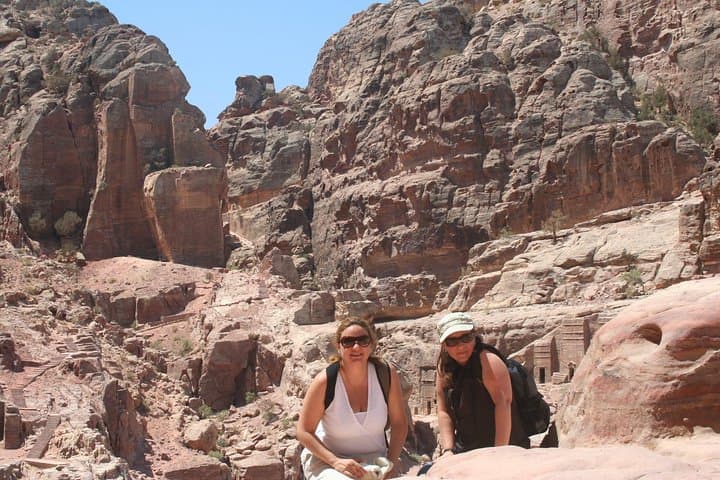
Petra is the Nabataean city cut into the mountain: facades, tombs and a Roman theater that record trade, water engineering and the sculptor’s patience. Hikers who push past the main trail can climb to the Monastery — a strenuous ascent of roughly 800 steps — and earn a perspective that flattens the valley to a map of sun and shadow.
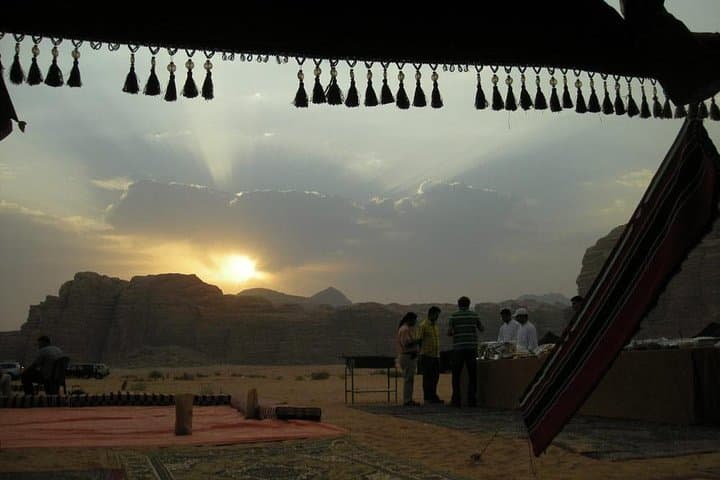
In the afternoon the landscape changes like a scene cut in a film. The drive to Wadi Rum crosses scarps and salt flats until the desert opens: sandstone and granite towers erode into sculpted arches and narrow gorges. Wadi Rum’s dunes breathe heat by day and drop to freezing at night; Bedouin guides read the land like a ledger of trails. Guests arrive at a tourist camp tucked among red sand, share a traditional dinner, and sleep in tents while the desert sky pinches distant stars into bright punctuation.
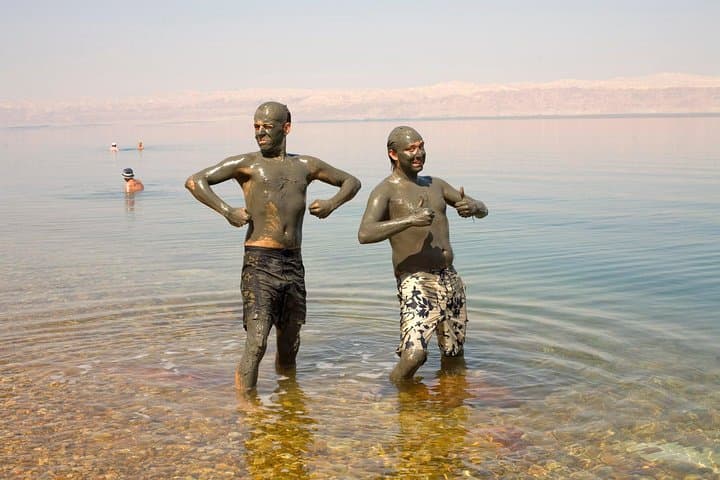
On day two, a local off‑road Jeep tour covers the best of Wadi Rum’s natural arches, Lawrence’s Spring and dramatic vistas where wind has carved the rock into shapes that seem to move. The route back north leads to the Dead Sea — the world’s lowest point at about 408 meters below sea level — where the water’s density literally props you up and the shoreline mud invites a mineral therapy ritual.
Practical realities: expect long drives (Amman→Petra ≈ 3 hours; Petra→Wadi Rum ≈ 2 hours; Wadi Rum→Dead Sea ≈ 4 hours), lots of walking on uneven ground, and significant temperature swings. The tour is private and door‑to‑door from Amman, which makes timing and comfort easy, but bring sturdy shoes for cobbled and sandy terrain, a sun hat, at least 2–3 liters of water per day, and a warm layer for desert nights.
For photographers, arrive at the Siq at first light and aim for sunset viewpoints in Wadi Rum; at the Dead Sea, mid‑afternoon yields glassy water and dramatic reflections. Respect local customs: dress modestly in towns and support Bedouin guides and camps that practice sustainable tourism. This compact two‑day route bundles Jordan’s geological drama, ancient engineering and desert culture into one efficient, memorable circuit.
moderate.
2 days.
Travelers should be comfortable walking 3–6 miles on uneven, rocky or sandy terrain and able to climb short steep sections.
Entrance to Petra and the Dead Sea resort access depend on the tour option selected; check your booking inclusions—Dead Sea lunch at Holiday Inn is included for some options.
Expect multiple hours of walking in Petra over uneven stone and steps, plus a 2–3 hour Jeep tour in Wadi Rum that includes short hikes; a moderate fitness level is recommended.
Yes—inform the operator at booking (special requirements field) so meals can be adjusted where possible, though remote camps have limited options.
Options range from basic tourist camps with shared toilets to upgraded tents with en‑suite facilities and A/C; confirm your selection when booking.
Yes, but balloon rides require prior booking and are payable separately; schedule and availability depend on weather and season.
Floating is generally safe—avoid swallowing water, limit time to avoid skin irritation, and consult staff if you have open wounds or health concerns.
Petra was the Nabataean capital and a major caravan hub; Wadi Rum has been inhabited since prehistory and gained fame during the Arab Revolt and T.E. Lawrence’s travels.
Tourism pressures and water scarcity are significant—stick to marked paths, avoid single-use plastics, and choose Bedouin-run camps that reinvest in local communities.
Jordan Select Tours operates guided outdoor trips and adventures with an emphasis on safety, stewardship, and memorable experiences.
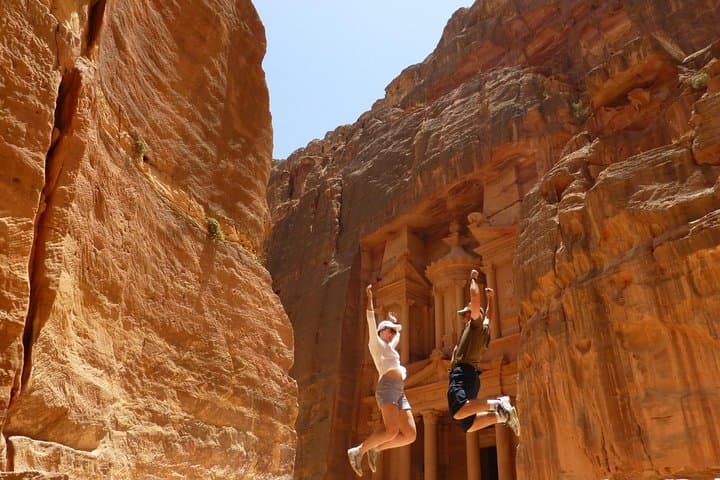
The day begins before the city wakes: an air-conditioned car eases out of Amman while the morning light flattens the hills, and a professional English-speaking driver takes the wheel for a 3‑hour drive south. The road unfurls through stubbled plains and limestone outcrops until the first hint of rose-red sandstone appears and the Siq narrows like a throat. Walking the Siq’s 1.2‑kilometer slot canyon, visitors feel the rock close in, the cool shadow daring them forward until the Treasury suddenly fills the view — an enormous carved façade that reads like a doorway to another civilization.
The day begins before the city wakes: an air-conditioned car eases out of Amman while the morning light flattens the hills, and a professional English-speaking driver takes the wheel for a 3‑hour drive south. The road unfurls through stubbled plains and limestone outcrops until the first hint of rose-red sandstone appears and the Siq narrows like a throat. Walking the Siq’s 1.2‑kilometer slot canyon, visitors feel the rock close in, the cool shadow daring them forward until the Treasury suddenly fills the view — an enormous carved façade that reads like a doorway to another civilization.
Petra is the Nabataean city cut into the mountain: facades, tombs and a Roman theater that record trade, water engineering and the sculptor’s patience. Hikers who push past the main trail can climb to the Monastery — a strenuous ascent of roughly 800 steps — and earn a perspective that flattens the valley to a map of sun and shadow.
In the afternoon the landscape changes like a scene cut in a film. The drive to Wadi Rum crosses scarps and salt flats until the desert opens: sandstone and granite towers erode into sculpted arches and narrow gorges. Wadi Rum’s dunes breathe heat by day and drop to freezing at night; Bedouin guides read the land like a ledger of trails. Guests arrive at a tourist camp tucked among red sand, share a traditional dinner, and sleep in tents while the desert sky pinches distant stars into bright punctuation.
On day two, a local off‑road Jeep tour covers the best of Wadi Rum’s natural arches, Lawrence’s Spring and dramatic vistas where wind has carved the rock into shapes that seem to move. The route back north leads to the Dead Sea — the world’s lowest point at about 408 meters below sea level — where the water’s density literally props you up and the shoreline mud invites a mineral therapy ritual.
Practical realities: expect long drives (Amman→Petra ≈ 3 hours; Petra→Wadi Rum ≈ 2 hours; Wadi Rum→Dead Sea ≈ 4 hours), lots of walking on uneven ground, and significant temperature swings. The tour is private and door‑to‑door from Amman, which makes timing and comfort easy, but bring sturdy shoes for cobbled and sandy terrain, a sun hat, at least 2–3 liters of water per day, and a warm layer for desert nights.
For photographers, arrive at the Siq at first light and aim for sunset viewpoints in Wadi Rum; at the Dead Sea, mid‑afternoon yields glassy water and dramatic reflections. Respect local customs: dress modestly in towns and support Bedouin guides and camps that practice sustainable tourism. This compact two‑day route bundles Jordan’s geological drama, ancient engineering and desert culture into one efficient, memorable circuit.