THE ADVENTURE COLLECTIVE® · Independent discovery and booking for outdoor travel

Two days of concentrated Peloponnese history—from Spartan ruins and Byzantine Mystras to the medieval rock town of Monemvasia—served with a private driver and flexible stops. Practical, comfortable, and rich with architecture and coastal views.
Two days of concentrated Peloponnese history—from Spartan ruins and Byzantine Mystras to the medieval rock town of Monemvasia—served with a private driver and flexible stops. Practical, comfortable, and rich with architecture and coastal views.
The day begins on an open road: olive groves slide by the window, limestone ridges and vineyards tilt toward the sea, and the driver eases the car along highways that thread the southern Peloponnese. By late morning the group steps out at Sparta’s archaeological sites—stones and worn steps that still hold the echo of a militarized polis—and later climbs the terraced slopes of Mystras where Byzantine churches keep their frescoes in cool shadow.
Verified experiences and guided adventures in the surrounding area.
Operated by Englobia · Monemvasia, Peloponnese
The day begins on an open road: olive groves slide by the window, limestone ridges and vineyards tilt toward the sea, and the driver eases the car along highways that thread the southern Peloponnese. By late morning the group steps out at Sparta’s archaeological sites—stones and worn steps that still hold the echo of a militarized polis—and later climbs the terraced slopes of Mystras where Byzantine churches keep their frescoes in cool shadow.
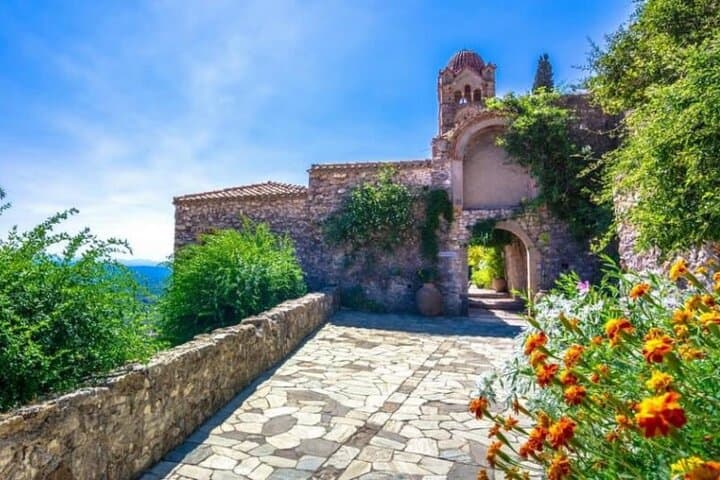
Mystras, a 13th-century fortified town built into a limestone spur, reads like a chapter of medieval Byzantium in stone—palaces, monasteries and narrow alleys that once connected clerics and craftsmen. Below, the plain of Laconia stretches to the Taygetos foothills; the geology is karstic, with steep ridgelines, fertile valleys, and coastal cliffs formed by ancient tectonics and marine terraces.
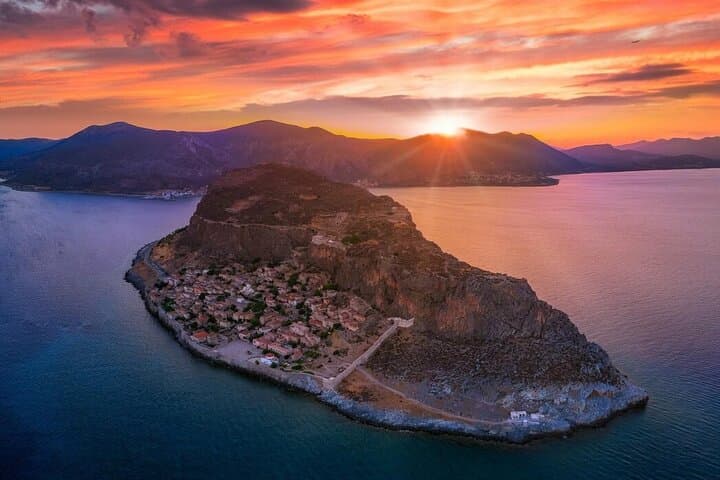
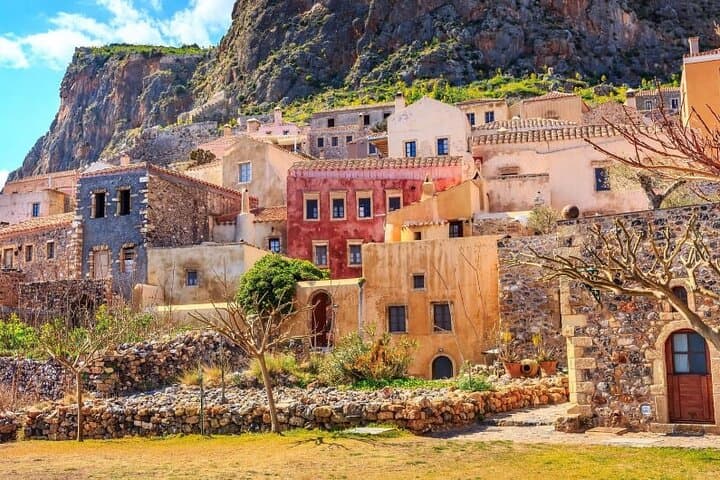
On the second day the itinerary skims the coast to Monemvasia: the ‘rock’—a small island with a single medieval town—rises from the Myrtoan Sea, its cobbled lanes, Byzantine chapels and sea-facing tavernas offering clear views and clear air. Expect hands-on cultural moments—local cuisine, chapel interiors, and brief walks on uneven stone paving.
Practical guidance: be ready for moderate walking on cobbles and steps, carry sun protection and comfortable shoes, and keep small bills for family-run cafes. Distances are driven; travel time between sites can add 2–3 hours per day in the vehicle. The tour is ideal for travelers who want a compact, guided cultural route through Spartan antiquity and Byzantine monastic life without strenuous hiking.
easy.
2 days.
Light physical fitness—able to walk on uneven stone for short stretches and climb steps; mostly car-based travel.
No special fitness is required; the tour is vehicle-based with short to moderate walks on cobbles and steps—suitable for most travelers who can walk short distances.
Admissions are not specified as included—check with the operator and bring cash or card for entry fees to museums and some churches.
Yes—pick-up and drop-off from Athens hotels, the airport, or Piraeus port are offered; confirm your preferred location at booking.
The operator lists wheelchair accessibility, but many historic streets and sites have uneven paving and steps; contact the provider to confirm site-level access and vehicle specifications.
Mystras rose as a Byzantine administrative and religious center in the 13th century and later became a key fortress and cultural hub in the Peloponnese; nearby Sparta preserves remains of the much older Lacedaemonian polis.
Historic masonry and coastal ecosystems are sensitive—stick to marked paths, avoid touching frescoes, and support local family-run businesses to help preserve the area.
Englobia operates guided outdoor trips and adventures with an emphasis on safety, stewardship, and memorable experiences.

The day begins on an open road: olive groves slide by the window, limestone ridges and vineyards tilt toward the sea, and the driver eases the car along highways that thread the southern Peloponnese. By late morning the group steps out at Sparta’s archaeological sites—stones and worn steps that still hold the echo of a militarized polis—and later climbs the terraced slopes of Mystras where Byzantine churches keep their frescoes in cool shadow.
The day begins on an open road: olive groves slide by the window, limestone ridges and vineyards tilt toward the sea, and the driver eases the car along highways that thread the southern Peloponnese. By late morning the group steps out at Sparta’s archaeological sites—stones and worn steps that still hold the echo of a militarized polis—and later climbs the terraced slopes of Mystras where Byzantine churches keep their frescoes in cool shadow.
Mystras, a 13th-century fortified town built into a limestone spur, reads like a chapter of medieval Byzantium in stone—palaces, monasteries and narrow alleys that once connected clerics and craftsmen. Below, the plain of Laconia stretches to the Taygetos foothills; the geology is karstic, with steep ridgelines, fertile valleys, and coastal cliffs formed by ancient tectonics and marine terraces.
On the second day the itinerary skims the coast to Monemvasia: the ‘rock’—a small island with a single medieval town—rises from the Myrtoan Sea, its cobbled lanes, Byzantine chapels and sea-facing tavernas offering clear views and clear air. Expect hands-on cultural moments—local cuisine, chapel interiors, and brief walks on uneven stone paving.
Practical guidance: be ready for moderate walking on cobbles and steps, carry sun protection and comfortable shoes, and keep small bills for family-run cafes. Distances are driven; travel time between sites can add 2–3 hours per day in the vehicle. The tour is ideal for travelers who want a compact, guided cultural route through Spartan antiquity and Byzantine monastic life without strenuous hiking.