THE ADVENTURE COLLECTIVE® · Independent discovery and booking for outdoor travel

Trade Marrakech’s red walls for Essaouira’s wind-braced ramparts on a private two-day coastal escape. Explore the medina, watch fishermen at the harbor, sample argan oil, and walk wide Atlantic beaches with time to breathe between sites.
Trade Marrakech’s red walls for Essaouira’s wind-braced ramparts on a private two-day coastal escape. Explore the medina, watch fishermen at the harbor, sample argan oil, and walk wide Atlantic beaches with time to breathe between sites.
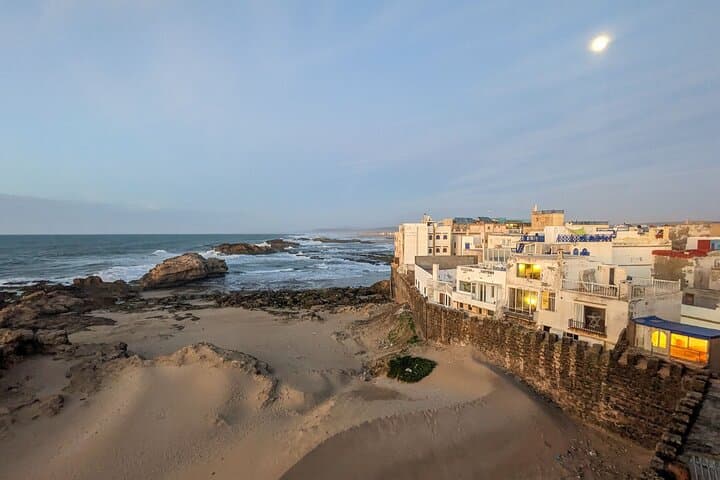
The Atlantic wind greets you before the city does — cool, saline air pushing across low dunes as the minivan slips from Marrakech’s ochre suburbs onto coastal plains. By mid-afternoon you stand on Essaouira’s stone ramparts, surf-silver waves daring the shore and gulls circling like small, impatient sentries.
Verified experiences and guided adventures in the surrounding area.
Operated by Discover sahara tours · Essaouira, Marrakesh-Safi
The Atlantic wind greets you before the city does — cool, saline air pushing across low dunes as the minivan slips from Marrakech’s ochre suburbs onto coastal plains. By mid-afternoon you stand on Essaouira’s stone ramparts, surf-silver waves daring the shore and gulls circling like small, impatient sentries.
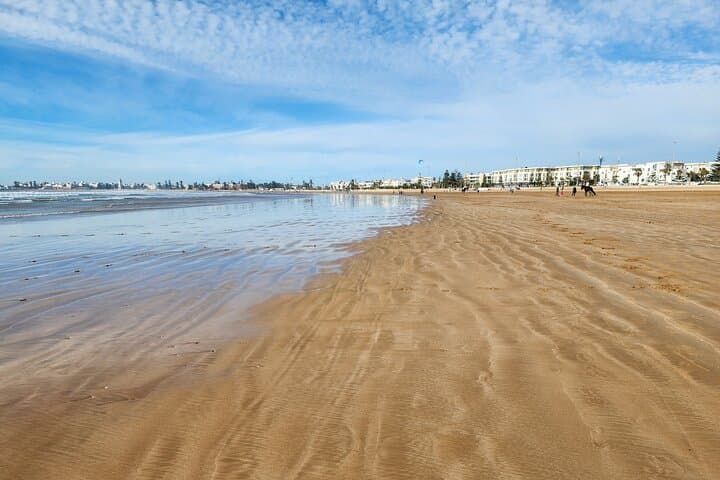
Essaouira (historically Mogador) is a compact coastal town defined by 18th-century fortifications built when European powers vied for Atlantic trade. The bay sits on metamorphic and sedimentary rock that gives way to broad sandy beaches; argan trees mark the hinterland, their gnarled trunks a reminder of a unique local ecology and an economy centered on artisanal argan oil.
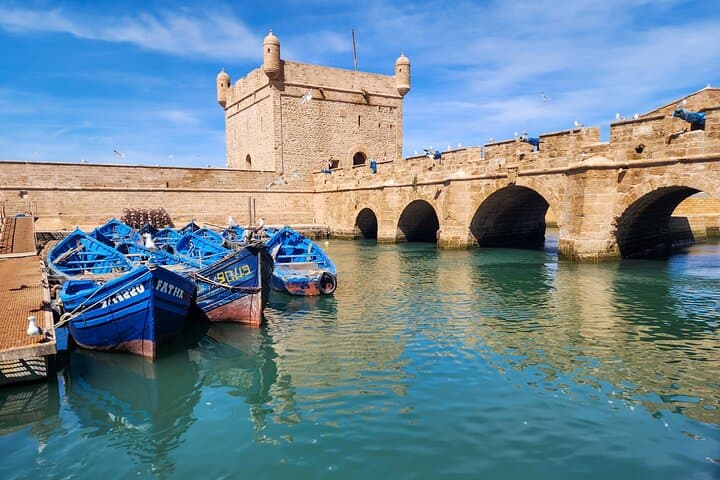
The medina’s lanes are low and open compared with inland souks; wooden shutters and blue doors, fishing boats hauled near the port, and wind-shaped cedar boards in artisan shops. Culture here is a mix of Amazigh (Berber), Arab and maritime traditions—you’ll hear Chaabi music from cafés and see nets mended near the Skala du Port. The sea and wind dictate daily life: surfers and kitesurfers thrive where the current forces a steady breeze.
Practical guidance: the drive is about 180 km (roughly 2.5–3 hours) each way, so plan an early departure and a relaxed return. Expect cobblestones and sandy stretches—flat-soled walking shoes and a windproof layer are musts. Bring dirhams for small purchases, tip modestly at cooperatives, and allow time for an optional argan cooperative visit. Accommodations range from riads in the medina to beachside guesthouses; breakfasts are typically included. With a private guide and driver, this is an accessible two-day coastal immersion suitable for most fitness levels.
easy.
2 days.
Suitable for most travelers; requires ability to walk short distances on cobblestones and sand.
Expect roughly 2.5–3 hours each way, depending on traffic and stops; distance is about 180 km (112 miles).
Yes—this private excursion is rated easy and manageable for most ages; drivers and guides accommodate pacing and accessibility needs.
The itinerary includes beach time; organized lessons or rentals can be arranged locally but usually require an additional booking and seasonal wind conditions may apply.
Tipping is customary but discretionary—small amounts for good service are appreciated; plan a few hundred dirhams depending on your satisfaction and group size.
Essaouira—formerly Mogador—was fortified in the 18th century to control Atlantic trade; its mix of Portuguese, French and Amazigh influences shaped the medina and port.
Argan woodlands are a protected part of the local ecosystem and community cooperatives help support sustainable harvest and female-led enterprises.
Discover sahara tours operates guided outdoor trips and adventures with an emphasis on safety, stewardship, and memorable experiences.
The Atlantic wind greets you before the city does — cool, saline air pushing across low dunes as the minivan slips from Marrakech’s ochre suburbs onto coastal plains. By mid-afternoon you stand on Essaouira’s stone ramparts, surf-silver waves daring the shore and gulls circling like small, impatient sentries.
The Atlantic wind greets you before the city does — cool, saline air pushing across low dunes as the minivan slips from Marrakech’s ochre suburbs onto coastal plains. By mid-afternoon you stand on Essaouira’s stone ramparts, surf-silver waves daring the shore and gulls circling like small, impatient sentries.
Essaouira (historically Mogador) is a compact coastal town defined by 18th-century fortifications built when European powers vied for Atlantic trade. The bay sits on metamorphic and sedimentary rock that gives way to broad sandy beaches; argan trees mark the hinterland, their gnarled trunks a reminder of a unique local ecology and an economy centered on artisanal argan oil.
The medina’s lanes are low and open compared with inland souks; wooden shutters and blue doors, fishing boats hauled near the port, and wind-shaped cedar boards in artisan shops. Culture here is a mix of Amazigh (Berber), Arab and maritime traditions—you’ll hear Chaabi music from cafés and see nets mended near the Skala du Port. The sea and wind dictate daily life: surfers and kitesurfers thrive where the current forces a steady breeze.
Practical guidance: the drive is about 180 km (roughly 2.5–3 hours) each way, so plan an early departure and a relaxed return. Expect cobblestones and sandy stretches—flat-soled walking shoes and a windproof layer are musts. Bring dirhams for small purchases, tip modestly at cooperatives, and allow time for an optional argan cooperative visit. Accommodations range from riads in the medina to beachside guesthouses; breakfasts are typically included. With a private guide and driver, this is an accessible two-day coastal immersion suitable for most fitness levels.