THE ADVENTURE COLLECTIVE® · Independent discovery and booking for outdoor travel

Two days of ancient cities and surreal white terraces: explore Roman Ephesus and the travertines of Pamukkale with private guides and transport. This compact itinerary pairs archaeological immersion with thermal geology and efficient logistics for travelers short on time.
Two days of ancient cities and surreal white terraces: explore Roman Ephesus and the travertines of Pamukkale with private guides and transport. This compact itinerary pairs archaeological immersion with thermal geology and efficient logistics for travelers short on time.
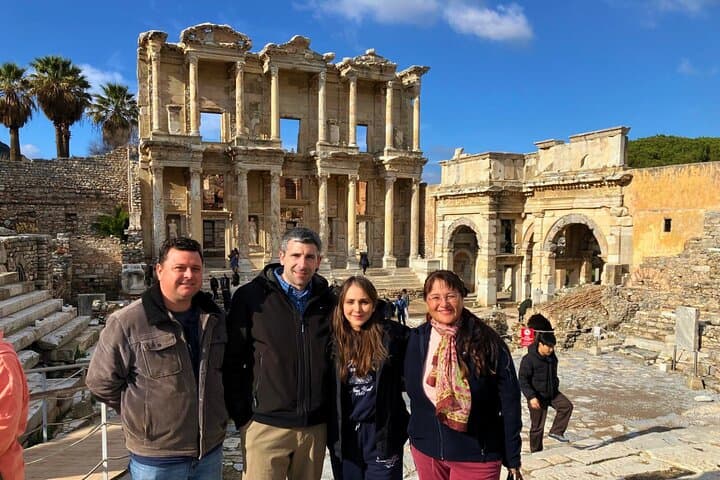
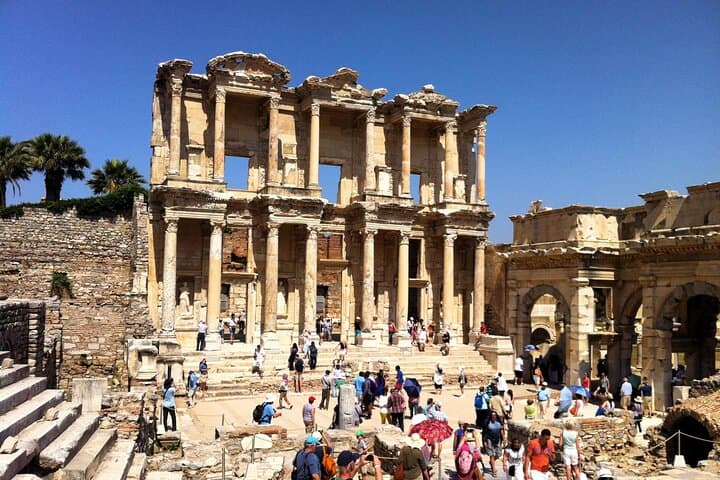
You arrive in the Aegean light, suitcase in the back of a private van, and the first marble steps of Ephesus wait like a lived-in stage. The city opens with the Library of Celsus, its carved facade catching the morning sun, and the Great Theater whose slope still holds echoes of Roman crowds.
Verified experiences and guided adventures in the surrounding area.
Operated by Guided Istanbul Tours · Selçuk, İzmir
You arrive in the Aegean light, suitcase in the back of a private van, and the first marble steps of Ephesus wait like a lived-in stage. The city opens with the Library of Celsus, its carved facade catching the morning sun, and the Great Theater whose slope still holds echoes of Roman crowds.
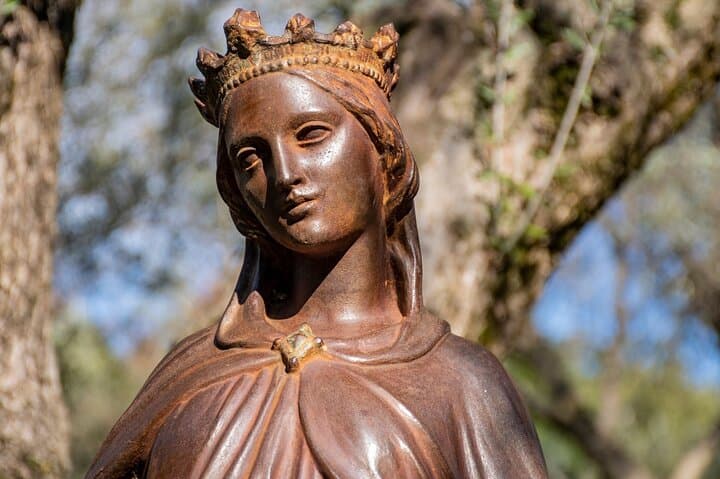
Ephesus is one of the best-preserved classical cities on the Mediterranean — a grid of marble streets, public latrines, and ornate temples. Nearby, the House of the Virgin Mary offers a quiet contrast: a small stone structure tied to early Christian pilgrimage. The next day the landscape shifts east to Pamukkale, where calcium-rich waters have built white travertine terraces and fed thermal pools since antiquity. Above them, the ruins of Hierapolis—Roman baths, Domitian Gate, and an imposing theater—sit atop mineral terraces formed by millennia of mineral-laden springs.
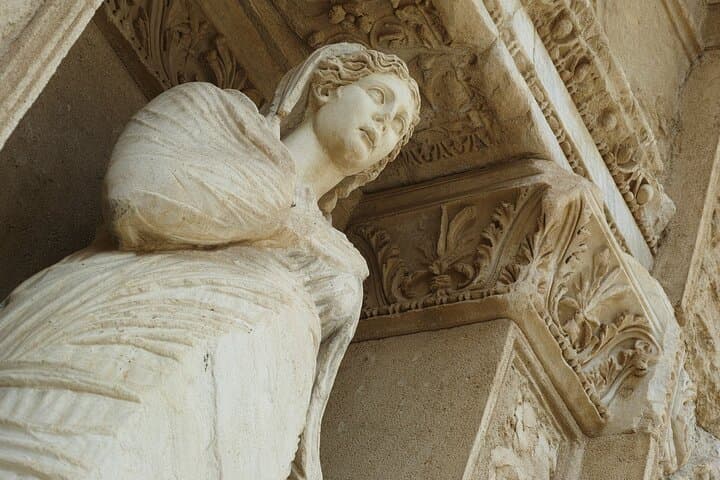
Culturally, expect warm hospitality, simple Aegean cuisine, and local guides who read inscriptions and point out architectural details that reveal daily life in Roman Anatolia.
Practical guidance: the itinerary uses a domestic flight from Istanbul to Izmir then private transfers; pack sturdy walking shoes for uneven marble and a swimsuit for the thermal pools (check current pool access). Carry your passport for domestic flights, bring a sun hat and water, and plan for long walking days—moderate fitness helps. Morning starts avoid high sun and crowds. Your private guide and driver handle logistics so you can focus on ruins, rock pools, and the geology underfoot.
moderate.
2 days.
Expect several hours of walking each day on uneven, sometimes steep surfaces; basic mobility is required.
Visa requirements depend on your nationality; check Turkish e-visa rules before travel and carry ID for domestic flights.
Access can change for conservation or restoration; guests should verify current pool access before packing swimwear.
Expect several hours of walking each day on uneven ground with stairs—moderate fitness and mobility are recommended.
Yes, private guides are available in multiple languages; request your preferred language at booking.
Ephesus flourished under Roman rule as a commercial and religious center; Hierapolis developed as a thermal spa city in Roman and Byzantine times.
Pamukkale’s terraces are sensitive to foot traffic and water diversion; authorities limit access to protect the travertines and manage water flow.
Guided Istanbul Tours operates guided outdoor trips and adventures with an emphasis on safety, stewardship, and memorable experiences.
You arrive in the Aegean light, suitcase in the back of a private van, and the first marble steps of Ephesus wait like a lived-in stage. The city opens with the Library of Celsus, its carved facade catching the morning sun, and the Great Theater whose slope still holds echoes of Roman crowds.
You arrive in the Aegean light, suitcase in the back of a private van, and the first marble steps of Ephesus wait like a lived-in stage. The city opens with the Library of Celsus, its carved facade catching the morning sun, and the Great Theater whose slope still holds echoes of Roman crowds.
Ephesus is one of the best-preserved classical cities on the Mediterranean — a grid of marble streets, public latrines, and ornate temples. Nearby, the House of the Virgin Mary offers a quiet contrast: a small stone structure tied to early Christian pilgrimage. The next day the landscape shifts east to Pamukkale, where calcium-rich waters have built white travertine terraces and fed thermal pools since antiquity. Above them, the ruins of Hierapolis—Roman baths, Domitian Gate, and an imposing theater—sit atop mineral terraces formed by millennia of mineral-laden springs.
Culturally, expect warm hospitality, simple Aegean cuisine, and local guides who read inscriptions and point out architectural details that reveal daily life in Roman Anatolia.
Practical guidance: the itinerary uses a domestic flight from Istanbul to Izmir then private transfers; pack sturdy walking shoes for uneven marble and a swimsuit for the thermal pools (check current pool access). Carry your passport for domestic flights, bring a sun hat and water, and plan for long walking days—moderate fitness helps. Morning starts avoid high sun and crowds. Your private guide and driver handle logistics so you can focus on ruins, rock pools, and the geology underfoot.