THE ADVENTURE COLLECTIVE® · Independent discovery and booking for outdoor travel

Two days in Cappadocia, guided and private: morning light on fairy chimneys, cave churches at Göreme, subterranean chambers at Kaymakli, and intimate stops in pottery towns. This compact itinerary pairs geological wonder with deep cultural context and practical logistics for travelers who want depth without the crowds.
Two days in Cappadocia, guided and private: morning light on fairy chimneys, cave churches at Göreme, subterranean chambers at Kaymakli, and intimate stops in pottery towns. This compact itinerary pairs geological wonder with deep cultural context and practical logistics for travelers who want depth without the crowds.
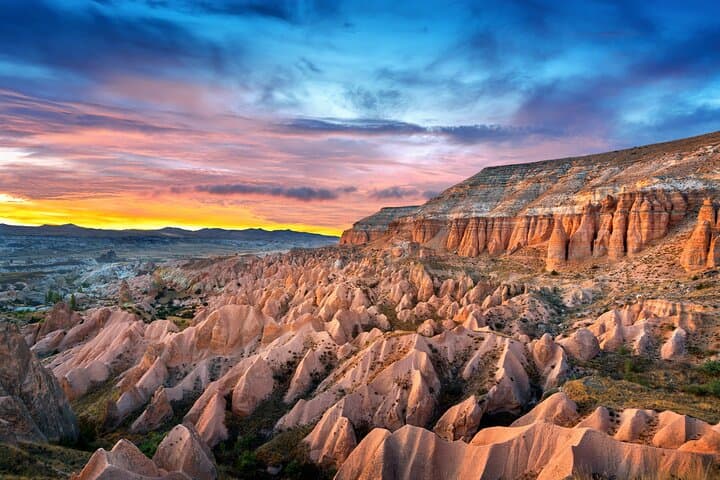
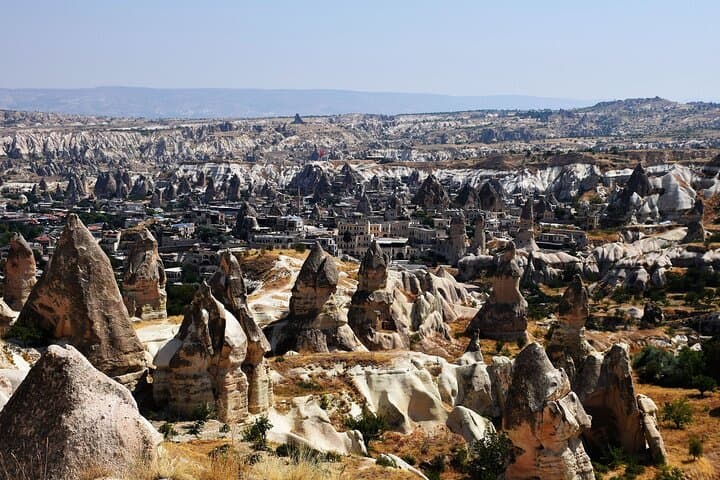
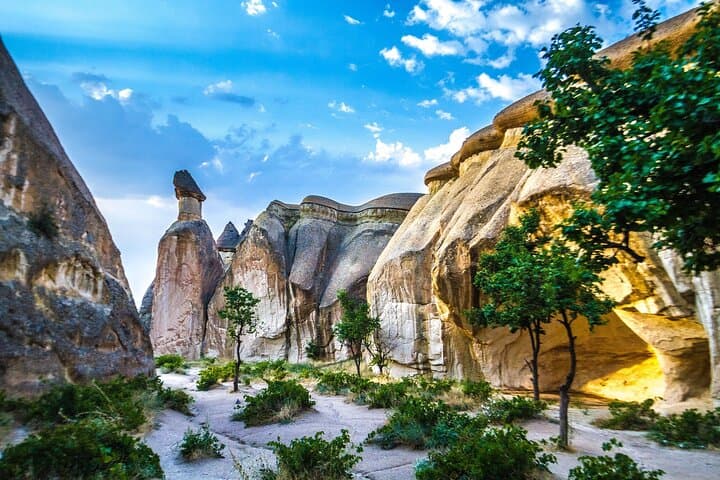
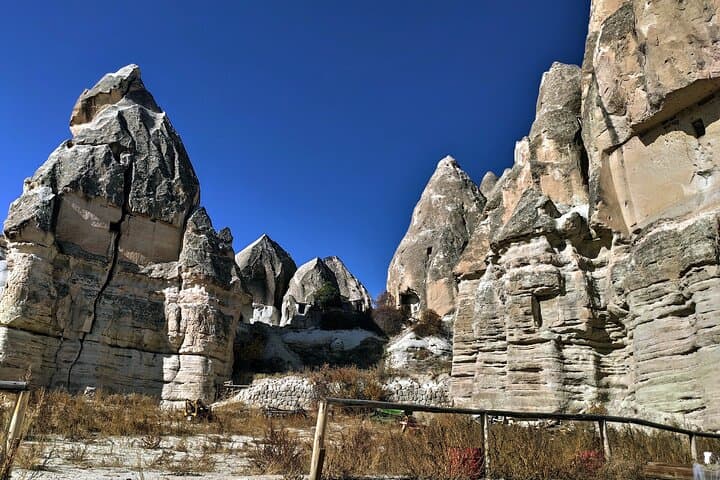
Morning light slices through a thin curtain of dust and the first fairy chimneys stand like patient ships on a ochre sea. On day one a private driver unlocks quiet lanes and the guide's voice slides into the van with context: who carved these caves, why pigeons once mattered, which frescoes survived the centuries. The Red (north) loop moves like a curated natural-history film—Göreme Open Air Museum's cave churches, the cone-shaped pillars of Pasabag, the playful shapes of Devrent, and the pottery-lined lanes of Avanos—each stop equal parts geology and human improvisation.
Verified experiences and guided adventures in the surrounding area.
Operated by Oyedo Travel · Göreme, Nevşehir
Morning light slices through a thin curtain of dust and the first fairy chimneys stand like patient ships on a ochre sea. On day one a private driver unlocks quiet lanes and the guide's voice slides into the van with context: who carved these caves, why pigeons once mattered, which frescoes survived the centuries. The Red (north) loop moves like a curated natural-history film—Göreme Open Air Museum's cave churches, the cone-shaped pillars of Pasabag, the playful shapes of Devrent, and the pottery-lined lanes of Avanos—each stop equal parts geology and human improvisation.
Day two shifts underground and into the quieter valleys of the south. You descend into Kaymakli, where tunnels narrow and the cool, damp air reads like a living map of survival—cellars, stables, chapels stacked where the sun cannot reach. Keşlik Monastery and Sobesos expose quieter chapters: mosaics and carved cells that speak of Byzantine devotional life. The finale is Uchisar Castle, a natural citadel with a horizon that tilts the whole region into scale.
Cappadocia is volcanic architecture. Millennia of ash compacted into tuff, then wind and water carved the softer layers into chimneys and cones while harder caps protected columns. Human hands then adapted the soft rock, carving churches, homes and fortifications. The result is a landscape where geology and human history are inseparable—Byzantine frescoes peer out above pastoral terraces and Ottoman-era village life persists in workshops where pottery and carpet-weaving support local economies.
Practicalities are straightforward. The tour runs as private transport with hotel pickup at 9:30 a.m., and each day is roughly eight hours with moderate walking, stairs and short uneven trails. Entrance fees noted on the itinerary include Göreme Open Air Museum (about 20 EUR), Pasabag (around 12 EUR) and Kaymakli (about 13 EUR). Wear sturdy footwear for underground passages and rocky ridgelines, carry water, and expect temperature swings between sun-soaked valleys and cool, shadowed interiors. The best light for photography is early morning and late afternoon; if hot air balloons are in the sky, try to shoot with them backlit for drama.
A private two-day format means time to ask questions, pause at lesser-known viewpoints, or learn a few pottery techniques in Avanos. For travelers seeking context with comfort, this tour balances cultural depth with achievable walks and the practical convenience of a local guide and air-conditioned vehicle. It’s a compact way to see why Cappadocia often feels less like a single place and more like a series of geological and human stories waiting to be walked through.
moderate.
2 days (approx 8 hours per day).
Suitable for travelers in average physical condition who can handle several hours of walking, stairs and short climbs.
Private pickup is included; provide your hotel name after booking and the guide will meet you at the agreed time, typically 10 minutes early.
Entrance fees are not included; expect to pay around 20 EUR for Göreme Open Air Museum, 12 EUR for Pasabag, and 13 EUR for Kaymakli.
Yes; the tour is described as physically easy overall, but underground cities require navigating narrow stairs and low passages—assess mobility before entering.
Guides are offered in English, Spanish and Portuguese according to itinerary inclusions; confirm your preferred language at booking.
As a private tour, the route is flexible—discuss desired stops with your guide in advance to adjust timing.
Standard cancellation allows a full refund if cancelled at least 24 hours before departure; the operator typically runs tours in most weather but check conditions if heavy rain or snow is forecast.
Cappadocia's soft volcanic tuff was carved for shelter and worship from Roman and Byzantine eras onward; Göreme Open Air Museum preserves many of those rock-cut churches and frescoes.
Erosion and visitor traffic threaten fragile rock formations, so stick to marked paths, avoid climbing chimneys, and support local artisans to help sustain village economies.
Oyedo Travel operates guided outdoor trips and adventures with an emphasis on safety, stewardship, and memorable experiences.
Morning light slices through a thin curtain of dust and the first fairy chimneys stand like patient ships on a ochre sea. On day one a private driver unlocks quiet lanes and the guide's voice slides into the van with context: who carved these caves, why pigeons once mattered, which frescoes survived the centuries. The Red (north) loop moves like a curated natural-history film—Göreme Open Air Museum's cave churches, the cone-shaped pillars of Pasabag, the playful shapes of Devrent, and the pottery-lined lanes of Avanos—each stop equal parts geology and human improvisation.
Morning light slices through a thin curtain of dust and the first fairy chimneys stand like patient ships on a ochre sea. On day one a private driver unlocks quiet lanes and the guide's voice slides into the van with context: who carved these caves, why pigeons once mattered, which frescoes survived the centuries. The Red (north) loop moves like a curated natural-history film—Göreme Open Air Museum's cave churches, the cone-shaped pillars of Pasabag, the playful shapes of Devrent, and the pottery-lined lanes of Avanos—each stop equal parts geology and human improvisation.
Day two shifts underground and into the quieter valleys of the south. You descend into Kaymakli, where tunnels narrow and the cool, damp air reads like a living map of survival—cellars, stables, chapels stacked where the sun cannot reach. Keşlik Monastery and Sobesos expose quieter chapters: mosaics and carved cells that speak of Byzantine devotional life. The finale is Uchisar Castle, a natural citadel with a horizon that tilts the whole region into scale.
Cappadocia is volcanic architecture. Millennia of ash compacted into tuff, then wind and water carved the softer layers into chimneys and cones while harder caps protected columns. Human hands then adapted the soft rock, carving churches, homes and fortifications. The result is a landscape where geology and human history are inseparable—Byzantine frescoes peer out above pastoral terraces and Ottoman-era village life persists in workshops where pottery and carpet-weaving support local economies.
Practicalities are straightforward. The tour runs as private transport with hotel pickup at 9:30 a.m., and each day is roughly eight hours with moderate walking, stairs and short uneven trails. Entrance fees noted on the itinerary include Göreme Open Air Museum (about 20 EUR), Pasabag (around 12 EUR) and Kaymakli (about 13 EUR). Wear sturdy footwear for underground passages and rocky ridgelines, carry water, and expect temperature swings between sun-soaked valleys and cool, shadowed interiors. The best light for photography is early morning and late afternoon; if hot air balloons are in the sky, try to shoot with them backlit for drama.
A private two-day format means time to ask questions, pause at lesser-known viewpoints, or learn a few pottery techniques in Avanos. For travelers seeking context with comfort, this tour balances cultural depth with achievable walks and the practical convenience of a local guide and air-conditioned vehicle. It’s a compact way to see why Cappadocia often feels less like a single place and more like a series of geological and human stories waiting to be walked through.