THE ADVENTURE COLLECTIVE® · Independent discovery and booking for outdoor travel

A private 15-day trek from Kathmandu to Everest Base Camp and Kala Patthar that blends Sherpa culture, high‑altitude geology, and close-up views of Everest. Expect long days, steep gain, and essential acclimatization.
A private 15-day trek from Kathmandu to Everest Base Camp and Kala Patthar that blends Sherpa culture, high‑altitude geology, and close-up views of Everest. Expect long days, steep gain, and essential acclimatization.
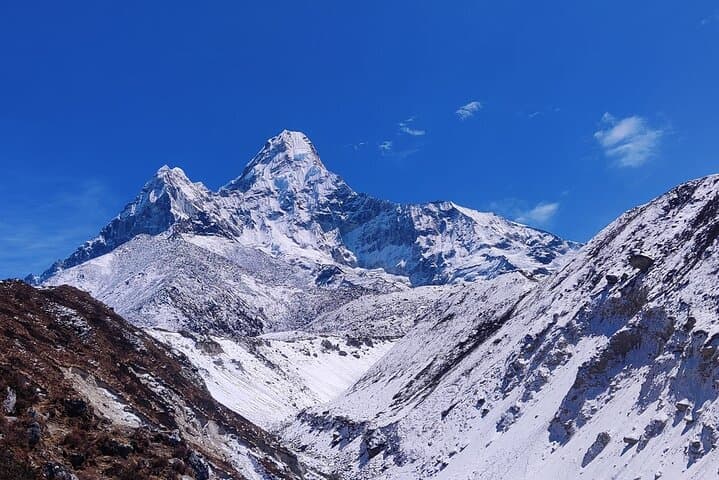
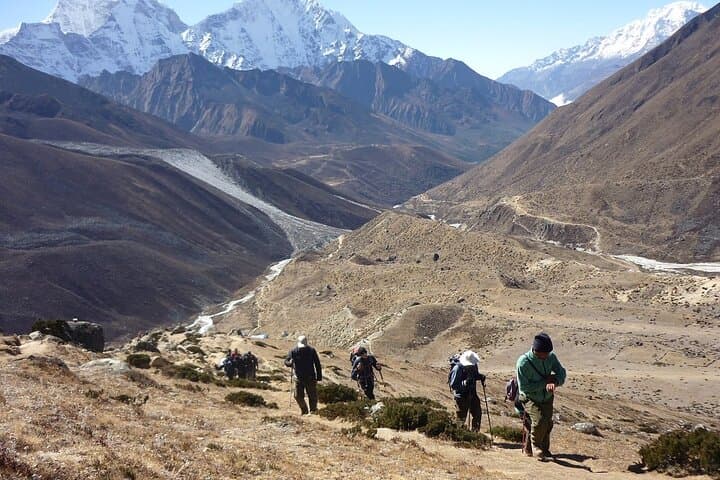
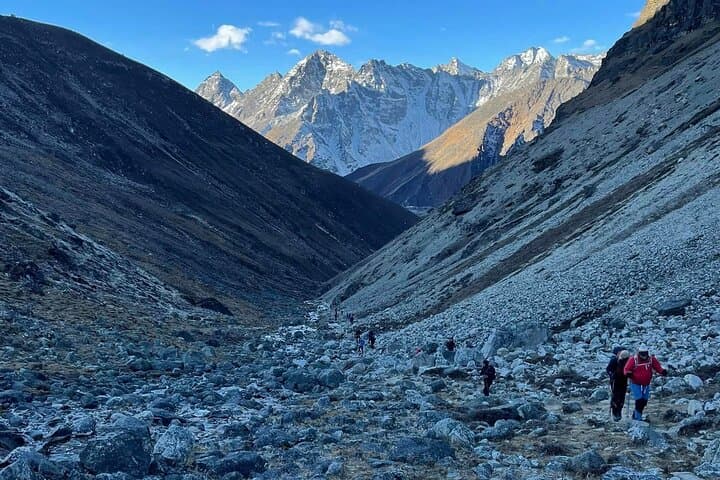
You step off the short Lukla flight and the air feels thinner immediately — a bright, salt-of-the-earth cold that sharpens every sound. Trails thread along the Dudha Koshi and climb through rhododendron and conifer forest, trading tree-shaded steps for open moraines where Everest and her neighbors dominate the skyline.
Verified experiences and guided adventures in the surrounding area.
Operated by Manakamana Treks & Expedition Pvt.Ltd. · Kathmandu, Bagmati Province
You step off the short Lukla flight and the air feels thinner immediately — a bright, salt-of-the-earth cold that sharpens every sound. Trails thread along the Dudha Koshi and climb through rhododendron and conifer forest, trading tree-shaded steps for open moraines where Everest and her neighbors dominate the skyline.
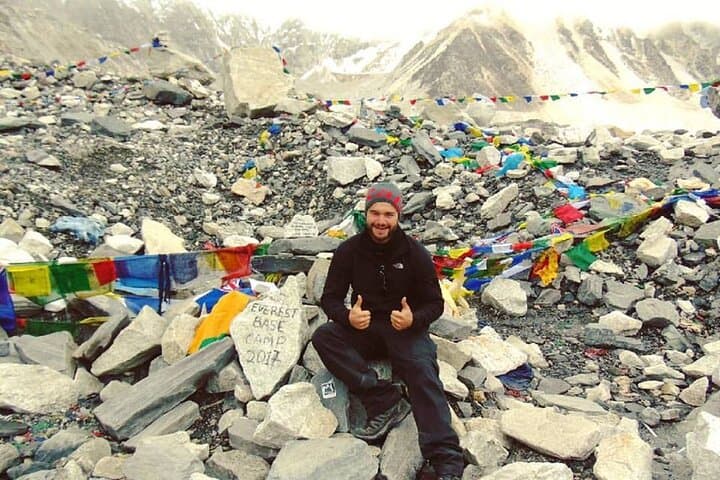
This route follows the classic Khumbu circuit to Everest Base Camp and up to Kala Patthar for the definitive summit views. The region sits inside Sagarmatha National Park, a UNESCO site created to protect high‑altitude ecosystems and the Sherpa cultural landscape. Geologically the valley is young: glacially carved hanging valleys, moraines and the sprawling Khumbu Glacier show ongoing uplift and ice movement.
Sherpa villages like Namche Bazaar and Tengboche are working hubs — monasteries, teahouses, and Saturday markets that reflect Tibetan Buddhist traditions and Himalayan trade routes that have existed for centuries. You’ll pass mani walls and prayer flags; local teahouses serve up dal bhat and stories alongside hot water to refill your insulated bottle.
Practical edge: altitude is the variable that defines success. Build in acclimatization days (Namche acclimatize), hike slow, and watch for headache, nausea or breathlessness. Expect 6–8 hour trekking days on rough, sometimes icy trails and significant elevation gain — final approaches sit above 5,000 m. Pack layered insulation, a warm sleeping liner, sun-protective eyewear, and a lightweight first-aid kit with altitude meds if prescribed. Flights to Lukla can be weather-dependent; allow buffer days in Kathmandu when booking onward travel. With steady pacing and proper gear, the reward is a close, immediate view of Everest that’s both humbling and unmistakable.
challenging.
12–15 days.
Requires strong cardiovascular fitness and experience with multi-day hiking; regular hikers who train with elevation gain will adapt best.
You should be in good aerobic shape, comfortable hiking 6–8 hours with backpacks and sustained elevation gain; specific acclimatization, not technical climbing ability, is the limiting factor.
No technical mountaineering gear is required for the standard EBC trek; crampons or microspikes are useful in winter, but ropes and harnesses are not needed.
Trekker’s Information Management System (TIMS) card and Sagarmatha National Park permit are required; your operator will typically arrange these before departure.
No — flights depend on weather and visibility; itineraries normally include contingency days in Kathmandu for delays.
The Khumbu region has been inhabited by Sherpa communities for centuries and became globally prominent after Sir Edmund Hillary and Tenzing Norgay’s 1953 Everest ascent, which opened the area to modern trekking.
Sagarmatha National Park enforces permit rules and waste-management practices; minimize impact by carrying out plastics, using refillable containers, and following local guidelines to protect fragile alpine ecology.
Manakamana Treks & Expedition Pvt.Ltd. operates guided outdoor trips and adventures with an emphasis on safety, stewardship, and memorable experiences.
You step off the short Lukla flight and the air feels thinner immediately — a bright, salt-of-the-earth cold that sharpens every sound. Trails thread along the Dudha Koshi and climb through rhododendron and conifer forest, trading tree-shaded steps for open moraines where Everest and her neighbors dominate the skyline.
You step off the short Lukla flight and the air feels thinner immediately — a bright, salt-of-the-earth cold that sharpens every sound. Trails thread along the Dudha Koshi and climb through rhododendron and conifer forest, trading tree-shaded steps for open moraines where Everest and her neighbors dominate the skyline.
This route follows the classic Khumbu circuit to Everest Base Camp and up to Kala Patthar for the definitive summit views. The region sits inside Sagarmatha National Park, a UNESCO site created to protect high‑altitude ecosystems and the Sherpa cultural landscape. Geologically the valley is young: glacially carved hanging valleys, moraines and the sprawling Khumbu Glacier show ongoing uplift and ice movement.
Sherpa villages like Namche Bazaar and Tengboche are working hubs — monasteries, teahouses, and Saturday markets that reflect Tibetan Buddhist traditions and Himalayan trade routes that have existed for centuries. You’ll pass mani walls and prayer flags; local teahouses serve up dal bhat and stories alongside hot water to refill your insulated bottle.
Practical edge: altitude is the variable that defines success. Build in acclimatization days (Namche acclimatize), hike slow, and watch for headache, nausea or breathlessness. Expect 6–8 hour trekking days on rough, sometimes icy trails and significant elevation gain — final approaches sit above 5,000 m. Pack layered insulation, a warm sleeping liner, sun-protective eyewear, and a lightweight first-aid kit with altitude meds if prescribed. Flights to Lukla can be weather-dependent; allow buffer days in Kathmandu when booking onward travel. With steady pacing and proper gear, the reward is a close, immediate view of Everest that’s both humbling and unmistakable.