THE ADVENTURE COLLECTIVE® · Independent discovery and booking for outdoor travel

Ride a camel for an hour through Marrakech’s expansive Palmeraie, enjoy a traditional Tuareg scarf and a mint tea break, and photograph palms backlit by Atlas Mountain views. This private experience is short, accessible and ideal for travelers seeking an atmospheric taste of Moroccan desert culture.
Ride a camel for an hour through Marrakech’s expansive Palmeraie, enjoy a traditional Tuareg scarf and a mint tea break, and photograph palms backlit by Atlas Mountain views. This private experience is short, accessible and ideal for travelers seeking an atmospheric taste of Moroccan desert culture.
A line of camels moves through long shadows cast by towering date palms, each animal rocking forward as the palm fronds shiver overhead. Travelers step from the pickup van at the edge of the Palmeraie, the city’s irrigated palm oasis stretching east toward the Atlas Mountains; the afternoon light flattens the red earth and makes the trunks glow.
Verified experiences and guided adventures in the surrounding area.
Operated by Morocco Holiday Trips · Marrakech, Marrakech-Safi
A line of camels moves through long shadows cast by towering date palms, each animal rocking forward as the palm fronds shiver overhead. Travelers step from the pickup van at the edge of the Palmeraie, the city’s irrigated palm oasis stretching east toward the Atlas Mountains; the afternoon light flattens the red earth and makes the trunks glow.
The Palmeraie dates back to the Almoravid period when palms were planted to shade routes and support local agriculture; today the grove is also a living link to caravan routes that once threaded Morocco. Geologically the plain is alluvial—sandy soil and shallow aquifers that keep palms alive with traditional irrigation. Culturally, the ride is short but vivid: guides offer a Tuareg-style scarf for sun protection and a mint tea break, a small ritual of hospitality that underlines Moroccan tea culture.
Practical guidance: expect about an hour on the camel, with another hour or so for transfers and a tea stop—plan 2–3 hours overall. Sun protection and steady shoes matter more than fitness; camels rise and fall in long, slow motions that can unsettle unprepared riders. Bring water, secure loose items for photography, and choose early morning or late afternoon to avoid the heat and get softer light for pictures.
The experience is straightforward and accessible—best for travelers who want a short, atmospheric introduction to Marrakechi palm country without a multi-day trek. Respect irrigation channels and follow the guide’s instructions for mounting, dismounting and tipping the handler.
easy.
2–3 hours.
Light activity; suitable for most people comfortable with short periods of sitting and moderate balance.
Pickup is typically arranged from central Marrakech (Jemaa el-Fna area); the operator will confirm an exact meeting spot after booking.
The camel sits/rides for about one hour; with pickup, transfers and a tea break plan for roughly 2–3 hours total.
Not recommended for pregnant travelers or those with serious cardiovascular issues; most operators have modest weight limits—confirm with the tour provider.
The listed tour includes the 1-hour camel ride, a tea break and private transfer arrangements—check your voucher for exact pickup details.
The Palmeraie’s palms were expanded during the Almoravid era to shade caravan routes and support irrigation-dependent agriculture around Marrakech.
The oasis relies on shallow groundwater and traditional irrigation—stay on marked paths, avoid littering and conserve water when using local facilities.
Morocco Holiday Trips operates guided outdoor trips and adventures with an emphasis on safety, stewardship, and memorable experiences.
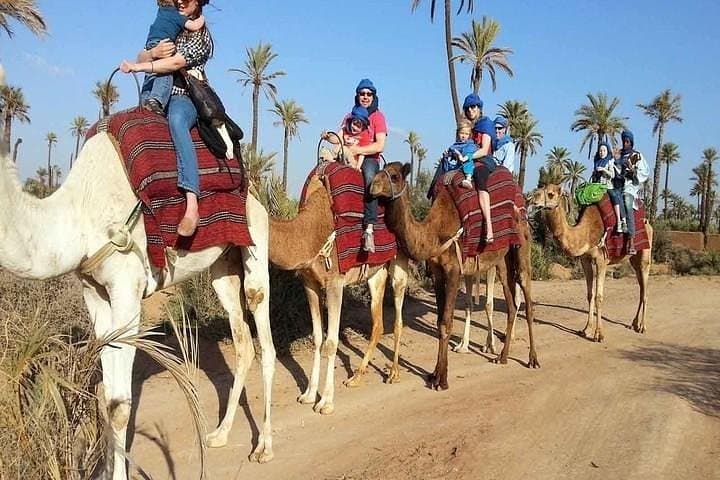
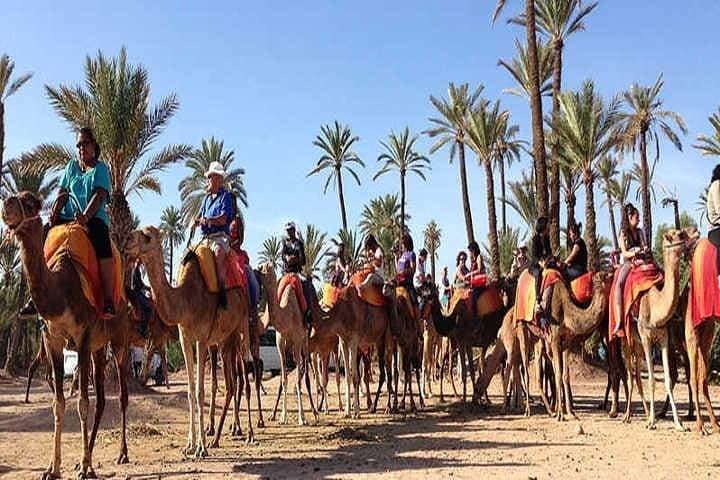
A line of camels moves through long shadows cast by towering date palms, each animal rocking forward as the palm fronds shiver overhead. Travelers step from the pickup van at the edge of the Palmeraie, the city’s irrigated palm oasis stretching east toward the Atlas Mountains; the afternoon light flattens the red earth and makes the trunks glow.
A line of camels moves through long shadows cast by towering date palms, each animal rocking forward as the palm fronds shiver overhead. Travelers step from the pickup van at the edge of the Palmeraie, the city’s irrigated palm oasis stretching east toward the Atlas Mountains; the afternoon light flattens the red earth and makes the trunks glow.
The Palmeraie dates back to the Almoravid period when palms were planted to shade routes and support local agriculture; today the grove is also a living link to caravan routes that once threaded Morocco. Geologically the plain is alluvial—sandy soil and shallow aquifers that keep palms alive with traditional irrigation. Culturally, the ride is short but vivid: guides offer a Tuareg-style scarf for sun protection and a mint tea break, a small ritual of hospitality that underlines Moroccan tea culture.
Practical guidance: expect about an hour on the camel, with another hour or so for transfers and a tea stop—plan 2–3 hours overall. Sun protection and steady shoes matter more than fitness; camels rise and fall in long, slow motions that can unsettle unprepared riders. Bring water, secure loose items for photography, and choose early morning or late afternoon to avoid the heat and get softer light for pictures.
The experience is straightforward and accessible—best for travelers who want a short, atmospheric introduction to Marrakechi palm country without a multi-day trek. Respect irrigation channels and follow the guide’s instructions for mounting, dismounting and tipping the handler.