THE ADVENTURE COLLECTIVE® · Independent discovery and booking for outdoor travel

Walk Princeton’s campus and nearby streets with guides who live and work in town. This two‑hour, three‑mile tour pairs campus landmarks with the homes and hangouts of Einstein, Fitzgerald and other notable residents.
Walk Princeton’s campus and nearby streets with guides who live and work in town. This two‑hour, three‑mile tour pairs campus landmarks with the homes and hangouts of Einstein, Fitzgerald and other notable residents.
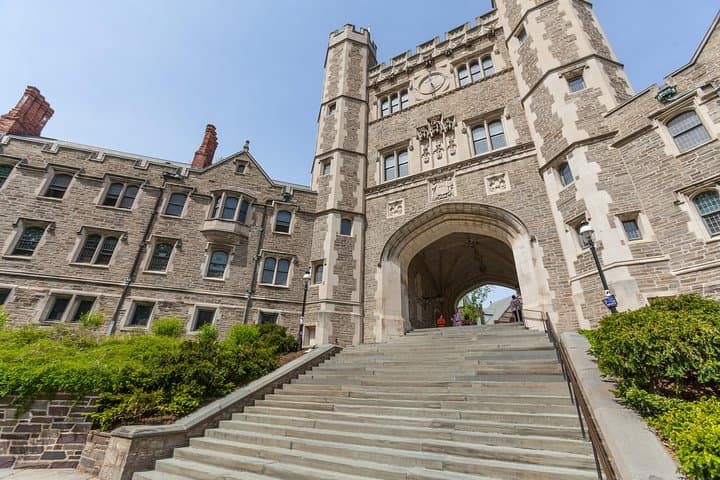
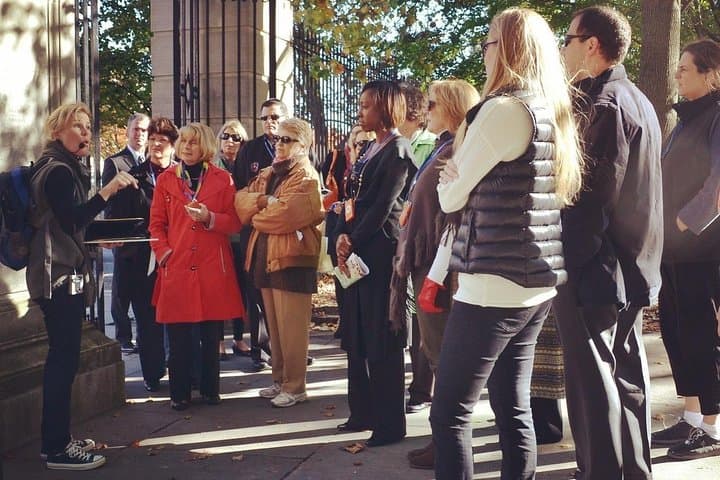
Morning settles over Nassau Street with bicycle bells and the low murmur of students — the guide checks a phone, unfolds a map, and the group moves under plane trees toward Nassau Hall. The walk feels like threading a conversation between brick quad and downtown, where collegiate architecture and small-town storefronts trade stories.
Verified experiences and guided adventures in the surrounding area.
Operated by Princeton Tour Company · Princeton, New Jersey
Morning settles over Nassau Street with bicycle bells and the low murmur of students — the guide checks a phone, unfolds a map, and the group moves under plane trees toward Nassau Hall. The walk feels like threading a conversation between brick quad and downtown, where collegiate architecture and small-town storefronts trade stories.
Princeton's story runs deep: an 18th‑century college campus that shaped American higher education, a downtown reborn in the early 20th century, and a surprising roster of residents from Albert Einstein to F. Scott Fitzgerald. Geologically the town sits on New Jersey's Piedmont, with modest hills, clay-rich soils and streets that reveal the slow shaping of older uplands rather than dramatic peaks.
Culturally, expect collegiate pageantry — chapel bells, alumni plaques, and a bookstore that feels like a local archive. The tour threads campus highlights (Nassau Hall, Princeton Chapel, Prospect Garden) with off-campus addresses and hangouts where writers, statesmen and scientists lived and worked, offering a human map as much as an architectural one.
Practical note: this is a 3‑mile, two‑hour walking experience on paved paths and sidewalks with frequent stops. Wear supportive shoes, bring a refillable water bottle and dress for the forecast; guides recommend arriving 15 minutes early at the Princeton University Store. Public transit, a nearby parking garage (30 Spring Street) and wheelchair access make the route widely attainable. Expect conversational storytelling, photo stops at the Tiger Statue, and a paced walk that balances landmark history with neighborhood anecdotes — ideal for curious travelers wanting an insider view of Princeton.
easy.
2 hours.
Suitable for most fitness levels — participants should be able to walk 3 miles on paved surfaces and stand for short interpretive stops.
The public tour runs approximately two hours and covers about three miles on paved paths and sidewalks with frequent stops.
Public weekend tours begin inside the Princeton University Store at 116 Nassau Street next to Labyrinth Books; arrive 15 minutes early to check in.
Yes — the provider lists the tour as wheelchair accessible, though some historic sites may have limited interior access; check with the operator for specific needs.
Infants and small children can use strollers; service animals are allowed, but pets generally are not recommended on this public walking tour.
Princeton University dates to the mid‑18th century and Nassau Hall played a key role in early American collegiate life; the town later attracted notable residents like Albert Einstein.
Princeton balances historic preservation with modern stewardship — efforts focus on maintaining green spaces and minimizing impacts from foot traffic through designated paths and signage.
Princeton Tour Company operates guided outdoor trips and adventures with an emphasis on safety, stewardship, and memorable experiences.


Morning settles over Nassau Street with bicycle bells and the low murmur of students — the guide checks a phone, unfolds a map, and the group moves under plane trees toward Nassau Hall. The walk feels like threading a conversation between brick quad and downtown, where collegiate architecture and small-town storefronts trade stories.
Morning settles over Nassau Street with bicycle bells and the low murmur of students — the guide checks a phone, unfolds a map, and the group moves under plane trees toward Nassau Hall. The walk feels like threading a conversation between brick quad and downtown, where collegiate architecture and small-town storefronts trade stories.
Princeton's story runs deep: an 18th‑century college campus that shaped American higher education, a downtown reborn in the early 20th century, and a surprising roster of residents from Albert Einstein to F. Scott Fitzgerald. Geologically the town sits on New Jersey's Piedmont, with modest hills, clay-rich soils and streets that reveal the slow shaping of older uplands rather than dramatic peaks.
Culturally, expect collegiate pageantry — chapel bells, alumni plaques, and a bookstore that feels like a local archive. The tour threads campus highlights (Nassau Hall, Princeton Chapel, Prospect Garden) with off-campus addresses and hangouts where writers, statesmen and scientists lived and worked, offering a human map as much as an architectural one.
Practical note: this is a 3‑mile, two‑hour walking experience on paved paths and sidewalks with frequent stops. Wear supportive shoes, bring a refillable water bottle and dress for the forecast; guides recommend arriving 15 minutes early at the Princeton University Store. Public transit, a nearby parking garage (30 Spring Street) and wheelchair access make the route widely attainable. Expect conversational storytelling, photo stops at the Tiger Statue, and a paced walk that balances landmark history with neighborhood anecdotes — ideal for curious travelers wanting an insider view of Princeton.