THE ADVENTURE COLLECTIVE® · Independent discovery and booking for outdoor travel

Spend a long coastal day from Heraklion exploring Preveli’s palm forest, taking a short boat ride from Damnoni, and wandering Rethymnon’s Venetian streets. This full-day trip mixes swimming, short hikes through a limestone gorge, and local tavernas for a grounded taste of southern Crete.
Spend a long coastal day from Heraklion exploring Preveli’s palm forest, taking a short boat ride from Damnoni, and wandering Rethymnon’s Venetian streets. This full-day trip mixes swimming, short hikes through a limestone gorge, and local tavernas for a grounded taste of southern Crete.
A wind-sweetened morning aboard a coastal launch sets the tone: the boat slips past sun-scratched coves, the Libyan Sea pressing coolly against the hull, and the cliffs of southern Crete rise like folded maps. After a short ride from Damnoni, the palm-lined inlet of Preveli appears—an abrupt green throat cut into the island’s stony face, where a small river pushes toward the sea and palms bend as if to welcome swimmers.
Verified experiences and guided adventures in the surrounding area.
Operated by Cretan Odyssey · Preveli (Rethymno), Crete
A wind-sweetened morning aboard a coastal launch sets the tone: the boat slips past sun-scratched coves, the Libyan Sea pressing coolly against the hull, and the cliffs of southern Crete rise like folded maps. After a short ride from Damnoni, the palm-lined inlet of Preveli appears—an abrupt green throat cut into the island’s stony face, where a small river pushes toward the sea and palms bend as if to welcome swimmers.
Geology here is blunt and readable: Miocene limestone and fractured marl have been carved by the Kourtaliotis River into a narrow gorge that funnels water and sediment to the coast, creating the pebble-sand mix that fringes Preveli. The palms (Phoenix theophrasti), a species native to the eastern Mediterranean, survive in this microclimate and give the place its oasis reputation. Nearby, the historic Preveli Monastery—dating to early modern Crete—speaks to the area’s Byzantine and Venetian layers; Rethymnon’s old town later adds Venetian harborside alleys and Ottoman-era echoes to the day.
Practical guidance: the organized day is long (about 11–13 hours) and mixes short walks, a 30-minute boat transfer, swimming windows, and free time in Rethymnon. Expect rocky paths near the river mouth and sun exposure on the beach. Bring sturdy water shoes, a light daypack, reef-friendly sunscreen, and cash for tavernas in Damnoni and Rethymno. Start early to avoid peak afternoon heat; the palms will cool you, but the climb out of the gorge can be sharp. For travelers based in Heraklion, this is a single-day, high-value introduction to Crete’s south coast—part geology lesson, part seaside escape, part cultural walk through a living island history.
moderate.
11–13 hours.
Moderate endurance for a long day: short climbs, some uneven footing and swimming; suitable for most active travelers.
The boat crossing from Damnoni to Preveli is about 30 minutes each way.
Children can join but require supervision near cliffs and water; infant seats are available on buses and GUIDES note moderate fitness is required.
There is free time for lunch at Damnoni where local tavernas serve Greek dishes; bringing snacks is recommended for the bus segments.
Guides manage group transfers and boat embarkation, but swimming is at participants’ own risk—strong swimmers should always take care in open sea conditions.
The area is tied to the historic Preveli Monastery and to Venetian and Ottoman eras visible later in Rethymnon’s port and narrow streets.
The Phoenix theophrasti palms are protected; visitors should stick to marked paths, avoid trampling seedlings and use reef-safe sunscreen to minimize marine impact.
Cretan Odyssey operates guided outdoor trips and adventures with an emphasis on safety, stewardship, and memorable experiences.
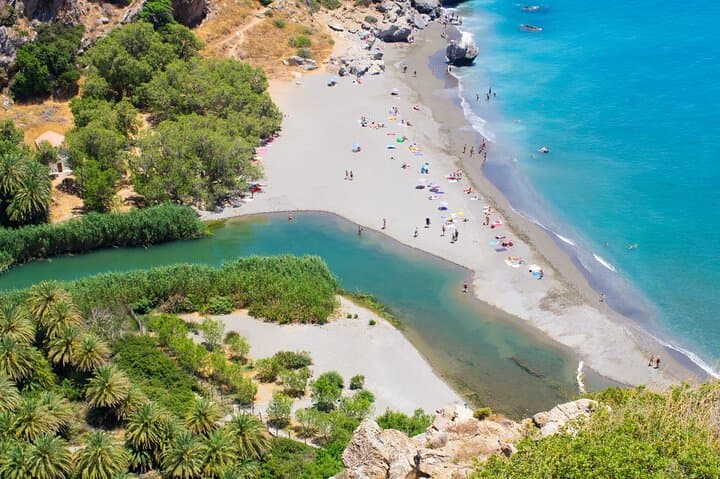
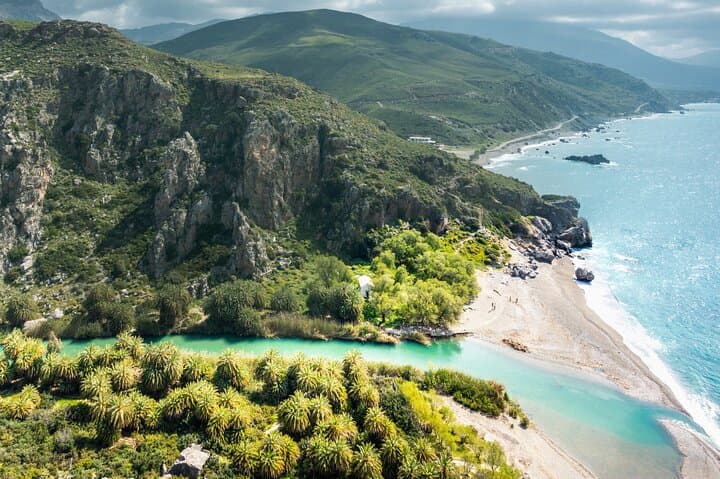
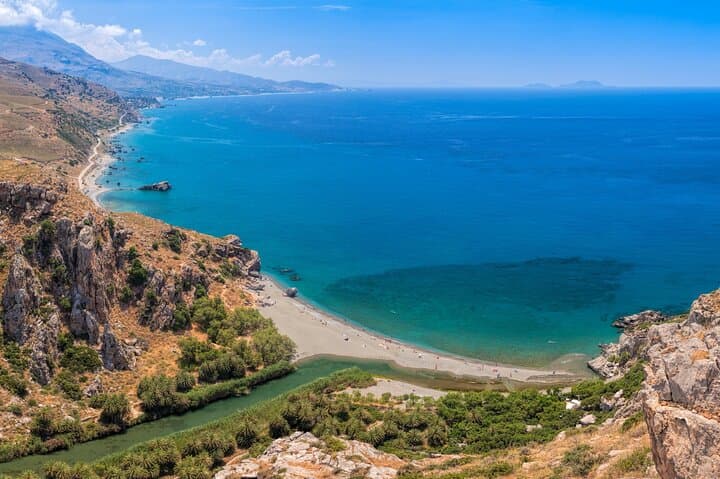
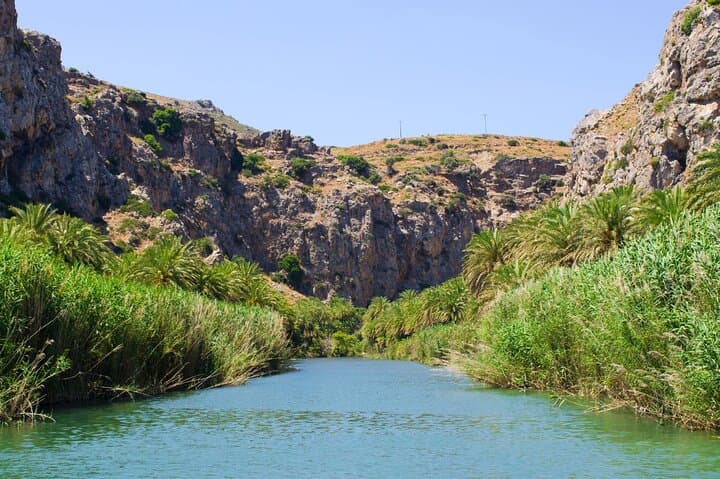
A wind-sweetened morning aboard a coastal launch sets the tone: the boat slips past sun-scratched coves, the Libyan Sea pressing coolly against the hull, and the cliffs of southern Crete rise like folded maps. After a short ride from Damnoni, the palm-lined inlet of Preveli appears—an abrupt green throat cut into the island’s stony face, where a small river pushes toward the sea and palms bend as if to welcome swimmers.
A wind-sweetened morning aboard a coastal launch sets the tone: the boat slips past sun-scratched coves, the Libyan Sea pressing coolly against the hull, and the cliffs of southern Crete rise like folded maps. After a short ride from Damnoni, the palm-lined inlet of Preveli appears—an abrupt green throat cut into the island’s stony face, where a small river pushes toward the sea and palms bend as if to welcome swimmers.
Geology here is blunt and readable: Miocene limestone and fractured marl have been carved by the Kourtaliotis River into a narrow gorge that funnels water and sediment to the coast, creating the pebble-sand mix that fringes Preveli. The palms (Phoenix theophrasti), a species native to the eastern Mediterranean, survive in this microclimate and give the place its oasis reputation. Nearby, the historic Preveli Monastery—dating to early modern Crete—speaks to the area’s Byzantine and Venetian layers; Rethymnon’s old town later adds Venetian harborside alleys and Ottoman-era echoes to the day.
Practical guidance: the organized day is long (about 11–13 hours) and mixes short walks, a 30-minute boat transfer, swimming windows, and free time in Rethymnon. Expect rocky paths near the river mouth and sun exposure on the beach. Bring sturdy water shoes, a light daypack, reef-friendly sunscreen, and cash for tavernas in Damnoni and Rethymno. Start early to avoid peak afternoon heat; the palms will cool you, but the climb out of the gorge can be sharp. For travelers based in Heraklion, this is a single-day, high-value introduction to Crete’s south coast—part geology lesson, part seaside escape, part cultural walk through a living island history.