THE ADVENTURE COLLECTIVE® · Independent discovery and booking for outdoor travel

See Tahiti's highlights on a private half-day drive: the historic Pointe Venus lighthouse, lush waterfalls, garden stops and sacred marae. Perfect for travelers short on time who want guided cultural and natural context.
See Tahiti's highlights on a private half-day drive: the historic Pointe Venus lighthouse, lush waterfalls, garden stops and sacred marae. Perfect for travelers short on time who want guided cultural and natural context.
The van eases along a coastal road, trade winds pushing the air saltward as the Pointe Venus lighthouse rises against a charcoal beach. In four brisk hours the island moves around you: basalt cliffs, green valleys, and a line of stone platforms where ancestors once gathered.
Verified experiences and guided adventures in the surrounding area.
Operated by Marie-Jeanne · Papeete, Tahiti
The van eases along a coastal road, trade winds pushing the air saltward as the Pointe Venus lighthouse rises against a charcoal beach. In four brisk hours the island moves around you: basalt cliffs, green valleys, and a line of stone platforms where ancestors once gathered.
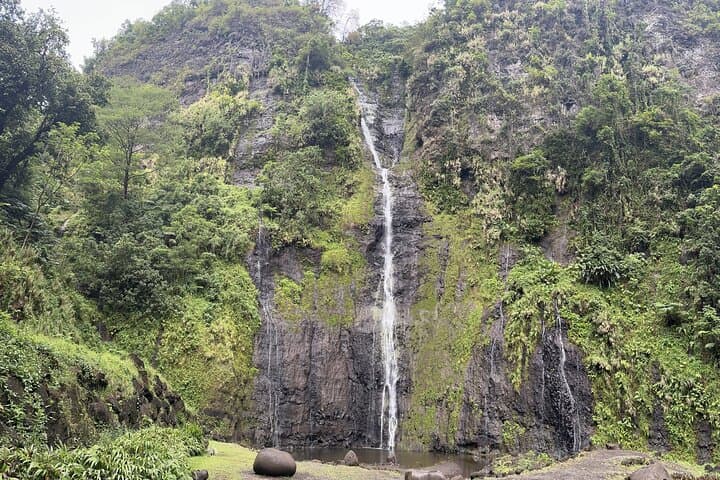
Pointe Venus and Matavai Bay are anchors of Tahiti's recorded history — James Cook stopped here in 1769 to observe the transit of Venus — and the black sand there tells a volcanic story written in basalt and surf. Inland, the Faarumai cascades tumble through a volcanic amphitheater, three falls cutting terraces into old lava flows. Marae — open-air stone temples — mark the spiritual geography of the island; these pre-contact structures are quiet places of memory and ceremony.
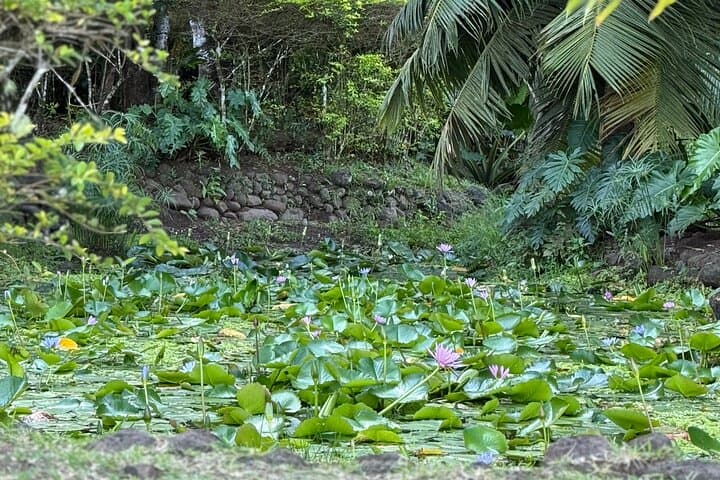
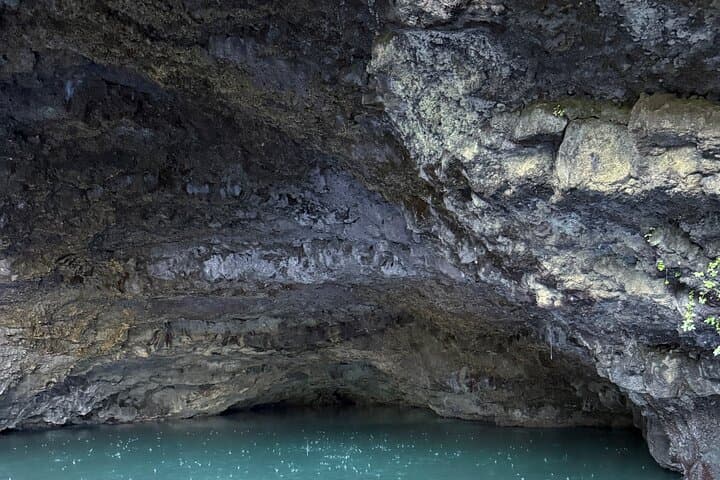
Local culture threads through the stops: guides explain tapa cloth, oral histories and the living role of marae, while gardens like Vaipahi show introduced and native plants that thrive in Tahiti's volcanic soils. Caverns with crystal-clear pools offer a cool counterpoint to the sun—nature daring you to step closer but asking for care.
Practical guidance: expect several short strolls on uneven, sometimes muddy trails; comfortable closed-toe shoes and sun protection are essential. Bring a refillable water bottle, swimwear if you want a quick dip, and a light rain layer during the wet season. Respect sacred sites by following guide directions and taking only photos where allowed. Morning departures dodge the heaviest heat and make for softer light at the lighthouse and waterfalls — ideal for photos and cooler walks.
easy.
4–5 hours.
Suitable for most fitness levels; involves short, low-to-moderate strolls and minimal elevation change.
Yes — this is a private, tailor-made half-day tour designed for a single group with a dedicated local guide and vehicle.
Admission to the listed ancient stone temples (marae) is indicated as included; check with the operator for specifics on any additional paid sites.
Pickup and drop-off options are typically available — provide your pickup point and flight or ship details when booking for confirmation.
The tour is advertised as stroller-accessible and suitable for all fitness levels, but some short walks to waterfalls and caverns may be easier without a stroller.
Pointe Venus is where Captain Cook recorded the 1769 transit of Venus; marae are stone platforms that served as communal and religious centers in pre-contact Polynesia.
Respect cultural sites and fragile coastal features; use guided tours to minimize footprint, avoid removing shells or coral, and carry reusable water to reduce waste.
Marie-Jeanne operates guided outdoor trips and adventures with an emphasis on safety, stewardship, and memorable experiences.
The van eases along a coastal road, trade winds pushing the air saltward as the Pointe Venus lighthouse rises against a charcoal beach. In four brisk hours the island moves around you: basalt cliffs, green valleys, and a line of stone platforms where ancestors once gathered.
The van eases along a coastal road, trade winds pushing the air saltward as the Pointe Venus lighthouse rises against a charcoal beach. In four brisk hours the island moves around you: basalt cliffs, green valleys, and a line of stone platforms where ancestors once gathered.
Pointe Venus and Matavai Bay are anchors of Tahiti's recorded history — James Cook stopped here in 1769 to observe the transit of Venus — and the black sand there tells a volcanic story written in basalt and surf. Inland, the Faarumai cascades tumble through a volcanic amphitheater, three falls cutting terraces into old lava flows. Marae — open-air stone temples — mark the spiritual geography of the island; these pre-contact structures are quiet places of memory and ceremony.
Local culture threads through the stops: guides explain tapa cloth, oral histories and the living role of marae, while gardens like Vaipahi show introduced and native plants that thrive in Tahiti's volcanic soils. Caverns with crystal-clear pools offer a cool counterpoint to the sun—nature daring you to step closer but asking for care.
Practical guidance: expect several short strolls on uneven, sometimes muddy trails; comfortable closed-toe shoes and sun protection are essential. Bring a refillable water bottle, swimwear if you want a quick dip, and a light rain layer during the wet season. Respect sacred sites by following guide directions and taking only photos where allowed. Morning departures dodge the heaviest heat and make for softer light at the lighthouse and waterfalls — ideal for photos and cooler walks.