THE ADVENTURE COLLECTIVE® · Independent discovery and booking for outdoor travel

Walk among 5,000-year-old megaliths, learn how limestone shaped Maltese life, and stand at the rim of the Blue Grotto where sunlight turns seawater an impossible blue. This half-day guided tour combines archaeology, geology and coastal drama with easy logistics for visitors based in Valletta.
Walk among 5,000-year-old megaliths, learn how limestone shaped Maltese life, and stand at the rim of the Blue Grotto where sunlight turns seawater an impossible blue. This half-day guided tour combines archaeology, geology and coastal drama with easy logistics for visitors based in Valletta.
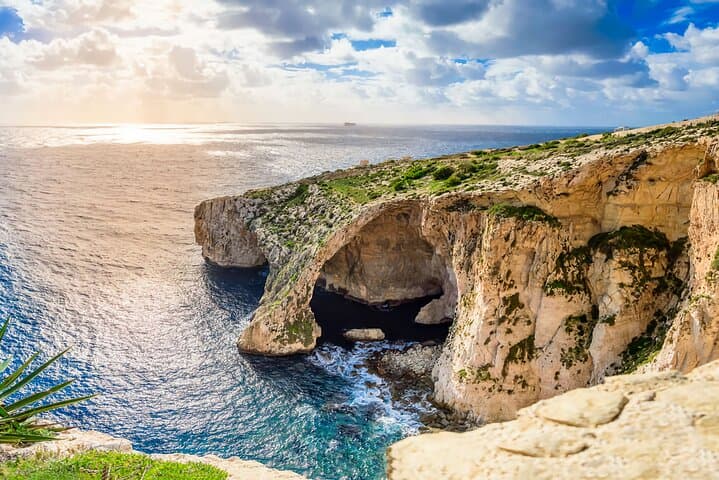
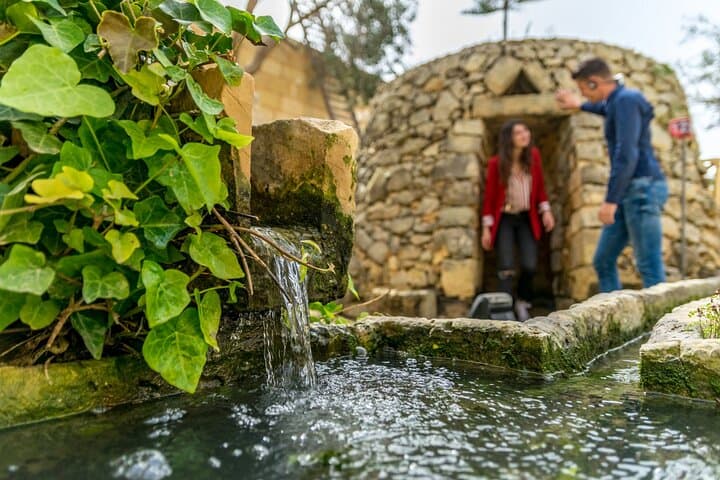
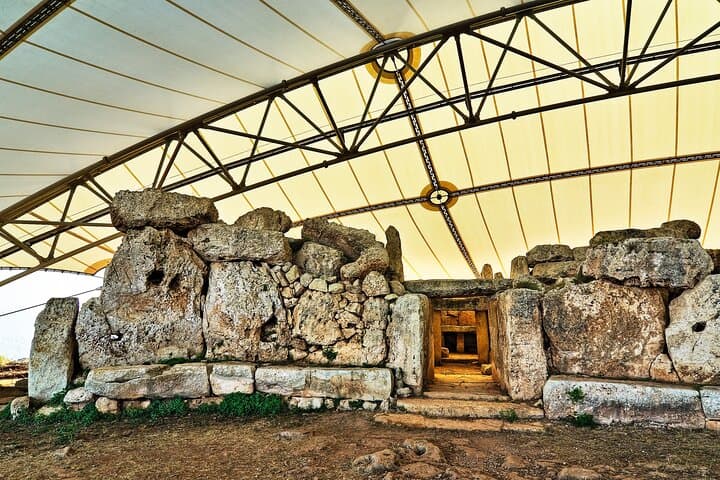
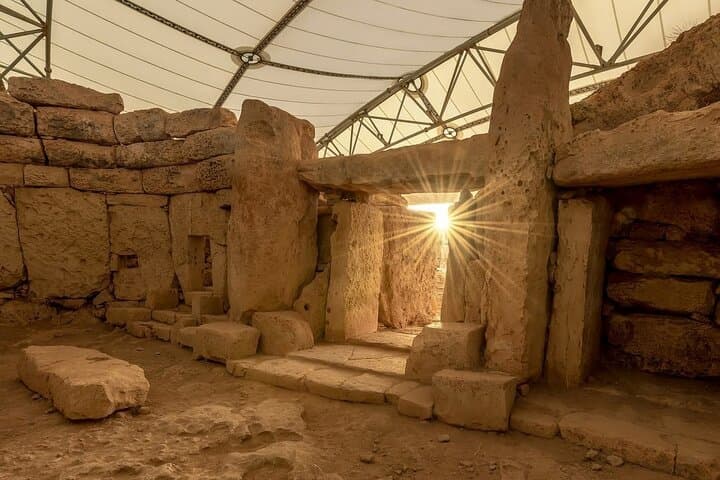
You step off the coach onto wind-buffed limestone and the air smells faintly of sea salt and sun-baked rock. The hilltop at Ħaġar Qim opens before you: a ring of threshold stones that have watched the Mediterranean for five millennia. Later the limestone park folds its stories into a shaded garden walk, and the southern coast’s Blue Grotto pitches its pale-blue mirrors against a dramatic sea‑arch.
Verified experiences and guided adventures in the surrounding area.
Operated by Robert Arrigo & Sons · Qrendi, Malta
You step off the coach onto wind-buffed limestone and the air smells faintly of sea salt and sun-baked rock. The hilltop at Ħaġar Qim opens before you: a ring of threshold stones that have watched the Mediterranean for five millennia. Later the limestone park folds its stories into a shaded garden walk, and the southern coast’s Blue Grotto pitches its pale-blue mirrors against a dramatic sea‑arch.
These sites map Malta’s deep past and its geology. Ħaġar Qim and neighboring Megalithic Temples date to c.3600–3200 BC, built of coralline and globigerina limestone that has preserved carved altars and massive megaliths. Limestone Heritage Park explains quarrying traditions and how stone shaped Maltese life and economy; the Blue Grotto owes its color and cavities to wave-carved chambers and sunlight refracting off submerged caverns.
Culturally, you’ll hear talk of votive offerings, ancient ritual spaces, and the islands’ strategic role between Europe and North Africa. Guides tie archaeology to local villages—Siġġiewi, Qrendi and Żurrieq—and recent conservation efforts to stabilise fragile structures.
Practical notes: the shared tour runs about 3.5–4 hours with coach transfers and fixed-site visits; wear sturdy shoes for uneven temple footing, sun protection for open hilltops and a light layer near the coast. Boat trips into the caves are optional and weather-dependent with a small local fee. Bring water and a camera, and confirm your pick-up location a few days ahead—the operator staggers start times between 8:30–9:15 AM. Expect an accessible, low‑impact outing that pairs archaeology with raw coastal scenery—pack good shoes and curiosity.
easy.
3.5–4 hours.
Suitable for most visitors; requires short walks on uneven ground and standing during guided segments.
No — the grotto boat is optional, paid locally (around €10 for adults, €5 for children) and operates only in favorable weather.
No — the Ħaġar Qim site has uneven ancient surfaces and steps; mobility-impaired travelers should plan accordingly.
Total duration is about 3.5–4 hours and includes pick-up/drop-off from designated meeting points—confirm your pick-up time a few days before the tour.
The tour is guided in the language you booked; occasionally a multilingual guide or translator may be used depending on availability.
Ħaġar Qim is part of Malta’s UNESCO-listed Megalithic Temples, dated to c.3600–3200 BC and among the world’s oldest free‑standing stone structures.
Conservation focuses on stabilising fragile megaliths and managing visitor impact; stick to marked paths and avoid touching carved surfaces to help preserve the sites.
Robert Arrigo & Sons operates guided outdoor trips and adventures with an emphasis on safety, stewardship, and memorable experiences.
You step off the coach onto wind-buffed limestone and the air smells faintly of sea salt and sun-baked rock. The hilltop at Ħaġar Qim opens before you: a ring of threshold stones that have watched the Mediterranean for five millennia. Later the limestone park folds its stories into a shaded garden walk, and the southern coast’s Blue Grotto pitches its pale-blue mirrors against a dramatic sea‑arch.
You step off the coach onto wind-buffed limestone and the air smells faintly of sea salt and sun-baked rock. The hilltop at Ħaġar Qim opens before you: a ring of threshold stones that have watched the Mediterranean for five millennia. Later the limestone park folds its stories into a shaded garden walk, and the southern coast’s Blue Grotto pitches its pale-blue mirrors against a dramatic sea‑arch.
These sites map Malta’s deep past and its geology. Ħaġar Qim and neighboring Megalithic Temples date to c.3600–3200 BC, built of coralline and globigerina limestone that has preserved carved altars and massive megaliths. Limestone Heritage Park explains quarrying traditions and how stone shaped Maltese life and economy; the Blue Grotto owes its color and cavities to wave-carved chambers and sunlight refracting off submerged caverns.
Culturally, you’ll hear talk of votive offerings, ancient ritual spaces, and the islands’ strategic role between Europe and North Africa. Guides tie archaeology to local villages—Siġġiewi, Qrendi and Żurrieq—and recent conservation efforts to stabilise fragile structures.
Practical notes: the shared tour runs about 3.5–4 hours with coach transfers and fixed-site visits; wear sturdy shoes for uneven temple footing, sun protection for open hilltops and a light layer near the coast. Boat trips into the caves are optional and weather-dependent with a small local fee. Bring water and a camera, and confirm your pick-up location a few days ahead—the operator staggers start times between 8:30–9:15 AM. Expect an accessible, low‑impact outing that pairs archaeology with raw coastal scenery—pack good shoes and curiosity.