THE ADVENTURE COLLECTIVE® · Independent discovery and booking for outdoor travel

A private full‑day circuit from Siem Reap that links three remote Khmer sites—Preah Vihear, Koh Ker and Beng Mealea—across jungle and escarpment. Expect long drives, uneven stonework, and dramatic cliff-top vistas paired with close-up cultural encounters.
A private full‑day circuit from Siem Reap that links three remote Khmer sites—Preah Vihear, Koh Ker and Beng Mealea—across jungle and escarpment. Expect long drives, uneven stonework, and dramatic cliff-top vistas paired with close-up cultural encounters.
You leave Siem Reap before dawn, the air cooling as rice paddies slide past the window and the road narrows into red-dust ribbon through low jungle. After an hour the forest closes in and stone emerges—blocks cut and stacked centuries ago, now mottled with moss and threaded by tree roots that seem to hold history together.
Verified experiences and guided adventures in the surrounding area.
Operated by Asia Voyage Tour · Siem Reap, Siem Reap Province
You leave Siem Reap before dawn, the air cooling as rice paddies slide past the window and the road narrows into red-dust ribbon through low jungle. After an hour the forest closes in and stone emerges—blocks cut and stacked centuries ago, now mottled with moss and threaded by tree roots that seem to hold history together.
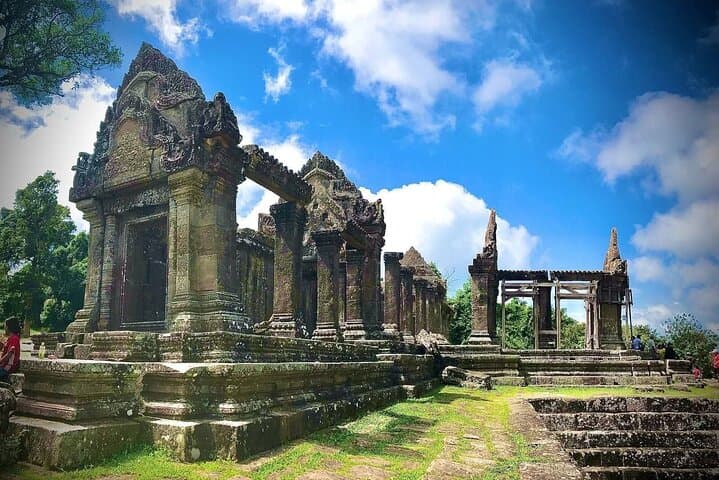
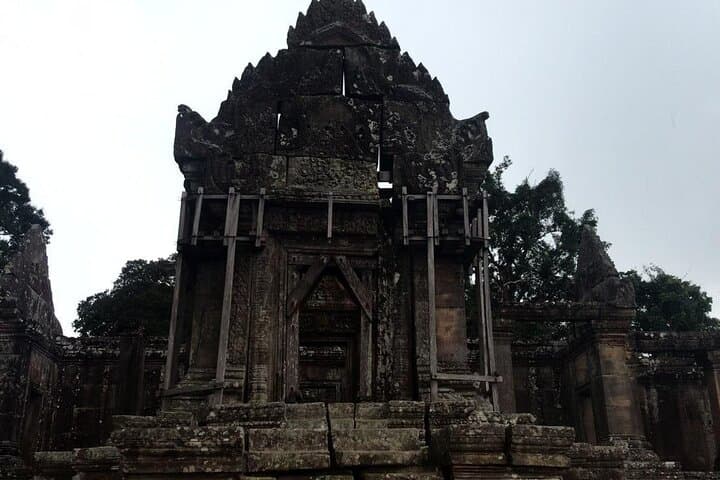
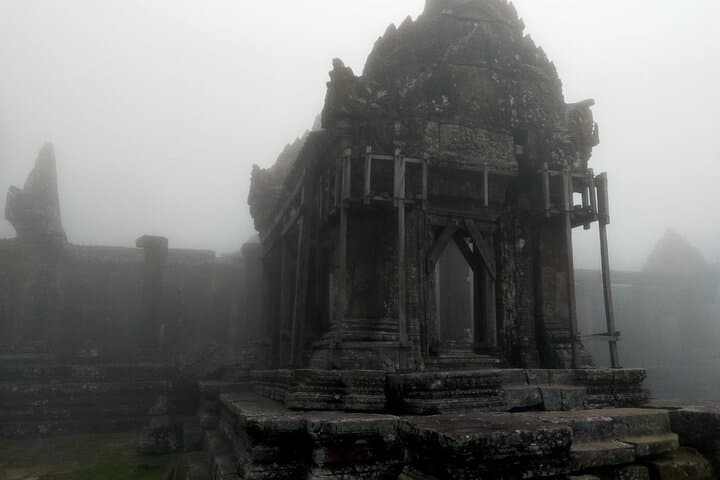
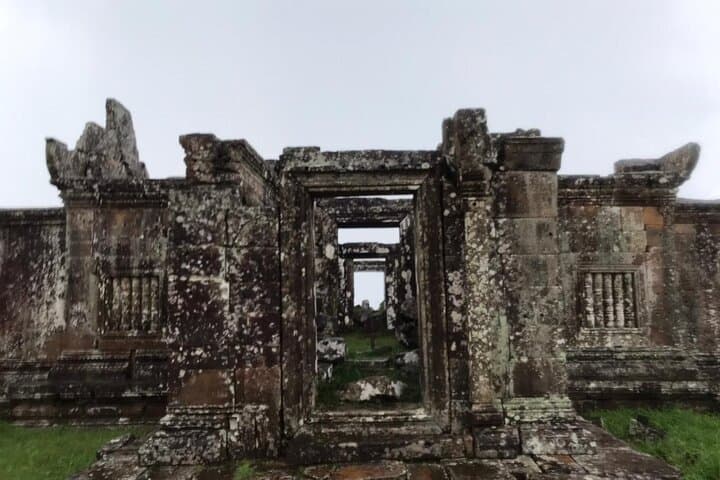
This route strings three very different Khmer works: Koh Ker, the short-lived 10th‑century capital with its stepped Prasat Thom pyramid; Preah Vihear, a cliff‑top Hindu sanctuary perched on the Dângrêk escarpment and crowned at roughly 525 m (1,700 ft); and Beng Mealea, a sprawling, half‑reclaimed temple whose collapsed galleries recall Angkor Wat on a smaller scale. The temples are primarily sandstone structures carved during the height of the Khmer Empire; the Dângrêk range provides the dramatic limestone-and-sandstone backdrop.
Villages and markets line the way—women carrying woven baskets, water buffalo grazing—offering a quick look at rural life outside the temple complexes. Expect uneven stone steps, short jungle trails and dusty access roads; entrances typically require separate tickets and small onsite fees.
Practical notes: this is a long day—about 9–10 hours including roughly four hours of roundtrip driving—so start early, carry 2–3 liters of water, sun protection, and modest clothing for temple entry. Bring local currency for entrance fees and small purchases. Footwear with good traction matters: many paths are slippery when wet and steps are irregular. Respect restricted areas and local customs; these ruins are fragile and best explored with a guide who can point out carvings, alignments and the quieter corners where the past still speaks.
moderate.
9–10 hours.
Moderate fitness; comfortable walking 2–5 miles over uneven terrain, climbing stone steps and short trails.
No; the tour price typically excludes national park or temple entrance fees—carry local currency to pay onsite.
Sites lie roughly 75 miles (120 km) northeast of Siem Reap; expect about four hours roundtrip driving between distant points.
Expect moderate walking with irregular stone steps and short trails; most routes are not technically difficult but require steady footing.
The dry season (November–April) offers cooler mornings and more stable roads; the wet season can make dirt access roads slippery.
These sites span the power and ambition of the Khmer Empire—Koh Ker was briefly a royal capital under Jayavarman IV in the 10th century and Preah Vihear served as a sacred cliff‑top sanctuary; Beng Mealea shares architectural motifs with Angkor Wat.
Sandstone carvings and root‑tangled galleries are fragile—stick to paths, avoid climbing unstable structures, and support local conservation efforts by using licensed guides.
Asia Voyage Tour operates guided outdoor trips and adventures with an emphasis on safety, stewardship, and memorable experiences.
You leave Siem Reap before dawn, the air cooling as rice paddies slide past the window and the road narrows into red-dust ribbon through low jungle. After an hour the forest closes in and stone emerges—blocks cut and stacked centuries ago, now mottled with moss and threaded by tree roots that seem to hold history together.
You leave Siem Reap before dawn, the air cooling as rice paddies slide past the window and the road narrows into red-dust ribbon through low jungle. After an hour the forest closes in and stone emerges—blocks cut and stacked centuries ago, now mottled with moss and threaded by tree roots that seem to hold history together.
This route strings three very different Khmer works: Koh Ker, the short-lived 10th‑century capital with its stepped Prasat Thom pyramid; Preah Vihear, a cliff‑top Hindu sanctuary perched on the Dângrêk escarpment and crowned at roughly 525 m (1,700 ft); and Beng Mealea, a sprawling, half‑reclaimed temple whose collapsed galleries recall Angkor Wat on a smaller scale. The temples are primarily sandstone structures carved during the height of the Khmer Empire; the Dângrêk range provides the dramatic limestone-and-sandstone backdrop.
Villages and markets line the way—women carrying woven baskets, water buffalo grazing—offering a quick look at rural life outside the temple complexes. Expect uneven stone steps, short jungle trails and dusty access roads; entrances typically require separate tickets and small onsite fees.
Practical notes: this is a long day—about 9–10 hours including roughly four hours of roundtrip driving—so start early, carry 2–3 liters of water, sun protection, and modest clothing for temple entry. Bring local currency for entrance fees and small purchases. Footwear with good traction matters: many paths are slippery when wet and steps are irregular. Respect restricted areas and local customs; these ruins are fragile and best explored with a guide who can point out carvings, alignments and the quieter corners where the past still speaks.