THE ADVENTURE COLLECTIVE® · Independent discovery and booking for outdoor travel

A two-day trek to Prashar Lake reaches 2,730 m for lakeside camping, sunrise views of the Greater Himalaya and a centuries-old temple. This guide covers what to expect on the 9 km approach, practical gear, and local insights to plan your trip.
A two-day trek to Prashar Lake reaches 2,730 m for lakeside camping, sunrise views of the Greater Himalaya and a centuries-old temple. This guide covers what to expect on the 9 km approach, practical gear, and local insights to plan your trip.
A thin cold wind moves across the water as you arrive at Prashar Lake; the temple’s wooden spire cuts a simple silhouette against a half-lit sky. Overnight camping at the lake puts you within arm’s reach of a high-altitude basin ringed by ridgelines and distant snow-clad summits. On clear mornings the lake mirrors the Himalaya and an unexpected floating island shifts, brushing the surface like a small green boat.
Verified experiences and guided adventures in the surrounding area.
Operated by Tripills · Mandi, Himachal Pradesh
A thin cold wind moves across the water as you arrive at Prashar Lake; the temple’s wooden spire cuts a simple silhouette against a half-lit sky. Overnight camping at the lake puts you within arm’s reach of a high-altitude basin ringed by ridgelines and distant snow-clad summits. On clear mornings the lake mirrors the Himalaya and an unexpected floating island shifts, brushing the surface like a small green boat.
The site is part spiritual site and part geological curiosity: a 13th-century temple reputedly built from a single tree stands beside a lake said to hold unknown depths. The basin sits at about 2,730 m, carved by millennia of glacial and fluvial activity and connected to local legends about sage Prashar. The surrounding villages—Jwalapur and Panarsa—retain hill-culture rhythms: small guesthouses, wood-fired food, and porters familiar with the route.
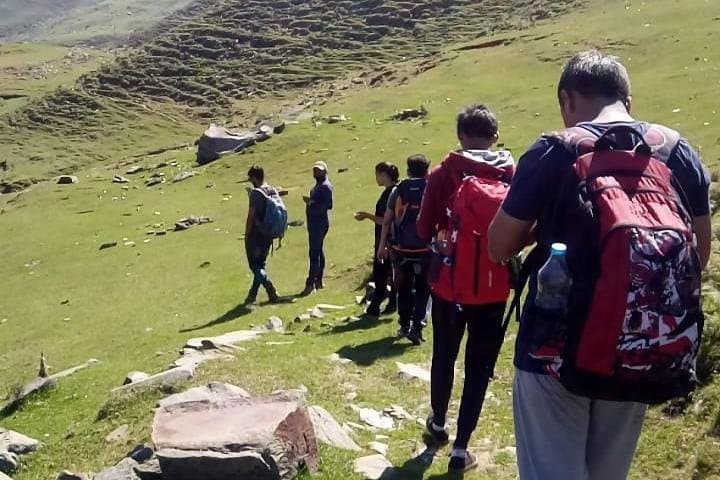
Practical route notes: the standard program approaches from Jwalapur with a 9 km ascent each way, moderate gradients and mostly singletrack through pastures and rhododendron belts. Expect loose scree near the lakeshore and short steep pitches that slow pace; altitude can make easy distances feel harder. Bring layers for cold evenings, a headlamp for campsite tasks, and extra water or a filter; mobile service is intermittent.
Timing matters: sunrise reveals the best mountain views, while late afternoon clouds can roll in fast. Respect local customs at the temple, pack out waste, and allow extra time for photography and slow acclimatization.
moderate.
2 days.
Suitable for hikers with regular cardio base; be prepared for sustained uphill walking at altitude.
The route is moderate: steady uphill grades, short steep sections, and uneven surfaces; average hikers in reasonable shape can complete it with regular breaks.
Tents, sleeping bags and mattresses are often included by local operators—confirm inclusions when you book and bring a sleeping liner for hygiene.
No special permit is generally required for the lake trek, but check with your operator for local rules or seasonal restrictions.
Late spring to early autumn offers the most reliable trail conditions and clearer mountain views; winters are snowy and require mountaineering experience.
Prashar Lake and its wooden temple are tied to local religious traditions around sage Prashar; the temple structure and rituals reflect centuries of hill-culture continuity.
Visitors should pack out trash, stick to established trails to protect fragile alpine meadows, and avoid feeding wildlife to reduce human-wildlife conflicts.
Tripills operates guided outdoor trips and adventures with an emphasis on safety, stewardship, and memorable experiences.
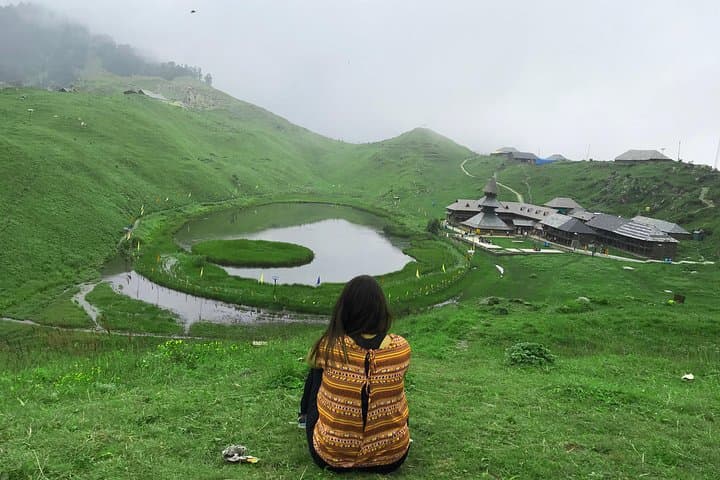
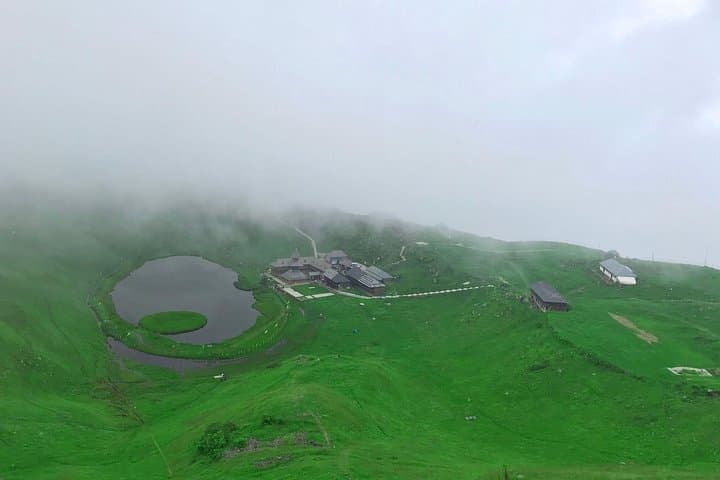
A thin cold wind moves across the water as you arrive at Prashar Lake; the temple’s wooden spire cuts a simple silhouette against a half-lit sky. Overnight camping at the lake puts you within arm’s reach of a high-altitude basin ringed by ridgelines and distant snow-clad summits. On clear mornings the lake mirrors the Himalaya and an unexpected floating island shifts, brushing the surface like a small green boat.
A thin cold wind moves across the water as you arrive at Prashar Lake; the temple’s wooden spire cuts a simple silhouette against a half-lit sky. Overnight camping at the lake puts you within arm’s reach of a high-altitude basin ringed by ridgelines and distant snow-clad summits. On clear mornings the lake mirrors the Himalaya and an unexpected floating island shifts, brushing the surface like a small green boat.
The site is part spiritual site and part geological curiosity: a 13th-century temple reputedly built from a single tree stands beside a lake said to hold unknown depths. The basin sits at about 2,730 m, carved by millennia of glacial and fluvial activity and connected to local legends about sage Prashar. The surrounding villages—Jwalapur and Panarsa—retain hill-culture rhythms: small guesthouses, wood-fired food, and porters familiar with the route.
Practical route notes: the standard program approaches from Jwalapur with a 9 km ascent each way, moderate gradients and mostly singletrack through pastures and rhododendron belts. Expect loose scree near the lakeshore and short steep pitches that slow pace; altitude can make easy distances feel harder. Bring layers for cold evenings, a headlamp for campsite tasks, and extra water or a filter; mobile service is intermittent.
Timing matters: sunrise reveals the best mountain views, while late afternoon clouds can roll in fast. Respect local customs at the temple, pack out waste, and allow extra time for photography and slow acclimatization.