THE ADVENTURE COLLECTIVE® · Independent discovery and booking for outdoor travel

Explore Praia’s Plateau on a focused two-hour guided walk that combines colonial architecture, the vibrant Sucupira market, and ocean views at Gamboa Beach. Ideal for first-time visitors wanting a practical, culture-rich introduction to Cape Verde’s capital.
Explore Praia’s Plateau on a focused two-hour guided walk that combines colonial architecture, the vibrant Sucupira market, and ocean views at Gamboa Beach. Ideal for first-time visitors wanting a practical, culture-rich introduction to Cape Verde’s capital.
A warm Atlantic breeze pushes across the Plateau as the tour sets off — tiled streets bright under the sun, colonial facades standing like old records of trade and migration. Walkers move through the city center, past a presidential palace and military barracks that keep one eye on the harbor, while the distant murmur of Gamboa Beach reminds you the ocean is never far.
Verified experiences and guided adventures in the surrounding area.
Operated by Kapverden Tours · Praia, Santiago
A warm Atlantic breeze pushes across the Plateau as the tour sets off — tiled streets bright under the sun, colonial facades standing like old records of trade and migration. Walkers move through the city center, past a presidential palace and military barracks that keep one eye on the harbor, while the distant murmur of Gamboa Beach reminds you the ocean is never far.
Praia is Santiago’s political and economic heart. The Plateau neighborhood grew during Portuguese colonial rule and still holds the grid of administrative buildings, a central square, and a cathedral whose stone faces reflect the city’s layered history. Geologically, Santiago is volcanic; the island’s compact ridges and black-rock shores shape beaches and viewpoints that look out over the Atlantic shipping lanes.
Culturally the city hums — markets brim with tropical fruit and bright cloth, street vendors call, and Creole rhythms filter from cafés. The Sucupira (municipal) market is the most African in character: dense, colorful, and excellent for small souvenirs and people-watching. Monuments and an 18th-century barracks point toward Praia’s strategic role in colonial defense and maritime routes.
In practical terms, this is a walking tour of about two hours on mostly paved streets with brief standing stops. Wear sturdy walking shoes, bring sun protection, and carry small change for market purchases. Morning or late-afternoon departures minimize heat and maximize light for photos. Guide commentary often includes architecture, local everyday life, and suggestions for nearby cafés — a compact orientation for first-time visitors to Praia.
easy.
2 hours.
Suitable for most fitness levels; requires the ability to walk for ~90 minutes with brief standing stops
The guided tour lasts about two hours and covers the Plateau, market, key colonial buildings, and viewpoints over Gamboa Beach.
Yes; the tour is rated easy and is suitable for all fitness levels, though participants should be able to walk for up to 90 minutes with short breaks.
This walking tour focuses on public spaces and markets; admission fees are generally not required unless you choose to enter a paid museum or site independently.
Yes—the Sucupira municipal market is a highlight for local crafts, textiles, and food; bring cash for purchases.
Praia’s Plateau developed as the colonial administrative center on Santiago and still preserves 19th- and early-20th-century civic architecture that reflects its role in Atlantic trade routes.
Cape Verde faces water scarcity and waste-management challenges; travelers can help by minimizing bottled-water use, disposing of litter properly, and supporting local businesses that follow sustainable practices.
Kapverden Tours operates guided outdoor trips and adventures with an emphasis on safety, stewardship, and memorable experiences.
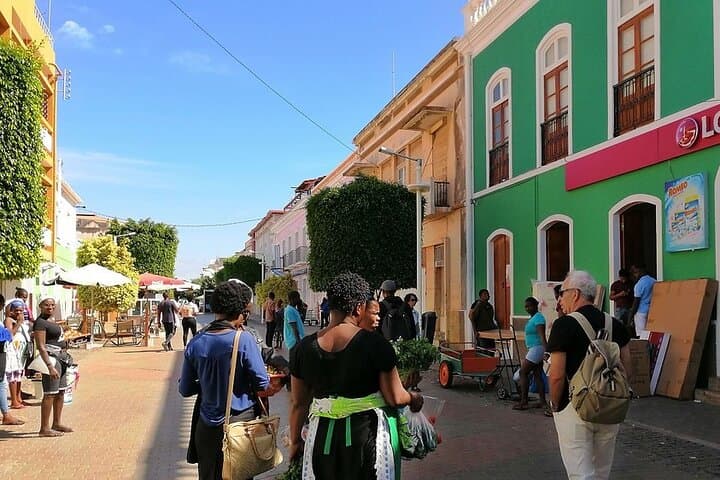

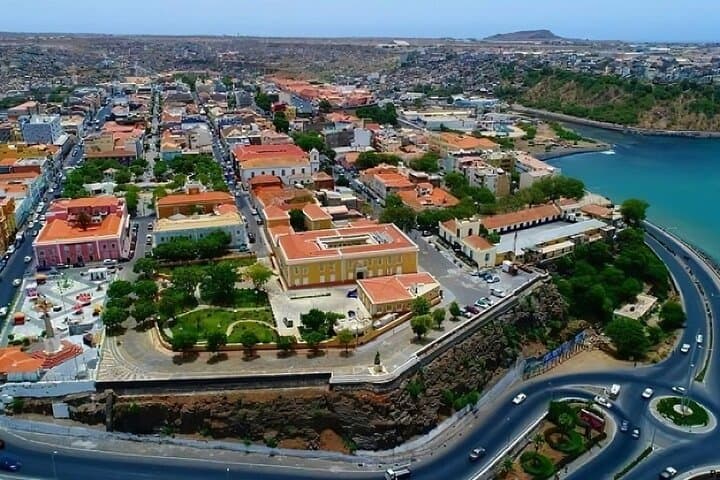

A warm Atlantic breeze pushes across the Plateau as the tour sets off — tiled streets bright under the sun, colonial facades standing like old records of trade and migration. Walkers move through the city center, past a presidential palace and military barracks that keep one eye on the harbor, while the distant murmur of Gamboa Beach reminds you the ocean is never far.
A warm Atlantic breeze pushes across the Plateau as the tour sets off — tiled streets bright under the sun, colonial facades standing like old records of trade and migration. Walkers move through the city center, past a presidential palace and military barracks that keep one eye on the harbor, while the distant murmur of Gamboa Beach reminds you the ocean is never far.
Praia is Santiago’s political and economic heart. The Plateau neighborhood grew during Portuguese colonial rule and still holds the grid of administrative buildings, a central square, and a cathedral whose stone faces reflect the city’s layered history. Geologically, Santiago is volcanic; the island’s compact ridges and black-rock shores shape beaches and viewpoints that look out over the Atlantic shipping lanes.
Culturally the city hums — markets brim with tropical fruit and bright cloth, street vendors call, and Creole rhythms filter from cafés. The Sucupira (municipal) market is the most African in character: dense, colorful, and excellent for small souvenirs and people-watching. Monuments and an 18th-century barracks point toward Praia’s strategic role in colonial defense and maritime routes.
In practical terms, this is a walking tour of about two hours on mostly paved streets with brief standing stops. Wear sturdy walking shoes, bring sun protection, and carry small change for market purchases. Morning or late-afternoon departures minimize heat and maximize light for photos. Guide commentary often includes architecture, local everyday life, and suggestions for nearby cafés — a compact orientation for first-time visitors to Praia.