THE ADVENTURE COLLECTIVE® · Independent discovery and booking for outdoor travel

Explore Prague’s lesser‑seen layers on a 3–4 hour guided route from a 16th‑century alchemy lab to Vyšehrad’s ramparts and the sweep of Prague Castle. Expect stone steps, secret passages, and stories that mix history with legend.
Explore Prague’s lesser‑seen layers on a 3–4 hour guided route from a 16th‑century alchemy lab to Vyšehrad’s ramparts and the sweep of Prague Castle. Expect stone steps, secret passages, and stories that mix history with legend.
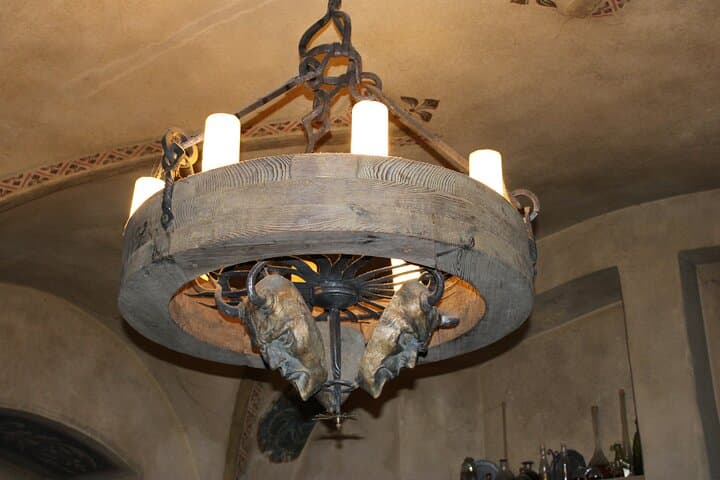
You step out of an air‑conditioned minibus into a narrow Old Town lane and descend a set of stone steps into a dim room that smells faintly of wood smoke and old metals — the Speculum Alchemiae. For the next 3–4 hours the city rearranges itself into layers: cobbled streets above, medieval laboratories below, a fortified hill with cathedral spires ahead.
Verified experiences and guided adventures in the surrounding area.
Operated by The Magical Triangle Tour Prague · Prague, Prague
You step out of an air‑conditioned minibus into a narrow Old Town lane and descend a set of stone steps into a dim room that smells faintly of wood smoke and old metals — the Speculum Alchemiae. For the next 3–4 hours the city rearranges itself into layers: cobbled streets above, medieval laboratories below, a fortified hill with cathedral spires ahead.
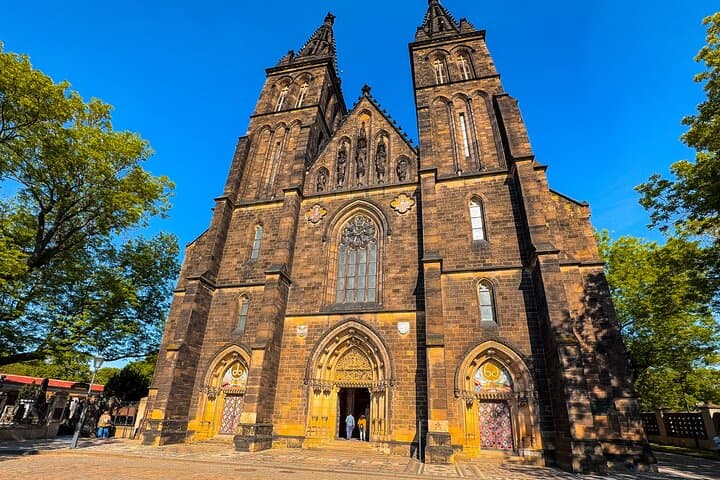
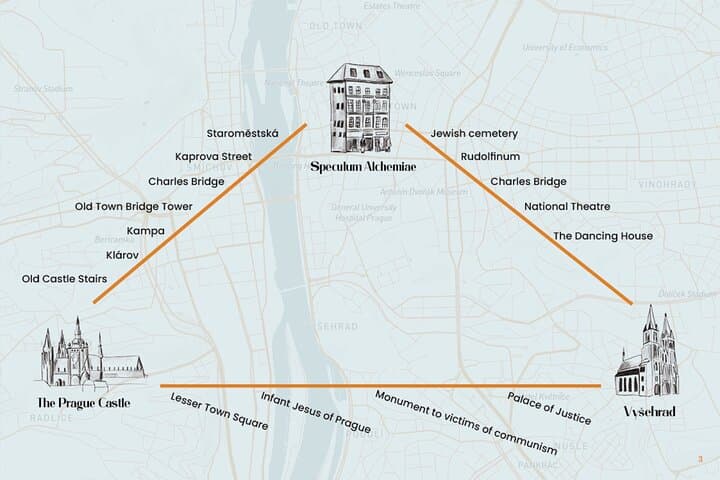
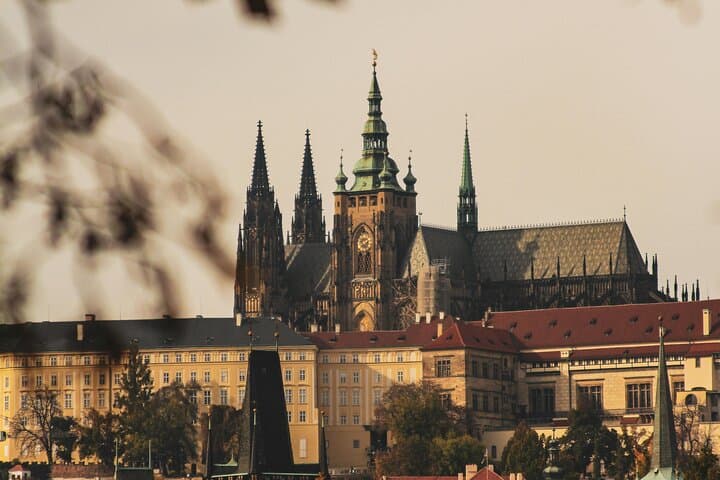
The tour threads three distinct chapters of Prague history. In the alchemical lab you encounter 16th‑century apparatus and stories of practitioners chasing the Philosopher’s Stone; the chemistry is real, the mythology persistent. Vyšehrad, set on a basalt promontory above the Vltava, offers exposed bedrock, ancient ramparts, and the graves of national figures — a place where national legend and landscape meet. Prague Castle crowns the route: St. Vitus’s Gothic vaults, the Old Royal Palace, and Golden Lane reveal shifts in power, art, and urban development across centuries.
Prague’s geology (granitic and basaltic outcrops) and its location on the Vltava shaped defense and settlement patterns; its architecture shows Romanesque, Gothic, Baroque and modern layers. Local guides tie archival fact to folklore — protective symbols carved into doorways, esoteric patronage, and the city’s long relationship with craft and science.
Practical edge: expect moderate walking on uneven stone, multiple sets of stairs, and brief indoor museum time. The experience includes museum entry and transport; cameras are allowed in most places but check with your guide. Wear supportive shoes, carry water, and allow time before or after for exploring nearby cafés or the castle gardens.
easy.
3–4 hours.
Suitable for most fitness levels; requires standing and walking on uneven ground and stairs.
The experience runs about 3–4 hours and includes transport between sites and guided walking segments.
Yes — entry to the Speculum Alchemiae Museum is included; other site entries referenced in the itinerary are covered per the tour description.
The tour is rated physically easy but includes stairs and uneven surfaces; infants must sit on laps and some locations have limited accessibility.
Large bags are impractical; bring a small daypack—secure storage isn’t provided on site during the walking segments.
Vyšehrad predates much of Prague’s later expansion and served as an early defensive and ceremonial site; Prague Castle evolved over centuries into Europe’s largest ancient castle complex.
Sites are protected cultural monuments—stick to paths, avoid touching fragile stonework, and follow guide instructions to minimize wear on historic interiors.
The Magical Triangle Tour Prague operates guided outdoor trips and adventures with an emphasis on safety, stewardship, and memorable experiences.
You step out of an air‑conditioned minibus into a narrow Old Town lane and descend a set of stone steps into a dim room that smells faintly of wood smoke and old metals — the Speculum Alchemiae. For the next 3–4 hours the city rearranges itself into layers: cobbled streets above, medieval laboratories below, a fortified hill with cathedral spires ahead.
You step out of an air‑conditioned minibus into a narrow Old Town lane and descend a set of stone steps into a dim room that smells faintly of wood smoke and old metals — the Speculum Alchemiae. For the next 3–4 hours the city rearranges itself into layers: cobbled streets above, medieval laboratories below, a fortified hill with cathedral spires ahead.
The tour threads three distinct chapters of Prague history. In the alchemical lab you encounter 16th‑century apparatus and stories of practitioners chasing the Philosopher’s Stone; the chemistry is real, the mythology persistent. Vyšehrad, set on a basalt promontory above the Vltava, offers exposed bedrock, ancient ramparts, and the graves of national figures — a place where national legend and landscape meet. Prague Castle crowns the route: St. Vitus’s Gothic vaults, the Old Royal Palace, and Golden Lane reveal shifts in power, art, and urban development across centuries.
Prague’s geology (granitic and basaltic outcrops) and its location on the Vltava shaped defense and settlement patterns; its architecture shows Romanesque, Gothic, Baroque and modern layers. Local guides tie archival fact to folklore — protective symbols carved into doorways, esoteric patronage, and the city’s long relationship with craft and science.
Practical edge: expect moderate walking on uneven stone, multiple sets of stairs, and brief indoor museum time. The experience includes museum entry and transport; cameras are allowed in most places but check with your guide. Wear supportive shoes, carry water, and allow time before or after for exploring nearby cafés or the castle gardens.