THE ADVENTURE COLLECTIVE® · Independent discovery and booking for outdoor travel

This full‑day excursion from Prague brings you to Terezín’s Big and Small Fortresses—sites of wartime incarceration, propaganda displays, and deep historical testimony. Expect a sober, informative tour with uneven surfaces and emotionally powerful exhibits.
This full‑day excursion from Prague brings you to Terezín’s Big and Small Fortresses—sites of wartime incarceration, propaganda displays, and deep historical testimony. Expect a sober, informative tour with uneven surfaces and emotionally powerful exhibits.
A cold wind moves across the low ramparts as visitors step from the small bus park into a place that asks for close attention rather than spectacle. The Big Fortress—an 18th‑century military enclosure ordered by Emperor Josef II—opens with broad stone courtyards, austere barracks and the heavy silence of rooms repurposed into exhibits. In the Small Fortress, once a Gestapo prison, the walls carry names and dates that make the past feel immediate.
Verified experiences and guided adventures in the surrounding area.
Operated by I Love Praag · Terezín, Central Bohemian Region
A cold wind moves across the low ramparts as visitors step from the small bus park into a place that asks for close attention rather than spectacle. The Big Fortress—an 18th‑century military enclosure ordered by Emperor Josef II—opens with broad stone courtyards, austere barracks and the heavy silence of rooms repurposed into exhibits. In the Small Fortress, once a Gestapo prison, the walls carry names and dates that make the past feel immediate.
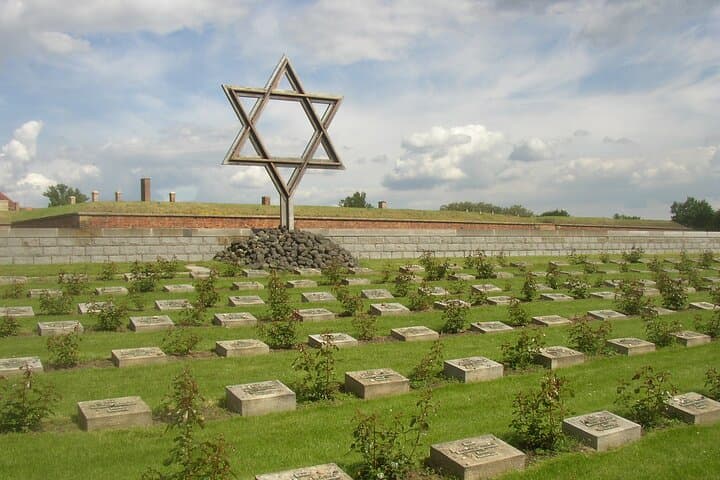
Terezín’s wartime role was complex: administered as a “model ghetto” for propaganda while serving as a transit and collection point. Around 60,000 Jews passed through the Big Fortress area and roughly 34,000 died from disease, malnutrition and deportation. Beneath the town lie reports of roughly 15 kilometers of service tunnels and casemates, and the National Cemetery holds 2,386 marked graves—each a reminder of human cost.
The visit balances quiet observation with concrete learning: museum panels, prisoner records, children’s drawings and the preserved cellblocks of the Small Fortress. Geologically the site sits on low sedimentary plains; terrain is mostly paved or packed earth with cobbles and steps. Culturally, Terezín is both a local memorial and a national site of memory—expect guided interpretation that frames facts with testimony.
Practical guidance: allow a full day (the standard excursion runs about six hours including transport from Prague, roughly 60–70 km each way), wear closed shoes for cobbles and stairs, bring water and a light jacket for exposed ramparts, and prepare for emotionally heavy exhibits. Photography rules and quiet conduct vary by building—follow signage and guide instructions.
easy.
6 hours.
Suitable for general fitness; involves standing and walking on uneven ground for several hours.
The full experience runs about six hours including transport; travel time is roughly 60–70 km each way depending on route and traffic.
Admission fees are included and the itinerary lists stops at the Big Fortress Ghetto Museum and the Small Fortress with guided interpretation.
Parts of the fortress have cobbles, steps and uneven surfaces; some museum areas may have limited wheelchair access—contact the operator for detailed accessibility options.
Younger visitors can attend, but the content is heavy and may be distressing; parental discretion is advised and some exhibits are not recommended for very young children.
Built as an 18th‑century fortress under Emperor Josef II, Terezín was repurposed by the Nazis as a ghetto and transit camp where tens of thousands passed through during World War II.
The site is maintained as a national memorial—follow marked routes, avoid touching artifacts, and support preservation by adhering to curator guidance.
I Love Praag operates guided outdoor trips and adventures with an emphasis on safety, stewardship, and memorable experiences.
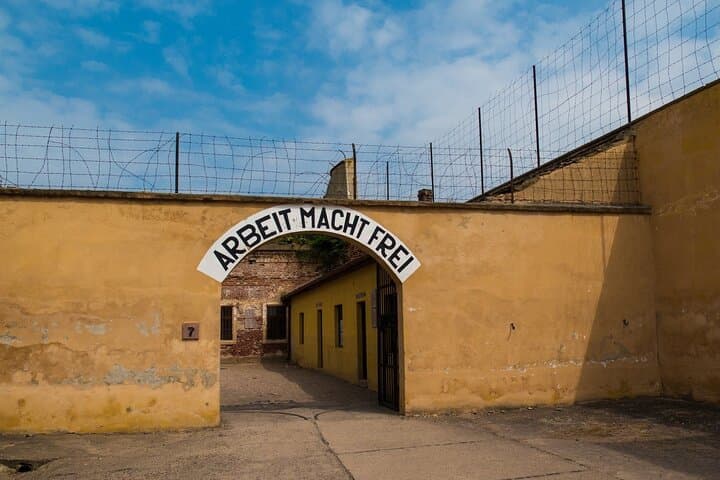
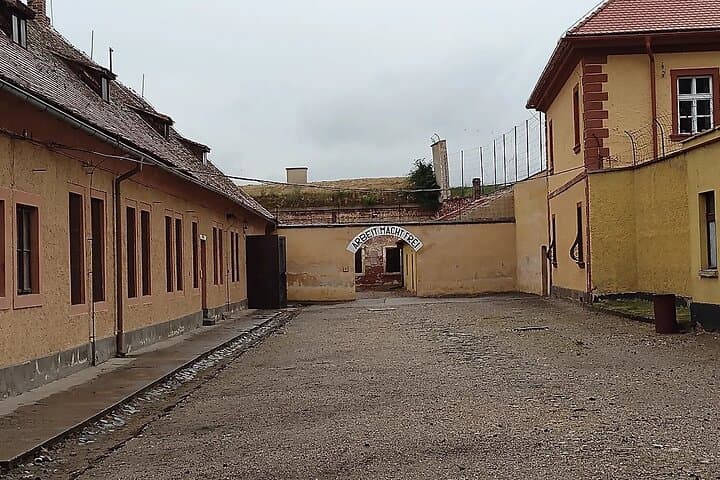
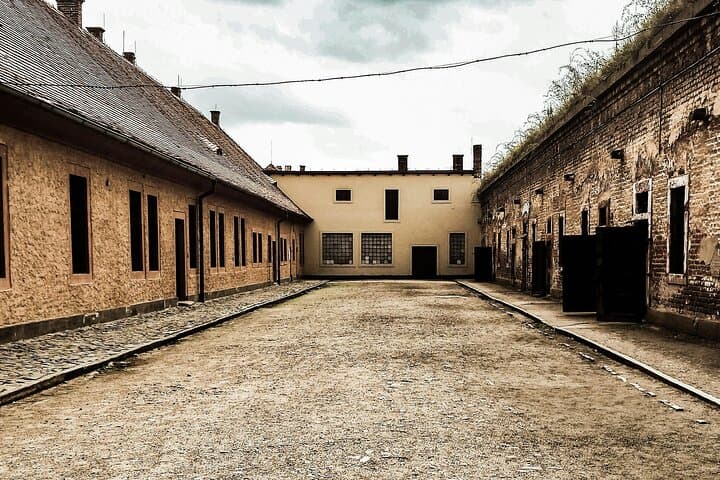
A cold wind moves across the low ramparts as visitors step from the small bus park into a place that asks for close attention rather than spectacle. The Big Fortress—an 18th‑century military enclosure ordered by Emperor Josef II—opens with broad stone courtyards, austere barracks and the heavy silence of rooms repurposed into exhibits. In the Small Fortress, once a Gestapo prison, the walls carry names and dates that make the past feel immediate.
A cold wind moves across the low ramparts as visitors step from the small bus park into a place that asks for close attention rather than spectacle. The Big Fortress—an 18th‑century military enclosure ordered by Emperor Josef II—opens with broad stone courtyards, austere barracks and the heavy silence of rooms repurposed into exhibits. In the Small Fortress, once a Gestapo prison, the walls carry names and dates that make the past feel immediate.
Terezín’s wartime role was complex: administered as a “model ghetto” for propaganda while serving as a transit and collection point. Around 60,000 Jews passed through the Big Fortress area and roughly 34,000 died from disease, malnutrition and deportation. Beneath the town lie reports of roughly 15 kilometers of service tunnels and casemates, and the National Cemetery holds 2,386 marked graves—each a reminder of human cost.
The visit balances quiet observation with concrete learning: museum panels, prisoner records, children’s drawings and the preserved cellblocks of the Small Fortress. Geologically the site sits on low sedimentary plains; terrain is mostly paved or packed earth with cobbles and steps. Culturally, Terezín is both a local memorial and a national site of memory—expect guided interpretation that frames facts with testimony.
Practical guidance: allow a full day (the standard excursion runs about six hours including transport from Prague, roughly 60–70 km each way), wear closed shoes for cobbles and stairs, bring water and a light jacket for exposed ramparts, and prepare for emotionally heavy exhibits. Photography rules and quiet conduct vary by building—follow signage and guide instructions.