THE ADVENTURE COLLECTIVE® · Independent discovery and booking for outdoor travel

Leave Prague for a private full-day drive into South Bohemia to explore UNESCO-listed Český Krumlov’s castle, monastery courtyards, and winding river streets, then stop at the photogenic neo‑Gothic Hluboká Castle. Expect castle towers, cobbled streets, and a relaxed lunch in town.
Leave Prague for a private full-day drive into South Bohemia to explore UNESCO-listed Český Krumlov’s castle, monastery courtyards, and winding river streets, then stop at the photogenic neo‑Gothic Hluboká Castle. Expect castle towers, cobbled streets, and a relaxed lunch in town.
The minivan eases out of Prague before dawn and the city’s skyline thins into open fields. By mid-morning the Vltava appears again, coiling through Český Krumlov as if daring you to follow it into the old town’s tight loop of cobbled lanes. The castle complex dominates the slope—brick, plaster, and tiled roofs stacked like a vertical village—and you feel the day laid out in stone steps and narrow courtyards.
Verified experiences and guided adventures in the surrounding area.
Operated by europe_with_zuzana · Český Krumlov, South Bohemia
The minivan eases out of Prague before dawn and the city’s skyline thins into open fields. By mid-morning the Vltava appears again, coiling through Český Krumlov as if daring you to follow it into the old town’s tight loop of cobbled lanes. The castle complex dominates the slope—brick, plaster, and tiled roofs stacked like a vertical village—and you feel the day laid out in stone steps and narrow courtyards.
Český Krumlov’s core dates to the 13th century, grown under families like the Rosenbergs and later the Schwarzenbergs; its castle tower was first recorded in 1253. Geologically the town sits where river erosion carved a pronounced bend in the Vltava, creating steep banks and dramatic viewpoints. Hluboká nad Vltavou, a later 19th‑century neo‑Gothic reimagining inspired by Windsor, offers manicured gardens and façades rather than medieval fortifications.
Expect focused walking: cobbles, short flights of steep stairs in the castle, and a covered arcade bridge linking the theatre and keep. Your guide times the visit to include the castle tower and museum, a stroll across Široká street to St. Vitus, and a relaxed lunch at a local bistro before a short drive to Hluboká for exterior viewing. Practical tips: wear grippy shoes for wet cobbles, reserve mornings to avoid coach crowds, carry small bills for market stalls, and bring layers—the river valley chills faster than Prague. The full loop is a long day (roughly 9–11 hours round trip) but designed to feel unhurried: sightseeing paced, transport private, and photo stops frequent—ideal for travelers who want cultural depth without the rush.
moderate.
9–11 hours.
Moderate fitness—able to walk on uneven cobbles, climb multiple flights of stairs, and stand during tours.
Plan on about 2.5–3 hours one way depending on traffic; the tour is full-day with both Český Krumlov and Hluboká included.
Yes—admission to the castle tower and museum is included as specified in the tour inclusions.
Lunch is not prepaid; the itinerary includes time for a relaxed meal at a local restaurant so you can choose dishes and pay on site.
Parts of the old town are accessible, but many areas—castle courtyards, tower, and historic stairs—are not suitable for wheelchairs; contact the operator ahead to discuss specific needs.
Český Krumlov grew around a 13th‑century castle held by noble families like the Rosenbergs; its compact medieval center later earned UNESCO recognition.
The town receives heavy visitor traffic—stick to marked paths, support local eateries, and avoid feeding wildlife to reduce pressure on historic fabric and river habitats.
europe_with_zuzana operates guided outdoor trips and adventures with an emphasis on safety, stewardship, and memorable experiences.
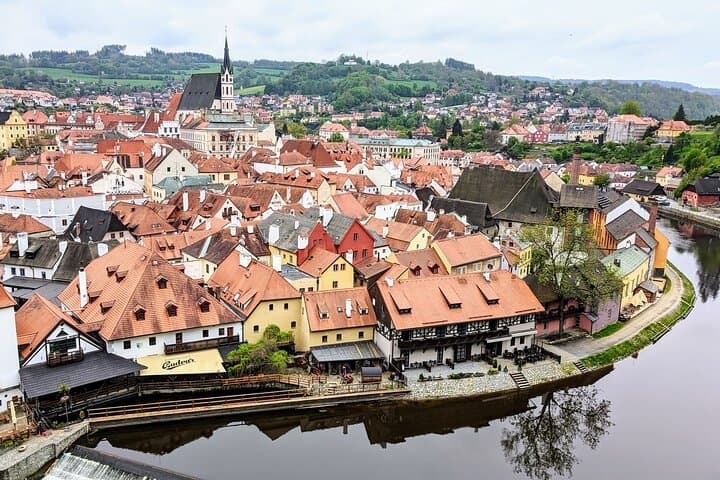
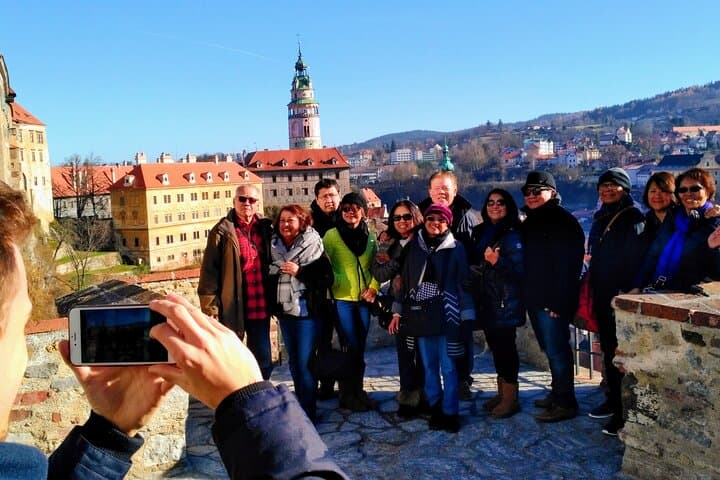
The minivan eases out of Prague before dawn and the city’s skyline thins into open fields. By mid-morning the Vltava appears again, coiling through Český Krumlov as if daring you to follow it into the old town’s tight loop of cobbled lanes. The castle complex dominates the slope—brick, plaster, and tiled roofs stacked like a vertical village—and you feel the day laid out in stone steps and narrow courtyards.
The minivan eases out of Prague before dawn and the city’s skyline thins into open fields. By mid-morning the Vltava appears again, coiling through Český Krumlov as if daring you to follow it into the old town’s tight loop of cobbled lanes. The castle complex dominates the slope—brick, plaster, and tiled roofs stacked like a vertical village—and you feel the day laid out in stone steps and narrow courtyards.
Český Krumlov’s core dates to the 13th century, grown under families like the Rosenbergs and later the Schwarzenbergs; its castle tower was first recorded in 1253. Geologically the town sits where river erosion carved a pronounced bend in the Vltava, creating steep banks and dramatic viewpoints. Hluboká nad Vltavou, a later 19th‑century neo‑Gothic reimagining inspired by Windsor, offers manicured gardens and façades rather than medieval fortifications.
Expect focused walking: cobbles, short flights of steep stairs in the castle, and a covered arcade bridge linking the theatre and keep. Your guide times the visit to include the castle tower and museum, a stroll across Široká street to St. Vitus, and a relaxed lunch at a local bistro before a short drive to Hluboká for exterior viewing. Practical tips: wear grippy shoes for wet cobbles, reserve mornings to avoid coach crowds, carry small bills for market stalls, and bring layers—the river valley chills faster than Prague. The full loop is a long day (roughly 9–11 hours round trip) but designed to feel unhurried: sightseeing paced, transport private, and photo stops frequent—ideal for travelers who want cultural depth without the rush.