THE ADVENTURE COLLECTIVE® · Independent discovery and booking for outdoor travel

Walk Josefov with a historian: enter the Old-New Synagogue, Spanish Synagogue and the Medieval Jewish Cemetery on a focused, small-group tour that connects architecture with centuries of local Jewish life.
Walk Josefov with a historian: enter the Old-New Synagogue, Spanish Synagogue and the Medieval Jewish Cemetery on a focused, small-group tour that connects architecture with centuries of local Jewish life.
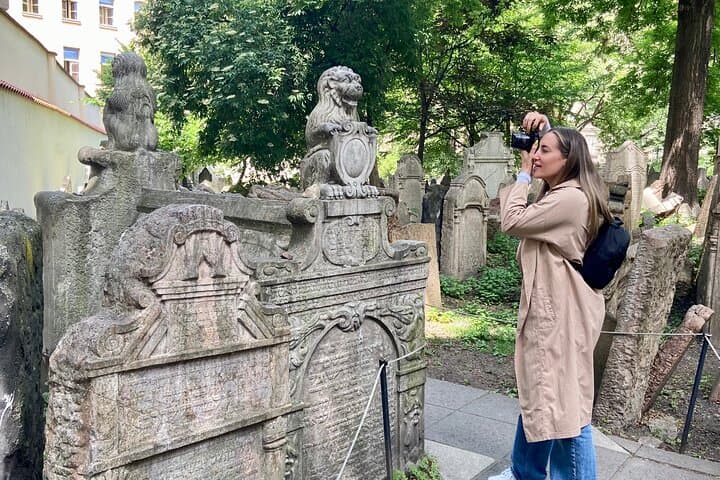
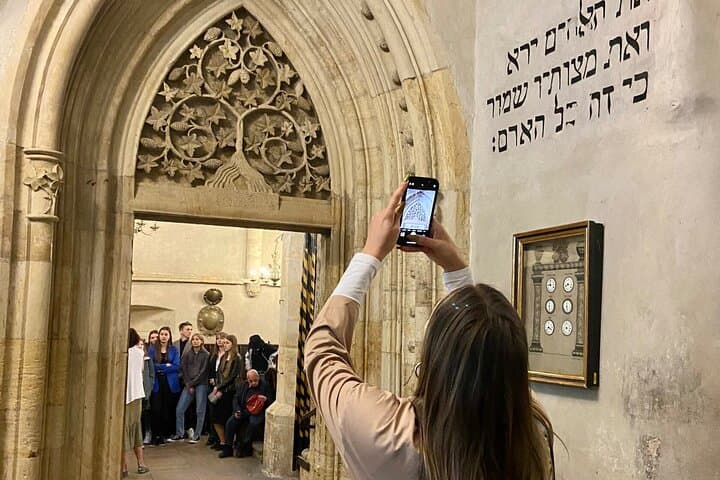
A narrow alley cools the mid-morning sun as you step off the Old Town square into Josefov — Prague’s historic Jewish Quarter. Stone underfoot, carved gravestones pressed into a hillside cemetery, and Moorish arches frame a route that moves quietly through centuries of faith, scholarship, and loss.
Verified experiences and guided adventures in the surrounding area.
Operated by Terezin and Prague Jewish Quarter Tours · Prague, Prague
A narrow alley cools the mid-morning sun as you step off the Old Town square into Josefov — Prague’s historic Jewish Quarter. Stone underfoot, carved gravestones pressed into a hillside cemetery, and Moorish arches frame a route that moves quietly through centuries of faith, scholarship, and loss.
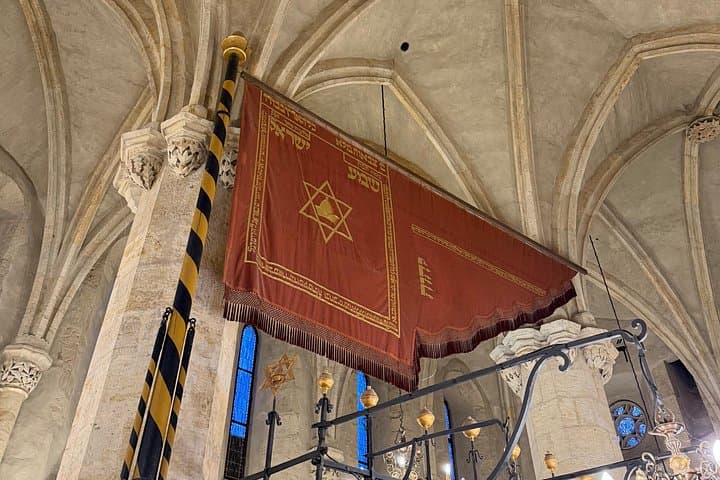
The district grew from medieval ghetto walls into a compact urban layer where Gothic and Baroque facades sit beside 19th-century Moorish revival synagogues. The Old-New Synagogue, Europe's oldest active medieval house of worship, anchors the neighborhood; the Spanish Synagogue flashes polychrome ornament borrowed from Andalusian models, while the Medieval Jewish Cemetery keeps vertical rows of tombs that map six centuries of community life. The story here is architectural and tragic: thriving centers of Jewish learning repeatedly constrained by edicts, then reshaped during Habsburg reforms and devastated during the Holocaust.
On a three-hour semi-private walk with a historian-guide you'll move with manageable groups, entering interiors that reveal ritual objects, memorial inscriptions, and curated exhibitions that place Prague’s Jewish story in wider European history.
Practicalities: wear sturdy shoes for cobbles and steps, bring a refillable water bottle, and expect quiet, reflective spaces where respectful behavior is required. Public transit drops you nearby; itineraries often include short indoor museum segments that may restrict large bags and tripods. Book a small-group slot to avoid crowds, arrive early to beat tour groups, and check closure days for specific synagogues — many close for Jewish holidays.
easy.
3 hours.
Light walking on uneven cobbles; suitable for most fitness levels
Check your booking details; some tours include admission while others require separate museum tickets—confirm with the operator before arrival.
Parts of Josefov have cobbles and narrow passages; some synagogue interiors have step access—notify the operator in advance to plan accessibility accommodations.
This semi-private option is typically offered in English with historian-guides; confirm language availability when booking.
Photography rules vary by site—flash and tripods are often restricted; follow signage and guide instructions inside each interior.
Josefov developed as a medieval ghetto and later expanded under Habsburg reforms; its surviving synagogues reflect layers of religious life, expulsions, and 19th-century architectural revival.
Many sites are managed by the Jewish Museum in Prague—visitors support conservation through admission fees and are asked to follow rules to protect fragile interiors and memorial spaces.
Terezin and Prague Jewish Quarter Tours operates guided outdoor trips and adventures with an emphasis on safety, stewardship, and memorable experiences.

A narrow alley cools the mid-morning sun as you step off the Old Town square into Josefov — Prague’s historic Jewish Quarter. Stone underfoot, carved gravestones pressed into a hillside cemetery, and Moorish arches frame a route that moves quietly through centuries of faith, scholarship, and loss.
A narrow alley cools the mid-morning sun as you step off the Old Town square into Josefov — Prague’s historic Jewish Quarter. Stone underfoot, carved gravestones pressed into a hillside cemetery, and Moorish arches frame a route that moves quietly through centuries of faith, scholarship, and loss.
The district grew from medieval ghetto walls into a compact urban layer where Gothic and Baroque facades sit beside 19th-century Moorish revival synagogues. The Old-New Synagogue, Europe's oldest active medieval house of worship, anchors the neighborhood; the Spanish Synagogue flashes polychrome ornament borrowed from Andalusian models, while the Medieval Jewish Cemetery keeps vertical rows of tombs that map six centuries of community life. The story here is architectural and tragic: thriving centers of Jewish learning repeatedly constrained by edicts, then reshaped during Habsburg reforms and devastated during the Holocaust.
On a three-hour semi-private walk with a historian-guide you'll move with manageable groups, entering interiors that reveal ritual objects, memorial inscriptions, and curated exhibitions that place Prague’s Jewish story in wider European history.
Practicalities: wear sturdy shoes for cobbles and steps, bring a refillable water bottle, and expect quiet, reflective spaces where respectful behavior is required. Public transit drops you nearby; itineraries often include short indoor museum segments that may restrict large bags and tripods. Book a small-group slot to avoid crowds, arrive early to beat tour groups, and check closure days for specific synagogues — many close for Jewish holidays.