THE ADVENTURE COLLECTIVE® · Independent discovery and booking for outdoor travel

Walk Old Town by lantern light on a compact 70–85 minute tour that moves from gothic lanes to a candlelit dungeon. Hear well-known legends—Golem, the Orloj creator, 1621 executions—while learning the medieval history beneath Prague’s streets.
Walk Old Town by lantern light on a compact 70–85 minute tour that moves from gothic lanes to a candlelit dungeon. Hear well-known legends—Golem, the Orloj creator, 1621 executions—while learning the medieval history beneath Prague’s streets.
A lantern swings as the group files into a narrow lane off Old Town Square; cobbles shine underfoot and the Astronomical Clock’s face fades behind the slate roofs. The guide, in period costume, lowers their voice and the city’s familiar hum gives way to footsteps and stories—headless brides, betrayed princes, and a clay guardian that once roamed the ghetto.
Verified experiences and guided adventures in the surrounding area.
Operated by Prague Tours · Prague, Prague
A lantern swings as the group files into a narrow lane off Old Town Square; cobbles shine underfoot and the Astronomical Clock’s face fades behind the slate roofs. The guide, in period costume, lowers their voice and the city’s familiar hum gives way to footsteps and stories—headless brides, betrayed princes, and a clay guardian that once roamed the ghetto.
Prague’s layers are literal: Romanesque cellars, Gothic spires and Baroque facades stacked over centuries. The medieval underground is a patchwork of former basements and flood-damaged foundations preserved beneath the streets. Here the tour stitches together social history—plague responses, 14th‑century epidemics, and the 1621 Old Town executions that left a long shadow over civic life.
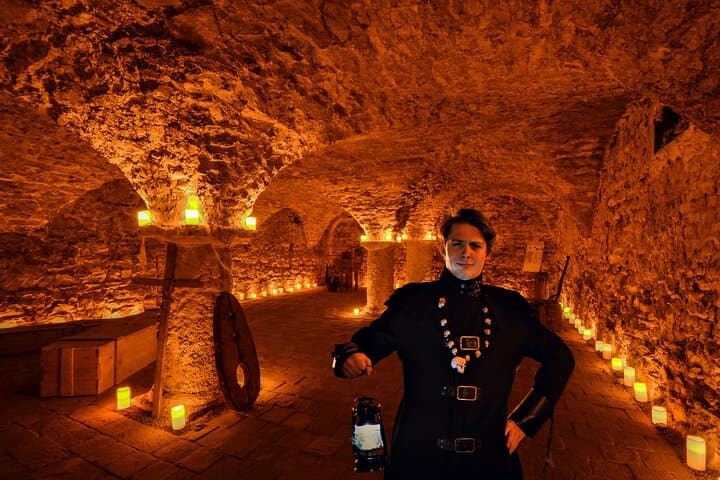
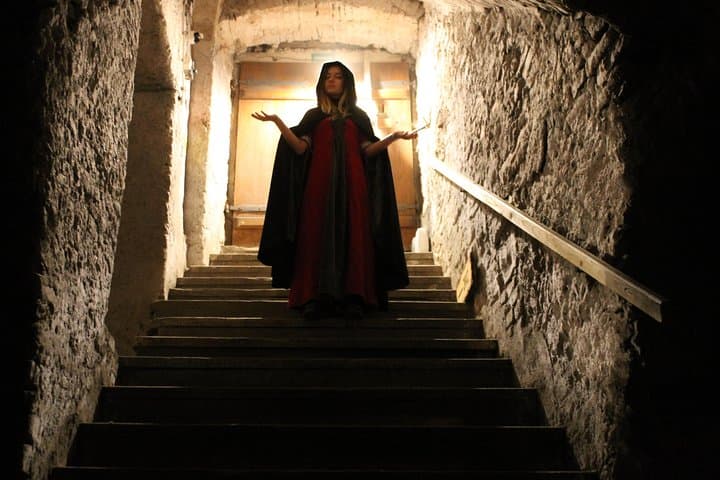
Culturally the walk leans on local folklore—tales about the Astronomical Clock’s creator, the Golem of Prague, and the executioner Jan Mydlář—delivered with theatrical timing. The dungeon visit is candlelit and compact; expect tight stairways and dim chambers where period instruments and reconstructions illustrate judicial and medical practices of another age.
Practically: the experience runs about 70–85 minutes, moves at an easy walking pace but includes steps and uneven surfaces, and is not wheelchair or stroller accessible. Wear sturdy shoes, bring a jacket for cool cellars, and reserve tickets in advance—mobile tickets are accepted and tours often fill during high season. Photography is generally allowed; ask before video-recording. For those curious about Prague’s darker past, this tour pairs living-city energy with a grounded look at how history, myth and urban architecture shape the stories still told on its streets.
easy.
1–1.5 hours.
Suitable for most people who can handle 30–60 minutes of standing and short walks; stair negotiation required.
The tour runs approximately 70–85 minutes, though actual duration may vary slightly with group size and route changes.
No—several sections include stairs and narrow underground passages, so it isn’t suitable for wheelchairs or strollers.
Photography is generally allowed; video recording may require special permission—ask the guide before filming.
Content can be graphic and the environment confined; it’s not recommended for very young children or those sensitive to disturbing topics.
Prague’s medieval core preserves layers of urban life—from 14th‑century plague responses to the public executions of 1621 that shaped civic memory.
Many underground chambers are fragile; follow guide instructions, avoid touching displays, and keep groups small to reduce wear on historic fabric.
Prague Tours operates guided outdoor trips and adventures with an emphasis on safety, stewardship, and memorable experiences.
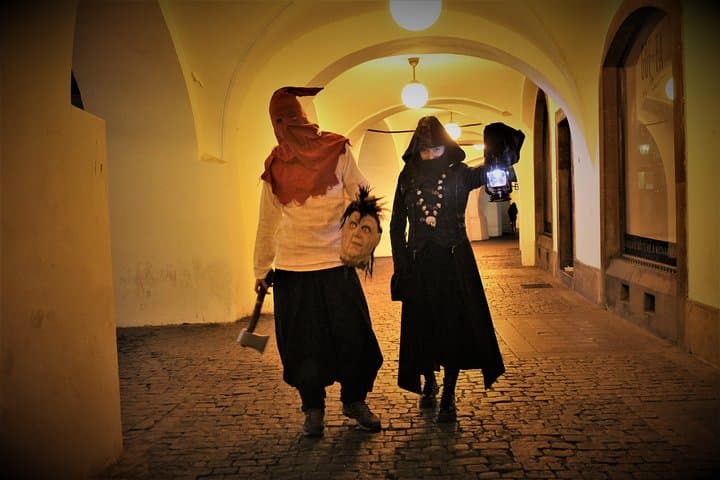
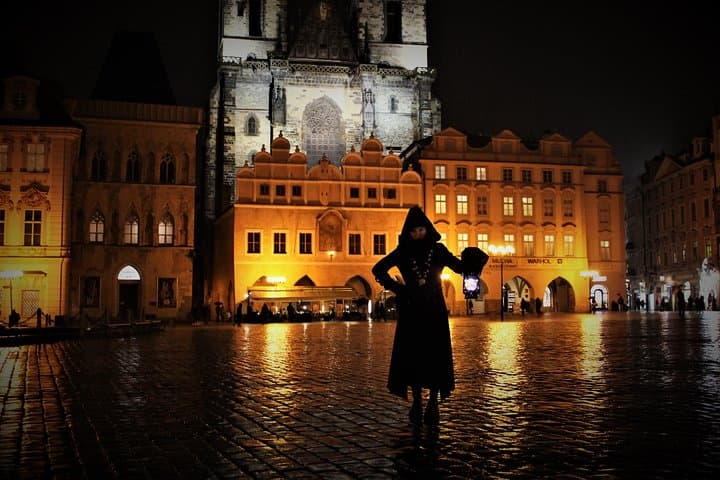
A lantern swings as the group files into a narrow lane off Old Town Square; cobbles shine underfoot and the Astronomical Clock’s face fades behind the slate roofs. The guide, in period costume, lowers their voice and the city’s familiar hum gives way to footsteps and stories—headless brides, betrayed princes, and a clay guardian that once roamed the ghetto.
A lantern swings as the group files into a narrow lane off Old Town Square; cobbles shine underfoot and the Astronomical Clock’s face fades behind the slate roofs. The guide, in period costume, lowers their voice and the city’s familiar hum gives way to footsteps and stories—headless brides, betrayed princes, and a clay guardian that once roamed the ghetto.
Prague’s layers are literal: Romanesque cellars, Gothic spires and Baroque facades stacked over centuries. The medieval underground is a patchwork of former basements and flood-damaged foundations preserved beneath the streets. Here the tour stitches together social history—plague responses, 14th‑century epidemics, and the 1621 Old Town executions that left a long shadow over civic life.
Culturally the walk leans on local folklore—tales about the Astronomical Clock’s creator, the Golem of Prague, and the executioner Jan Mydlář—delivered with theatrical timing. The dungeon visit is candlelit and compact; expect tight stairways and dim chambers where period instruments and reconstructions illustrate judicial and medical practices of another age.
Practically: the experience runs about 70–85 minutes, moves at an easy walking pace but includes steps and uneven surfaces, and is not wheelchair or stroller accessible. Wear sturdy shoes, bring a jacket for cool cellars, and reserve tickets in advance—mobile tickets are accepted and tours often fill during high season. Photography is generally allowed; ask before video-recording. For those curious about Prague’s darker past, this tour pairs living-city energy with a grounded look at how history, myth and urban architecture shape the stories still told on its streets.