THE ADVENTURE COLLECTIVE® · Independent discovery and booking for outdoor travel

Explore Prague’s living cityscape on a guided three‑hour walk from Old Town to Kampa, then finish with a tasting at the R. Jelinek Slivovitz Museum. Expect history, contemporary culture, and practical local insights delivered by an informed guide.
Explore Prague’s living cityscape on a guided three‑hour walk from Old Town to Kampa, then finish with a tasting at the R. Jelinek Slivovitz Museum. Expect history, contemporary culture, and practical local insights delivered by an informed guide.
The tour opens on Old Town Square where cobblestones hold the echo of centuries and the Vltava river dares you to look beyond the postcards.
Verified experiences and guided adventures in the surrounding area.
Operated by Supreme Prague · Prague, Prague
The tour opens on Old Town Square where cobblestones hold the echo of centuries and the Vltava river dares you to look beyond the postcards.
A local guide leads a compact loop through Old Town, across Wenceslas Square and over the Charles Bridge to Kampa, translating monuments into moments of contemporary life—commutes, weekend rituals, and the cost-of-living realities that shape Prague today. The narrative links Bohemia’s medieval foundations to 20th‑century upheavals and the post‑Communist reinvention that created the city you see now.
Geology here is subtle: Prague’s granitic plateau underpins hilltop castles and the terraces that frame the river; architecture rises from that same stone, layered with Gothic, Baroque and functionalist interventions.
Culturally, the tour surfaces the Czech relationship to beer gardens, neighborhood studios and public art—past works and present controversies, including local sculptor David Černý’s provocative pieces on Kampa.
Practical guidance follows the storytelling. This is an easy, three‑hour walking experience mainly on paved streets and bridges with short, frequent stops. Wear supportive shoes for uneven cobbles, carry a light rain layer year‑round and bring a small amount of local currency for optional snacks or souvenirs. The finale at the R. Jelinek Slivovitz Museum includes admission and a guided tasting; expect a brief, moderated sampling rather than a full bar service.
Timing mornings or late afternoons avoids the largest tour groups and gives clearer light for photos. The route is public-transport friendly and stroller accessible, making it a solid introduction to Prague for first‑time visitors and returning travelers alike.
easy.
3 hours.
Suitable for most fitness levels; requires walking 2–4 miles on paved and cobbled surfaces.
Yes—admission and a guided tasting at the R. Jelinek museum are included as the tour’s finale.
Mostly—paved streets and bridges are stroller-friendly though cobbles can be bumpy; a sturdy stroller is recommended.
Expect roughly 2–4 miles (3–6 km) of walking over three hours with frequent stops and short explanatory talks.
Yes; the tour lists entrance fees to the Slivovitz museum as included in the price.
Prague’s urban core grew from a medieval castle and market center; 20th‑century events—Munich Agreement, Nazi occupation, Communist era, and the Velvet Revolution—shaped its public spaces and contemporary identity.
High foot traffic stresses historic paving and narrow streets; practice leave-no-trace, avoid littering and follow local signage to protect fragile riverbanks and heritage sites.
Supreme Prague operates guided outdoor trips and adventures with an emphasis on safety, stewardship, and memorable experiences.
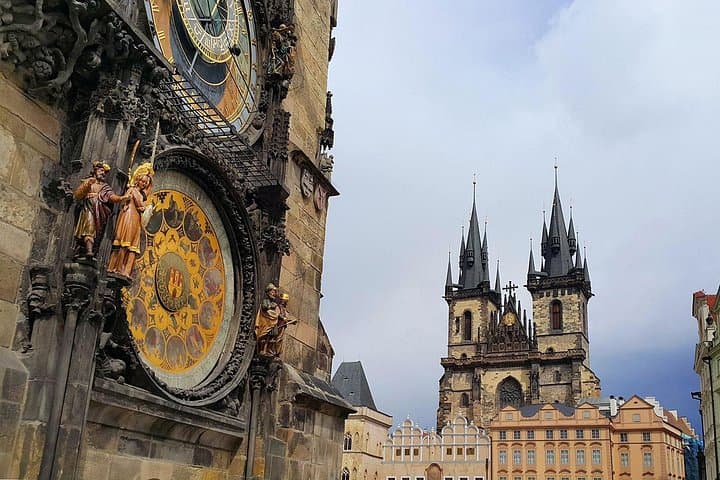
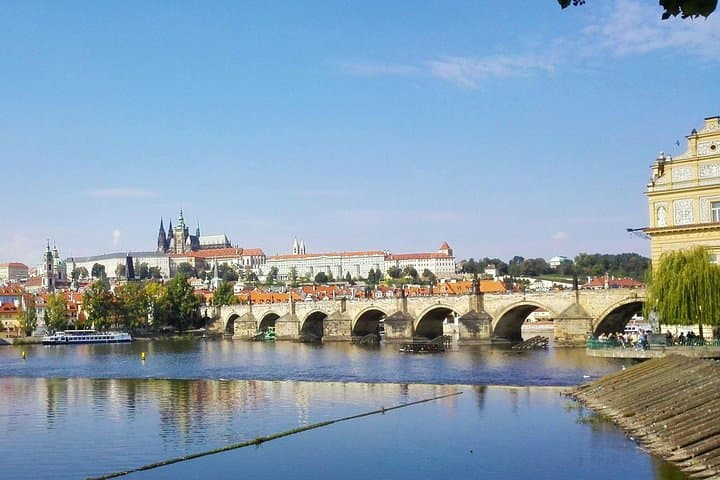
The tour opens on Old Town Square where cobblestones hold the echo of centuries and the Vltava river dares you to look beyond the postcards.
The tour opens on Old Town Square where cobblestones hold the echo of centuries and the Vltava river dares you to look beyond the postcards.
A local guide leads a compact loop through Old Town, across Wenceslas Square and over the Charles Bridge to Kampa, translating monuments into moments of contemporary life—commutes, weekend rituals, and the cost-of-living realities that shape Prague today. The narrative links Bohemia’s medieval foundations to 20th‑century upheavals and the post‑Communist reinvention that created the city you see now.
Geology here is subtle: Prague’s granitic plateau underpins hilltop castles and the terraces that frame the river; architecture rises from that same stone, layered with Gothic, Baroque and functionalist interventions.
Culturally, the tour surfaces the Czech relationship to beer gardens, neighborhood studios and public art—past works and present controversies, including local sculptor David Černý’s provocative pieces on Kampa.
Practical guidance follows the storytelling. This is an easy, three‑hour walking experience mainly on paved streets and bridges with short, frequent stops. Wear supportive shoes for uneven cobbles, carry a light rain layer year‑round and bring a small amount of local currency for optional snacks or souvenirs. The finale at the R. Jelinek Slivovitz Museum includes admission and a guided tasting; expect a brief, moderated sampling rather than a full bar service.
Timing mornings or late afternoons avoids the largest tour groups and gives clearer light for photos. The route is public-transport friendly and stroller accessible, making it a solid introduction to Prague for first‑time visitors and returning travelers alike.