THE ADVENTURE COLLECTIVE® · Independent discovery and booking for outdoor travel

Walk Prague’s Cold War history from open streets into a real four-floor nuclear bunker. This guided tour combines city history, original Cold War artifacts, and practical insights into life under communism.
Walk Prague’s Cold War history from open streets into a real four-floor nuclear bunker. This guided tour combines city history, original Cold War artifacts, and practical insights into life under communism.
Cobblestones click underfoot as the guide threads you through blocks of austere postwar architecture; the city’s modern life hums above while a network of concrete corridors waits below. The walk moves from open squares and grey apartment blocks—places that once echoed with party rallies—toward a four-floor underground bunker where the Cold War’s contingency plans were kept behind sealed doors.
Verified experiences and guided adventures in the surrounding area.
Operated by Communism and Nuclear Bunker Tour · Prague, Prague
Cobblestones click underfoot as the guide threads you through blocks of austere postwar architecture; the city’s modern life hums above while a network of concrete corridors waits below. The walk moves from open squares and grey apartment blocks—places that once echoed with party rallies—toward a four-floor underground bunker where the Cold War’s contingency plans were kept behind sealed doors.
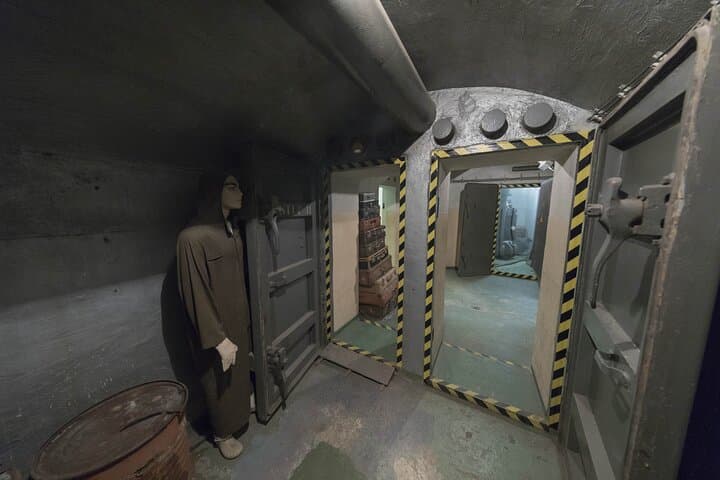
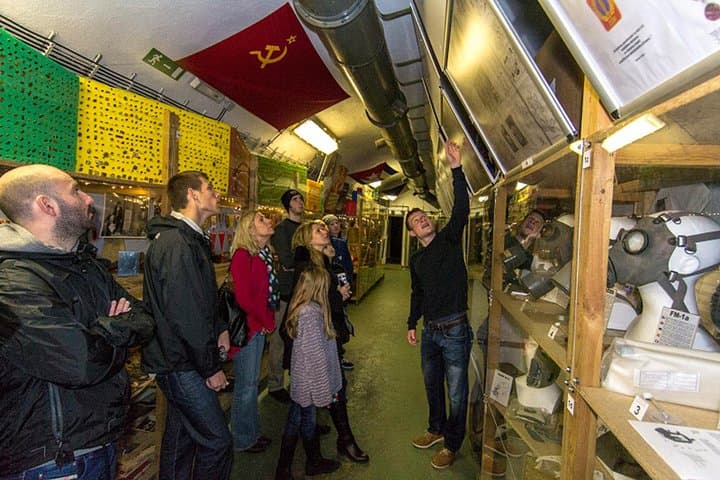
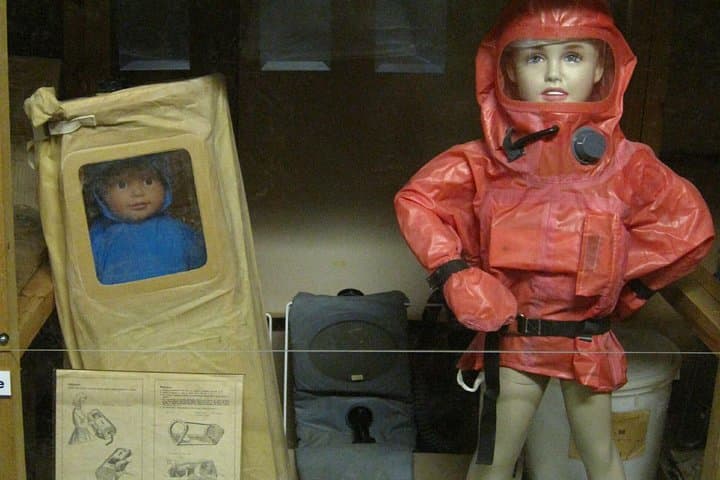
The tour traces Prague’s 20th-century arc: the interwar republic, the 1948 communist takeover, the Soviet-led invasion of 1968, and the Velvet Revolution of 1989 that rewrote public life. The bunker itself is a study in practical paranoia—thick doors, metal bunks, army gear and instructional leaflets that show how civilians were meant to survive a worst-case scenario.
Geologically, Prague’s city center sits above older Bohemian bedrock while urban expansion in the 20th century drove construction downward—tunnels and shelters cut into the city’s subsurface and reinforced with poured concrete. Culturally, the route highlights how everyday spaces—workers’ districts, former secret police offices—carry visible traces of state control and popular resistance.
Practical guidance: the itinerary lasts about 2–2.5 hours and includes stair descent into tight spaces; it’s unsuitable for people with claustrophobia, serious heart issues, or mobility impairments. Wear comfortable walking shoes, bring a charged phone for your mobile ticket and photos, and arrive at least 10 minutes early. Photography is generally allowed but video requires permission. Plan for sharp contrasts—cool, damp air underground and brisk city air above—so layer accordingly.
easy.
2–2.5 hours.
Suitable for most people who can manage stairs and short periods standing; not for those with significant mobility limitations
The tour runs approximately 140 minutes (about 2–2.5 hours), including the bunker visit and city walking commentary.
Children below school age and those with attention or behavioral disorders are not allowed; older children should be able to follow safety instructions and handle stairs.
Still photography is generally permitted; video recording requires prior permission from the operator—ask your guide before filming.
Once the tour departs the start point it’s not guaranteed you can join; arrive 10–15 minutes early and contact the operator if you’re delayed.
The itinerary highlights Prague’s shift from a Soviet-influenced socialist republic to a democratic Czech state after the Velvet Revolution of 1989, with original Cold War artifacts preserved in the bunker.
The bunker is treated as a historical site—visitors are asked to avoid touching sensitive displays and to follow rules to preserve exhibits; travel responsibly and limit group noise and waste.
Communism and Nuclear Bunker Tour operates guided outdoor trips and adventures with an emphasis on safety, stewardship, and memorable experiences.
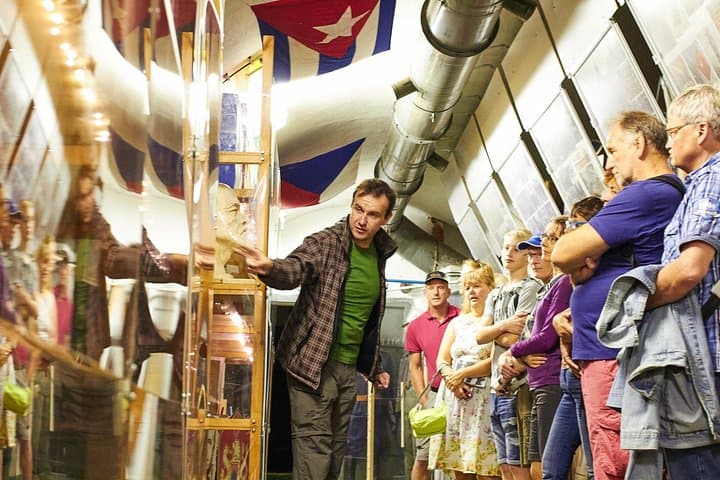
Cobblestones click underfoot as the guide threads you through blocks of austere postwar architecture; the city’s modern life hums above while a network of concrete corridors waits below. The walk moves from open squares and grey apartment blocks—places that once echoed with party rallies—toward a four-floor underground bunker where the Cold War’s contingency plans were kept behind sealed doors.
Cobblestones click underfoot as the guide threads you through blocks of austere postwar architecture; the city’s modern life hums above while a network of concrete corridors waits below. The walk moves from open squares and grey apartment blocks—places that once echoed with party rallies—toward a four-floor underground bunker where the Cold War’s contingency plans were kept behind sealed doors.
The tour traces Prague’s 20th-century arc: the interwar republic, the 1948 communist takeover, the Soviet-led invasion of 1968, and the Velvet Revolution of 1989 that rewrote public life. The bunker itself is a study in practical paranoia—thick doors, metal bunks, army gear and instructional leaflets that show how civilians were meant to survive a worst-case scenario.
Geologically, Prague’s city center sits above older Bohemian bedrock while urban expansion in the 20th century drove construction downward—tunnels and shelters cut into the city’s subsurface and reinforced with poured concrete. Culturally, the route highlights how everyday spaces—workers’ districts, former secret police offices—carry visible traces of state control and popular resistance.
Practical guidance: the itinerary lasts about 2–2.5 hours and includes stair descent into tight spaces; it’s unsuitable for people with claustrophobia, serious heart issues, or mobility impairments. Wear comfortable walking shoes, bring a charged phone for your mobile ticket and photos, and arrive at least 10 minutes early. Photography is generally allowed but video requires permission. Plan for sharp contrasts—cool, damp air underground and brisk city air above—so layer accordingly.