THE ADVENTURE COLLECTIVE® · Independent discovery and booking for outdoor travel

Walk through Prague’s Cold War past with a local guide, stop in a working‑class 1970s canteen, and visit a functioning nuclear bunker. Small groups and first‑hand stories bring the city’s modern history to life.
Walk through Prague’s Cold War past with a local guide, stop in a working‑class 1970s canteen, and visit a functioning nuclear bunker. Small groups and first‑hand stories bring the city’s modern history to life.
You step into Prague's cityscape where broad avenues and tram tracks keep the memory of 20th-century upheaval close at hand. The guide—blue umbrella raised—moves the small group through Old Town streets, past spaces that witnessed the 1948 coup, the uneasy hush of the 1950s, the turbulent Prague Spring of 1968 and the crowds of the Velvet Revolution.
Verified experiences and guided adventures in the surrounding area.
Operated by Prague Extravaganza Tours · Prague, Prague
You step into Prague's cityscape where broad avenues and tram tracks keep the memory of 20th-century upheaval close at hand. The guide—blue umbrella raised—moves the small group through Old Town streets, past spaces that witnessed the 1948 coup, the uneasy hush of the 1950s, the turbulent Prague Spring of 1968 and the crowds of the Velvet Revolution.
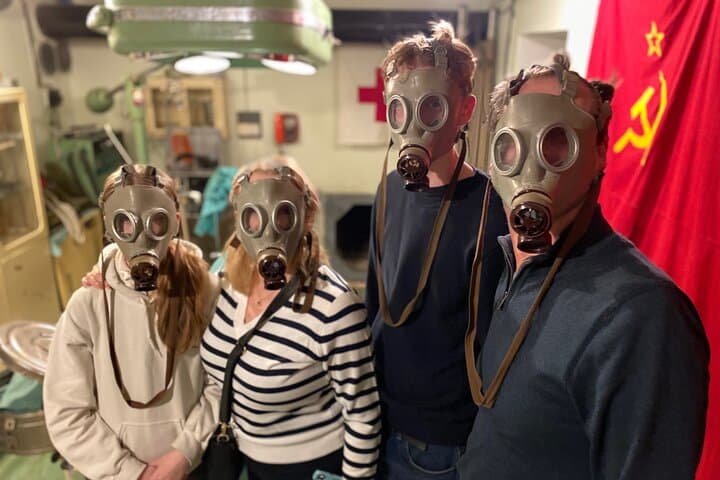
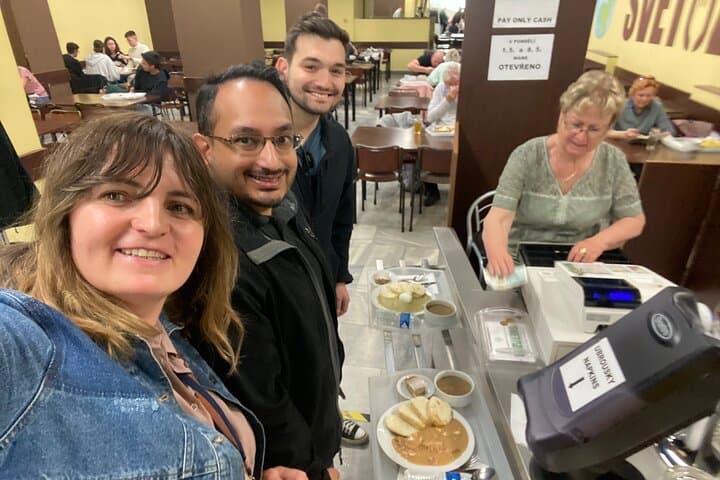
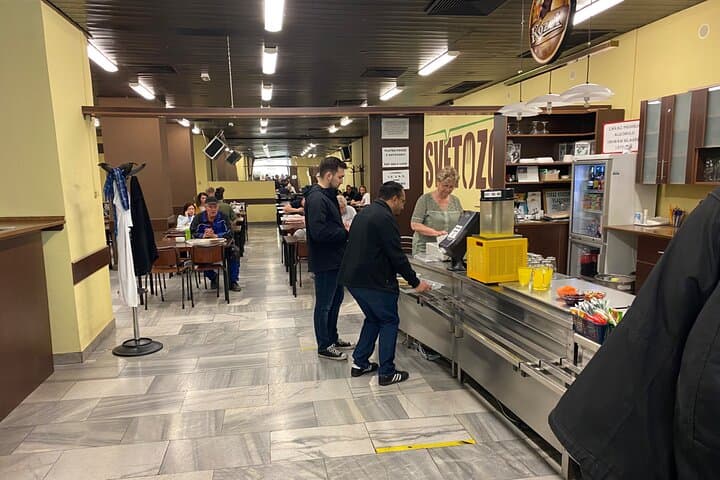
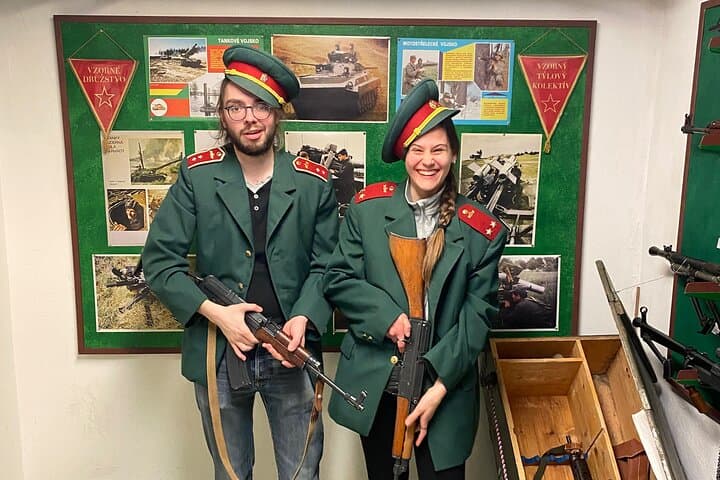
This walk stitches civic history to place: Wenceslas Square’s layered monuments, Vinohrady’s broad boulevards and the city’s geology—ancient granite and sandstone underfoot—tell why strategic routes and public squares shaped political life. The tour balances macro history with human detail; guides share personal anecdotes about ration queues, censorship, and daily improvisation under surveillance. For the 4-hour option the route pauses in an authentic 1970s canteen for a short break (lunch and drinks are optional, often paid on site) before descending into an upper-Wenceslas Square nuclear bunker where Cold War exhibits and concrete corridors sharpen that era’s claustrophobic realities.
Practicalities: expect 3–4 hours on mostly flat, paved streets with short stair sections in the bunker; not recommended for anyone with severe claustrophobia. Small groups (max 10) keep discussion interactive. Bring a charged phone for the meeting photo, carry small change for a Kofola or canteen meal, and wear supportive shoes—Prague’s cobbles reward steady footing. Morning departures avoid peak crowds; winter layers matter—the bunker can be cool. The experience is both a primer in modern Czech history and a visceral reminder that everyday places hold political stories.
easy.
3–4 hours.
Suitable for all fitness levels with standard walking ability; some stair descent in the bunker.
The full option runs about 3.5 hours (listed as 210 minutes) and includes the canteen break and bunker visit; a shorter 2‑hour walking option is also available without the bunker and canteen.
Yes—the Cold War Museum admission (approx. 10 EUR) is included in the 4‑hour tour price; food in the canteen is paid separately.
Yes—strollers are accessible for the walking portions but the bunker has confined spaces and uneven steps that may limit access.
Tours are led by local English-speaking guides; confirm language availability when booking if you need another language.
Prague’s modern civic identity was shaped by events from the 1948 communist takeover through the Prague Spring of 1968 to the Velvet Revolution of 1989, with public squares repeatedly serving as stages for protest and power.
Respect historic sites and museum rules—avoid touching exhibits or graffiti; support local museums by following signage and staying on marked paths.
Prague Extravaganza Tours operates guided outdoor trips and adventures with an emphasis on safety, stewardship, and memorable experiences.
You step into Prague's cityscape where broad avenues and tram tracks keep the memory of 20th-century upheaval close at hand. The guide—blue umbrella raised—moves the small group through Old Town streets, past spaces that witnessed the 1948 coup, the uneasy hush of the 1950s, the turbulent Prague Spring of 1968 and the crowds of the Velvet Revolution.
You step into Prague's cityscape where broad avenues and tram tracks keep the memory of 20th-century upheaval close at hand. The guide—blue umbrella raised—moves the small group through Old Town streets, past spaces that witnessed the 1948 coup, the uneasy hush of the 1950s, the turbulent Prague Spring of 1968 and the crowds of the Velvet Revolution.
This walk stitches civic history to place: Wenceslas Square’s layered monuments, Vinohrady’s broad boulevards and the city’s geology—ancient granite and sandstone underfoot—tell why strategic routes and public squares shaped political life. The tour balances macro history with human detail; guides share personal anecdotes about ration queues, censorship, and daily improvisation under surveillance. For the 4-hour option the route pauses in an authentic 1970s canteen for a short break (lunch and drinks are optional, often paid on site) before descending into an upper-Wenceslas Square nuclear bunker where Cold War exhibits and concrete corridors sharpen that era’s claustrophobic realities.
Practicalities: expect 3–4 hours on mostly flat, paved streets with short stair sections in the bunker; not recommended for anyone with severe claustrophobia. Small groups (max 10) keep discussion interactive. Bring a charged phone for the meeting photo, carry small change for a Kofola or canteen meal, and wear supportive shoes—Prague’s cobbles reward steady footing. Morning departures avoid peak crowds; winter layers matter—the bunker can be cool. The experience is both a primer in modern Czech history and a visceral reminder that everyday places hold political stories.