THE ADVENTURE COLLECTIVE® · Independent discovery and booking for outdoor travel

Walk Prague’s Cold War geography with a historian guide: tunnels that once hid civilians, the Hall of the Red Army, and a steep climb to Vítkov Hill with commanding city views. This three‑hour tour combines political history, urban architecture, and practical walking in a compact route.
Walk Prague’s Cold War geography with a historian guide: tunnels that once hid civilians, the Hall of the Red Army, and a steep climb to Vítkov Hill with commanding city views. This three‑hour tour combines political history, urban architecture, and practical walking in a compact route.
You step out from a tram into a cool Prague morning; the city’s wind seems to dare you up Vitkov Hill as cobbles and concrete lead the way. The three-hour walk threads between austere monuments and narrow tunnels — a historian’s commentary underscoring each stop — and culminates where the Hall of the Red Army and the former mausoleum loom, their stone faces holding the weight of a 20th-century ideology.
Verified experiences and guided adventures in the surrounding area.
Operated by Insight Cities · Prague, Prague
You step out from a tram into a cool Prague morning; the city’s wind seems to dare you up Vitkov Hill as cobbles and concrete lead the way. The three-hour walk threads between austere monuments and narrow tunnels — a historian’s commentary underscoring each stop — and culminates where the Hall of the Red Army and the former mausoleum loom, their stone faces holding the weight of a 20th-century ideology.
This route traces Prague’s 20th-century arc: Habsburg-era squares repurposed for military parades, the brutalist imprint of postwar memorials, and the uneasy relics of communist governance. Geologically the city sits on modest uplands and river terraces, so the main exertion is the climb to Vítkov — a steep 20–30 minute ascent that rewards with sweeping views and an imposing equestrian statue. Culturally, the tour stitches together public memory: the Velvet Revolution’s gatherings at Wenceslas Square, the symbolism of the mausoleum, and the everyday traces of Cold War life in shelters and state-built infrastructure.
Practical details are simple and concrete. Expect three hours of walking, mixed surfaces (cobble, asphalt, tunnel steps) and a small-group format with a historian guide; tram tickets are included. Not recommended for guests with serious heart or back problems or pregnancy due to the hill climb. Wear supportive shoes, layer for Prague’s shifting weather, and bring water and a light rain shell in shoulder seasons. The tour pairs immersive storytelling with actionable logistics — a compact, urban hike through the political geography of modern Prague.
moderate.
3 hours.
Moderate fitness—comfortable walking ability and the capacity to climb a sustained hill are required.
Exact meeting point is provided at booking; the route typically starts near a central tram stop and finishes close to the city center for easy onward travel.
Tram tickets and the historian guide are included; admission to some museum interiors may not be and are noted in the itinerary if required.
Children with good stamina can join, but the steep climb and tunnel sections make the route unsuitable for people with limited mobility; consider a tailored private option that skips Vítkov Hill.
Guiding language is arranged at booking; English is commonly offered—confirm during reservation to ensure your preferred language is available.
The route focuses on Prague under Communist rule (1948–1989): public spaces were repurposed for state ceremonies and monuments, and Klement Gottwald’s mausoleum symbolized leadership cults of the era.
These sites are protected as historical monuments—avoid touching plaques, follow posted routes, and respect signs to limit wear and preserve artifacts for future visitors.
Insight Cities operates guided outdoor trips and adventures with an emphasis on safety, stewardship, and memorable experiences.
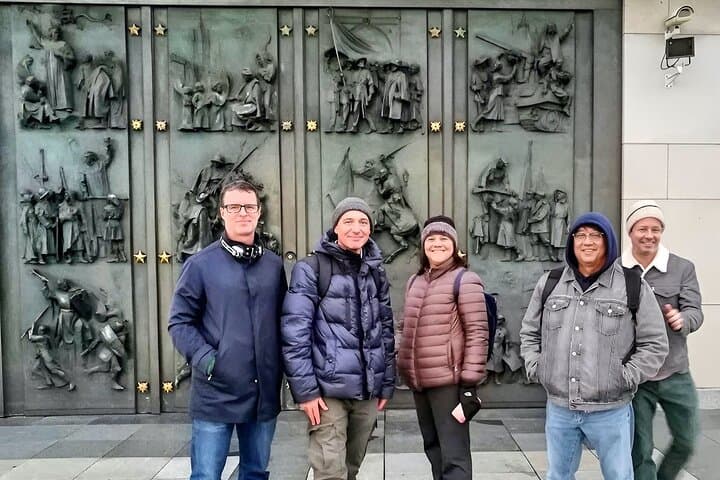
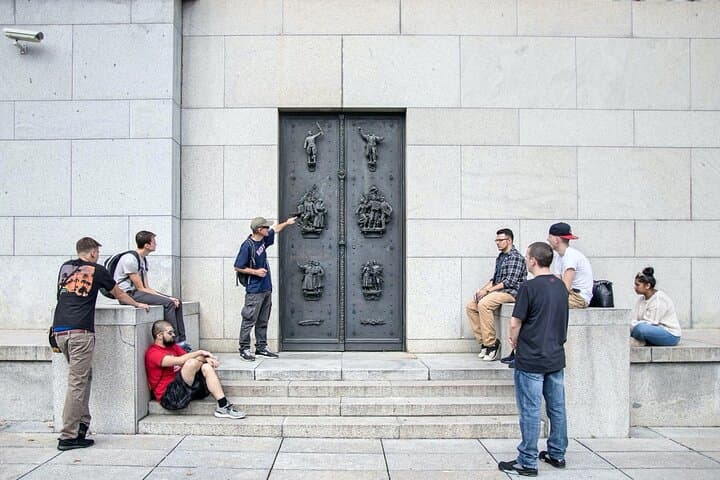
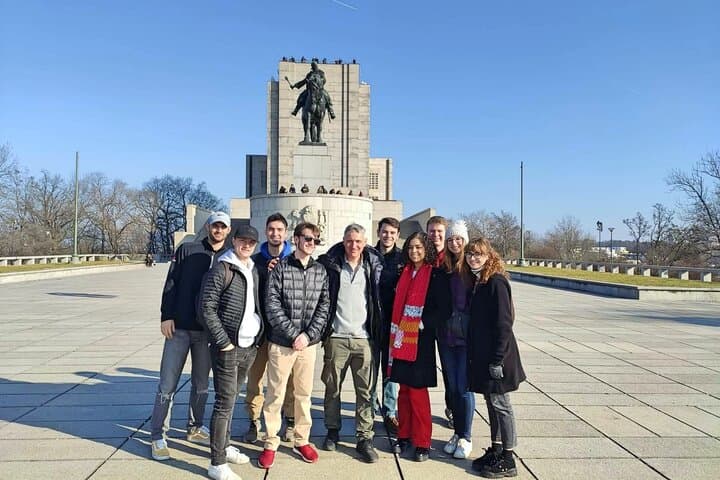

You step out from a tram into a cool Prague morning; the city’s wind seems to dare you up Vitkov Hill as cobbles and concrete lead the way. The three-hour walk threads between austere monuments and narrow tunnels — a historian’s commentary underscoring each stop — and culminates where the Hall of the Red Army and the former mausoleum loom, their stone faces holding the weight of a 20th-century ideology.
You step out from a tram into a cool Prague morning; the city’s wind seems to dare you up Vitkov Hill as cobbles and concrete lead the way. The three-hour walk threads between austere monuments and narrow tunnels — a historian’s commentary underscoring each stop — and culminates where the Hall of the Red Army and the former mausoleum loom, their stone faces holding the weight of a 20th-century ideology.
This route traces Prague’s 20th-century arc: Habsburg-era squares repurposed for military parades, the brutalist imprint of postwar memorials, and the uneasy relics of communist governance. Geologically the city sits on modest uplands and river terraces, so the main exertion is the climb to Vítkov — a steep 20–30 minute ascent that rewards with sweeping views and an imposing equestrian statue. Culturally, the tour stitches together public memory: the Velvet Revolution’s gatherings at Wenceslas Square, the symbolism of the mausoleum, and the everyday traces of Cold War life in shelters and state-built infrastructure.
Practical details are simple and concrete. Expect three hours of walking, mixed surfaces (cobble, asphalt, tunnel steps) and a small-group format with a historian guide; tram tickets are included. Not recommended for guests with serious heart or back problems or pregnancy due to the hill climb. Wear supportive shoes, layer for Prague’s shifting weather, and bring water and a light rain shell in shoulder seasons. The tour pairs immersive storytelling with actionable logistics — a compact, urban hike through the political geography of modern Prague.