THE ADVENTURE COLLECTIVE® · Independent discovery and booking for outdoor travel

Explore Prague Castle with a licensed private guide: Gothic spires, royal halls and quieter Lesser Town alleys await. Choose a focused 2-hour option or a full 5-hour sweep that finishes on Charles Bridge.
Explore Prague Castle with a licensed private guide: Gothic spires, royal halls and quieter Lesser Town alleys await. Choose a focused 2-hour option or a full 5-hour sweep that finishes on Charles Bridge.
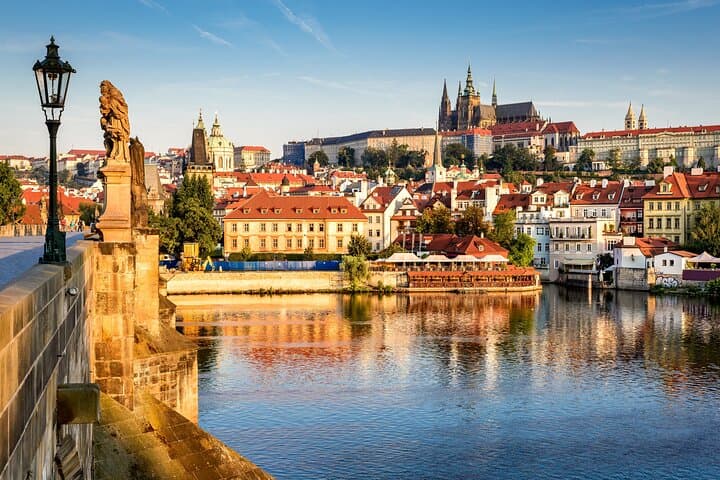
Standing on the cobbled approach to Prague Castle, the city opens like a map beneath you: the Vltava threading silver through terracotta roofs, church bells marking time. Your guide leads through an arc of gates into courtyards where stone ages from Romanesque blocks to air-piercing Gothic pinnacles.
Verified experiences and guided adventures in the surrounding area.
Operated by Rosotravel - Ostrava City Tours · Prague, Prague
Standing on the cobbled approach to Prague Castle, the city opens like a map beneath you: the Vltava threading silver through terracotta roofs, church bells marking time. Your guide leads through an arc of gates into courtyards where stone ages from Romanesque blocks to air-piercing Gothic pinnacles.
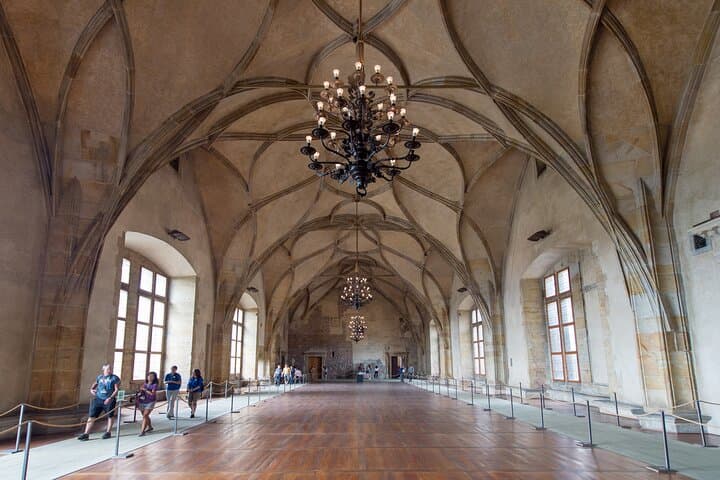
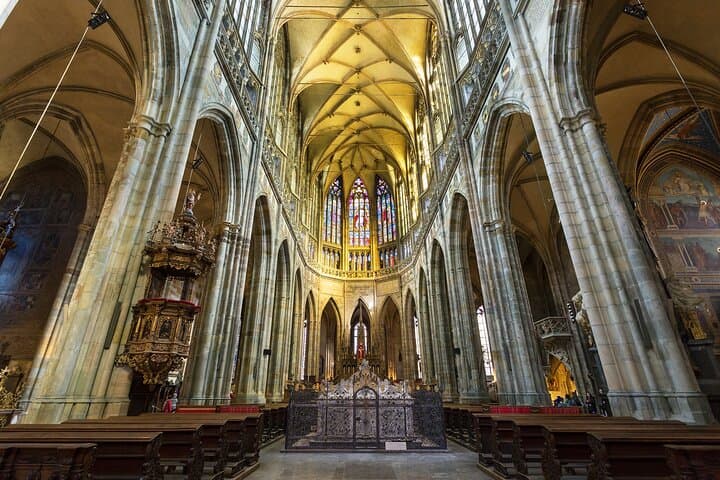
The castle complex began in the 9th century and grew as Bohemian rulers layered palaces, basilicas and fortifications on ancient bedrock of the Bohemian Massif. St. Vitus Cathedral dominates the hill—Gothic vaults, St. Wenceslas Chapel and the crypts that hold Czech kings. Nearby, St. George’s Basilica and the Old Royal Palace (with its Vladislav Hall) show Renaissance and Baroque additions; Golden Lane keeps the compressed, everyday life of past centuries in a row of tiny houses.
Culture here mixes liturgy, statecraft and tourism: coronations, cathedral services and civic ceremonies leave traces in architecture and local lore. The Lesser Town (Malá Strana) below offers Baroque facades and quieter alleys, ending at Charles Bridge with its weathered statues.
Practical guidance: choose a 2, 3 or 5‑hour private option depending on depth; skip‑the‑line tickets are included. Start early for softer light and smaller crowds, and plan around cathedral services that may close parts of the interior. Cobblestones and steps are constant—flat, supportive shoes matter. The route is largely accessible, but some historic sections have stairs; follow your guide’s directions and respect signs in sacred spaces. Hydrate, dress in layers for sudden Prague weather, and leave time to absorb the view from the southern terraces before descending into the city below.
easy.
2–5 hours.
Suitable for most people who can walk for up to 5 hours with short breaks and manage stairs.
Yes—the tour includes skip-the-line admission to the Prague Castle complex, including St. Vitus Cathedral and the Old Royal Palace for the selected option.
The tour is listed as wheelchair accessible, but some historic rooms and Golden Lane have uneven steps—notify the operator if full mobility access is required.
Photography is generally allowed in public areas but may be restricted during services or special events; follow signage and your guide’s instructions.
The meeting point is in front of the Statue of Tomáš Garrigue Masaryk on Hradčanské náměstí; confirm exact time in your pre-tour email and arrive 10 minutes early.
Pražský hrad began as a fortified seat in the 9th century and expanded through centuries as the political and spiritual center of Bohemia.
The castle manages heavy visitor flow—stay on marked paths, avoid touching fragile artifacts and follow local guidance to reduce wear on historic fabric.
Rosotravel - Ostrava City Tours operates guided outdoor trips and adventures with an emphasis on safety, stewardship, and memorable experiences.
Standing on the cobbled approach to Prague Castle, the city opens like a map beneath you: the Vltava threading silver through terracotta roofs, church bells marking time. Your guide leads through an arc of gates into courtyards where stone ages from Romanesque blocks to air-piercing Gothic pinnacles.
Standing on the cobbled approach to Prague Castle, the city opens like a map beneath you: the Vltava threading silver through terracotta roofs, church bells marking time. Your guide leads through an arc of gates into courtyards where stone ages from Romanesque blocks to air-piercing Gothic pinnacles.
The castle complex began in the 9th century and grew as Bohemian rulers layered palaces, basilicas and fortifications on ancient bedrock of the Bohemian Massif. St. Vitus Cathedral dominates the hill—Gothic vaults, St. Wenceslas Chapel and the crypts that hold Czech kings. Nearby, St. George’s Basilica and the Old Royal Palace (with its Vladislav Hall) show Renaissance and Baroque additions; Golden Lane keeps the compressed, everyday life of past centuries in a row of tiny houses.
Culture here mixes liturgy, statecraft and tourism: coronations, cathedral services and civic ceremonies leave traces in architecture and local lore. The Lesser Town (Malá Strana) below offers Baroque facades and quieter alleys, ending at Charles Bridge with its weathered statues.
Practical guidance: choose a 2, 3 or 5‑hour private option depending on depth; skip‑the‑line tickets are included. Start early for softer light and smaller crowds, and plan around cathedral services that may close parts of the interior. Cobblestones and steps are constant—flat, supportive shoes matter. The route is largely accessible, but some historic sections have stairs; follow your guide’s directions and respect signs in sacred spaces. Hydrate, dress in layers for sudden Prague weather, and leave time to absorb the view from the southern terraces before descending into the city below.