THE ADVENTURE COLLECTIVE® · Independent discovery and booking for outdoor travel

Step into centuries of Czech history with a guided tour of Prague Castle and St. Vitus Cathedral. Choose from 2–5 hour options, with private transfers available to streamline your visit.
Step into centuries of Czech history with a guided tour of Prague Castle and St. Vitus Cathedral. Choose from 2–5 hour options, with private transfers available to streamline your visit.
Morning light slides down the cobblestones of Hradčany as a guide waits by the statue of Tomáš Garrigue Masaryk, ready to lead a small group uphill to the castle plateau. The Vltava glints below and the city compresses into rooftops and spires; each step toward the castle feels like walking into centuries of governance, worship and craft.
Verified experiences and guided adventures in the surrounding area.
Operated by Rosotravel - Ostrava City Tours · Prague, Prague
Morning light slides down the cobblestones of Hradčany as a guide waits by the statue of Tomáš Garrigue Masaryk, ready to lead a small group uphill to the castle plateau. The Vltava glints below and the city compresses into rooftops and spires; each step toward the castle feels like walking into centuries of governance, worship and craft.
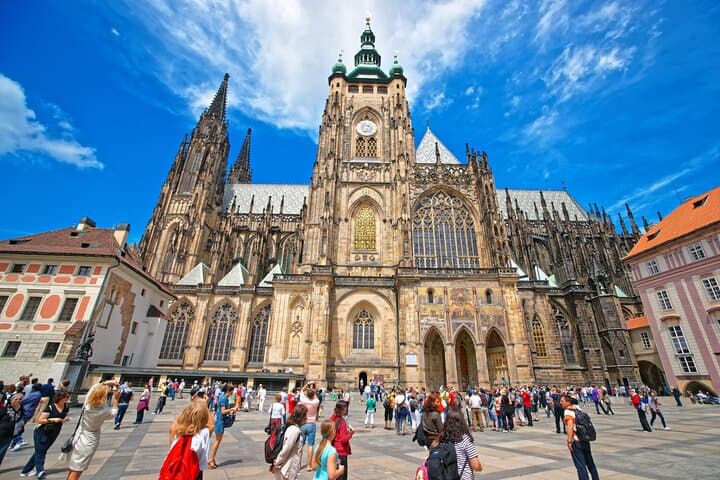
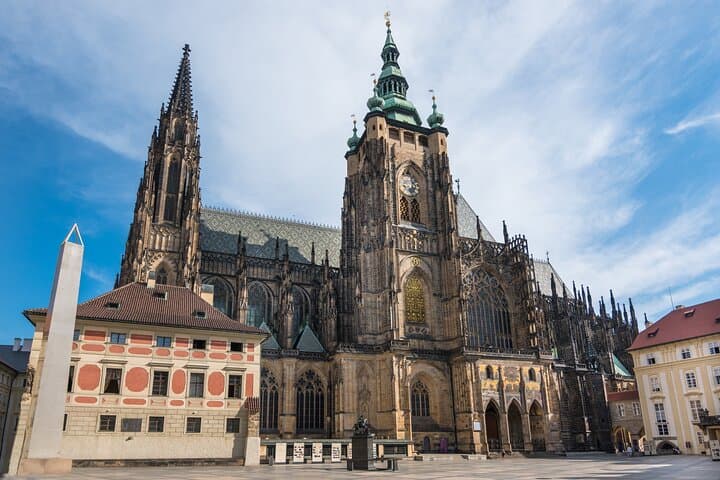
Prague Castle began in the 9th century as a fortified seat of Bohemian rulers and evolved into a complex containing the Gothic St. Vitus Cathedral, the Old Royal Palace, St George’s Basilica and the narrow artisan houses of Golden Lane. The hill itself is a rocky promontory above the Vltava, commanding the approaches to the old city and shaping Prague’s urban spine.
Culturally, this route threads Hradčany’s diplomatic squares, Baroque churches in the Lesser Town and the medieval crossings of Charles Bridge — each stop layered with legends, coronation rites and later Habsburg and Czech state history. Guides focus on architecture, royal artifacts and the daily life that once animated these courtyards.
Practicalities matter: choose a 2–5 hour option depending on whether you want transfers or a deeper walking tour. Early mornings or late afternoons cut the crowds and make photography easier; church interiors may be restricted during services. Comfortable shoes, a valid ID for ticketing and modest attire for religious sites keep the visit smooth. For groups needing logistics, private car transfers are available to and from central Prague addresses to minimize transit time.
This is an urban walk that rewards attention—stone, glass and carved wood reveal Prague’s long human story if you know where to look.
easy.
2–5 hours.
Suitable for most fitness levels—expect urban walking with short uphill sections and stairs.
Yes; the tour includes admission to Prague Castle, St. Vitus Cathedral, the Old Royal Palace and St George’s Basilica for the selected option.
Private round-trip transfers are available with the 3- and 5-hour options—provide your accommodation address at booking for pickup details.
The operator lists wheelchair- and stroller-accessible options, but some historic surfaces and stairs may limit access to certain areas—confirm needs when booking.
Admission to St Vitus Tower is not included; access may be restricted and requires separate permission or tickets when available.
Prague Castle originated in the 9th century and grew over centuries as the seat of Bohemian rulers, later Habsburg officials and the modern Czech state.
High foot traffic makes preservation efforts important—stay on marked paths, avoid touching fragile artifacts and follow guide instructions to protect interiors and artworks.
Rosotravel - Ostrava City Tours operates guided outdoor trips and adventures with an emphasis on safety, stewardship, and memorable experiences.

Morning light slides down the cobblestones of Hradčany as a guide waits by the statue of Tomáš Garrigue Masaryk, ready to lead a small group uphill to the castle plateau. The Vltava glints below and the city compresses into rooftops and spires; each step toward the castle feels like walking into centuries of governance, worship and craft.
Morning light slides down the cobblestones of Hradčany as a guide waits by the statue of Tomáš Garrigue Masaryk, ready to lead a small group uphill to the castle plateau. The Vltava glints below and the city compresses into rooftops and spires; each step toward the castle feels like walking into centuries of governance, worship and craft.
Prague Castle began in the 9th century as a fortified seat of Bohemian rulers and evolved into a complex containing the Gothic St. Vitus Cathedral, the Old Royal Palace, St George’s Basilica and the narrow artisan houses of Golden Lane. The hill itself is a rocky promontory above the Vltava, commanding the approaches to the old city and shaping Prague’s urban spine.
Culturally, this route threads Hradčany’s diplomatic squares, Baroque churches in the Lesser Town and the medieval crossings of Charles Bridge — each stop layered with legends, coronation rites and later Habsburg and Czech state history. Guides focus on architecture, royal artifacts and the daily life that once animated these courtyards.
Practicalities matter: choose a 2–5 hour option depending on whether you want transfers or a deeper walking tour. Early mornings or late afternoons cut the crowds and make photography easier; church interiors may be restricted during services. Comfortable shoes, a valid ID for ticketing and modest attire for religious sites keep the visit smooth. For groups needing logistics, private car transfers are available to and from central Prague addresses to minimize transit time.
This is an urban walk that rewards attention—stone, glass and carved wood reveal Prague’s long human story if you know where to look.