THE ADVENTURE COLLECTIVE® · Independent discovery and booking for outdoor travel

Explore Prague Castle with a local guide on a focused 2.5-hour small-group tour. Visit St. Vitus Cathedral, the Old Royal Palace, the Basilica of St. George and the Golden Lane while learning the site's layered history.
Explore Prague Castle with a local guide on a focused 2.5-hour small-group tour. Visit St. Vitus Cathedral, the Old Royal Palace, the Basilica of St. George and the Golden Lane while learning the site's layered history.
Morning light cuts across Hradčany as the guide meets the group in the First Courtyard, the stonework still cool underfoot. Walks move from stately courts to the soaring nave of St. Vitus Cathedral; each turn reveals a different century—Gothic buttresses, Renaissance halls and Baroque chapels—stacked on a hill that has held power since the 9th century.
Verified experiences and guided adventures in the surrounding area.
Operated by czechguidingtours · Prague, Prague
Morning light cuts across Hradčany as the guide meets the group in the First Courtyard, the stonework still cool underfoot. Walks move from stately courts to the soaring nave of St. Vitus Cathedral; each turn reveals a different century—Gothic buttresses, Renaissance halls and Baroque chapels—stacked on a hill that has held power since the 9th century.
Prague Castle grew from a fortified hill fort into one of the world’s largest castle complexes. Visitors pass the Second Courtyard where Habsburg-era façades frame the president’s office, then enter the third courtyard dominated by St. Vitus, whose stained glass and royal tombs hold the city’s stories. The Old Royal Palace and Vladislav Hall show medieval governance and ceremonial space; the Basilica of St. George preserves Romanesque simplicity. The narrow Golden Lane, built into the northern fortification, offers a human-scale counterpoint to grand state rooms.
This small-group tour (up to 10) runs about 2.5 hours and includes admission to the cathedral, palace, basilica and Golden Lane. Expect stairs, short lines for interiors and periods of standing during guided explanation. Guides fill gaps in the guidebooks with local anecdotes and architectural detail.
Plan for comfortable shoes, a light layer for shifting weather, and set aside time to step onto a terrace or into a quiet lane after the group departs; the castle complex rewards a slower second look.
moderate.
2–2.5 hours.
Light to moderate mobility—able to stand and walk on uneven stone and climb stairs.
The tour provides entrance tickets in advance, but interior visits sometimes require standing in a common line; guides work to keep that wait informative.
Many areas are wheelchair-accessible and transportation options accommodate wheelchairs, but some historic interiors have steps—check specifics with the operator in advance.
Photography rules vary by interior; informal photos are generally allowed, but flash and tripods are usually restricted—follow guide instructions.
The meeting point is the First Courtyard of Prague Castle, reachable on foot from Hradčanské náměstí or by tram to Castle District stops; allow time for uphill approach.
Prague Castle began as a 9th‑century hill fort and evolved through Romanesque, Gothic and Baroque phases as the seat of Bohemian rulers and, since 1918, the Czechoslovak and Czech presidencies.
High visitor numbers put pressure on fragile interiors; stay on marked routes, avoid touching artifacts, and follow local guidance to help preserve the complex.
czechguidingtours operates guided outdoor trips and adventures with an emphasis on safety, stewardship, and memorable experiences.
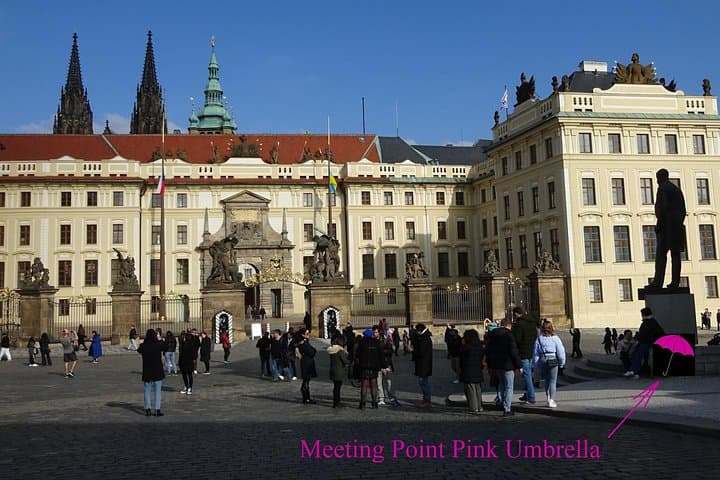
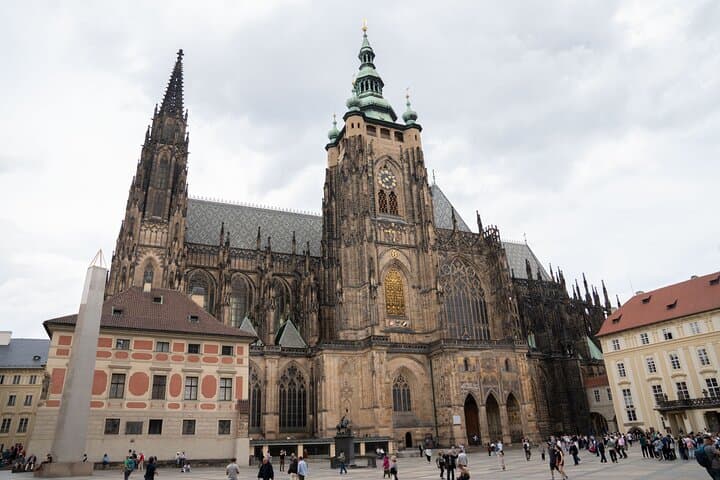
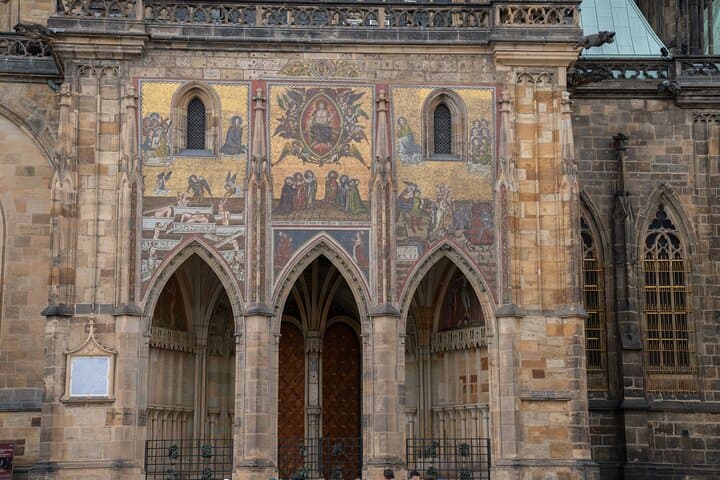
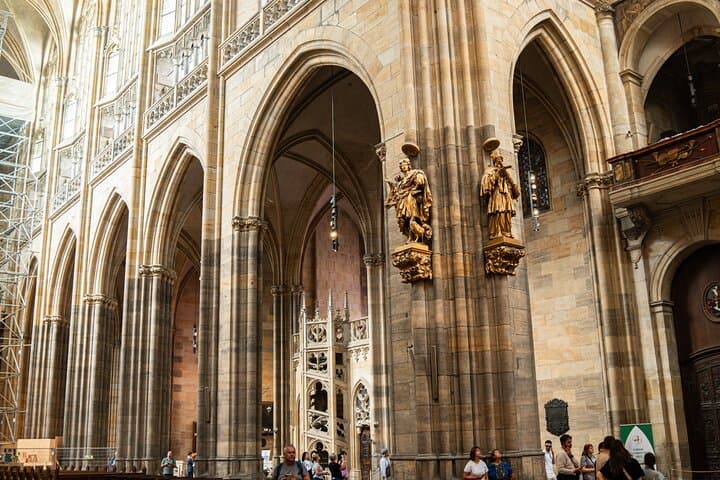
Morning light cuts across Hradčany as the guide meets the group in the First Courtyard, the stonework still cool underfoot. Walks move from stately courts to the soaring nave of St. Vitus Cathedral; each turn reveals a different century—Gothic buttresses, Renaissance halls and Baroque chapels—stacked on a hill that has held power since the 9th century.
Morning light cuts across Hradčany as the guide meets the group in the First Courtyard, the stonework still cool underfoot. Walks move from stately courts to the soaring nave of St. Vitus Cathedral; each turn reveals a different century—Gothic buttresses, Renaissance halls and Baroque chapels—stacked on a hill that has held power since the 9th century.
Prague Castle grew from a fortified hill fort into one of the world’s largest castle complexes. Visitors pass the Second Courtyard where Habsburg-era façades frame the president’s office, then enter the third courtyard dominated by St. Vitus, whose stained glass and royal tombs hold the city’s stories. The Old Royal Palace and Vladislav Hall show medieval governance and ceremonial space; the Basilica of St. George preserves Romanesque simplicity. The narrow Golden Lane, built into the northern fortification, offers a human-scale counterpoint to grand state rooms.
This small-group tour (up to 10) runs about 2.5 hours and includes admission to the cathedral, palace, basilica and Golden Lane. Expect stairs, short lines for interiors and periods of standing during guided explanation. Guides fill gaps in the guidebooks with local anecdotes and architectural detail.
Plan for comfortable shoes, a light layer for shifting weather, and set aside time to step onto a terrace or into a quiet lane after the group departs; the castle complex rewards a slower second look.