THE ADVENTURE COLLECTIVE® · Independent discovery and booking for outdoor travel

Walk Prague Castle at your own pace with a downloadable audio guide that narrates the site’s legends and architecture. This 39-minute self-guided route covers St. Vitus, Golden Lane and the Rosenberg Palace with offline maps and historical context.
Walk Prague Castle at your own pace with a downloadable audio guide that narrates the site’s legends and architecture. This 39-minute self-guided route covers St. Vitus, Golden Lane and the Rosenberg Palace with offline maps and historical context.
The path opens on a cool stone terrace above the Vltava: cathedral spires pierce a low sky and cobbled lanes funnel toward a fortress that has held Bohemian power for a thousand years.
Verified experiences and guided adventures in the surrounding area.
Operated by SOUNDWALKRS · Prague, Prague
The path opens on a cool stone terrace above the Vltava: cathedral spires pierce a low sky and cobbled lanes funnel toward a fortress that has held Bohemian power for a thousand years.
This self-guided audio walk begins at the Old Royal Palace and threads through Prague Castle’s compound—St. Vitus Cathedral with its soaring Gothic nave, the compact houses of Golden Lane, the austere facade of St. George’s Basilica and the frescoed Rosenberg Palace. Narration channels figures of the past, including Prince Dalibor, whose imprisonment and legend still linger in the castle tower that bears his name.
Geology and placement are part of the story: the Castle stands on a rocky promontory above the Vltava, a defensible site chosen in the 9th–10th centuries that grew into a royal and later presidential seat. Layers of Romanesque, Gothic and Renaissance architecture reveal cultural shifts, while small details—fresco ceilings, relic displays and stone staircases—speak to craft and patronage over centuries.
Practically, the tour is compact (about 39 minutes of narration) and built for offline use with maps and tips. Expect lots of short walking sections on uneven cobbles and shallow steps; many interiors require paid admission and timed entry. Download chapters before you go, start early to avoid peak crowds on the castle grounds, and leave time if you plan to enter St. Vitus or the Golden Lane houses. Comfortable shoes, a water bottle and a charged phone for maps make this an efficient, atmosphere-rich way to take the Castle on your own terms.
easy.
30–45 minutes.
Suitable for most fitness levels; involves standing and short walks over cobbles and steps
The narrated content runs about 39 minutes, but allow extra time if you plan to enter museums or the cathedral.
No—listening and walking the exterior route requires no ticket, but several interiors on the route have separate paid entry and timed admission.
Many outdoor surfaces are cobbled and include steps; the provider lists areas as wheelchair accessible but check specific building access and entrances before arrival.
Yes—the tour provides downloadable chapters so you can pause, explore a site, and resume where you left off.
Prague Castle began as a fortified seat in the 9th–10th centuries and expanded through Romanesque, Gothic and Renaissance periods as the political and spiritual center of Bohemia.
High visitor numbers stress fragile interiors and frescoes—stick to marked paths, avoid touching surfaces, and follow signage to support preservation.
SOUNDWALKRS operates guided outdoor trips and adventures with an emphasis on safety, stewardship, and memorable experiences.
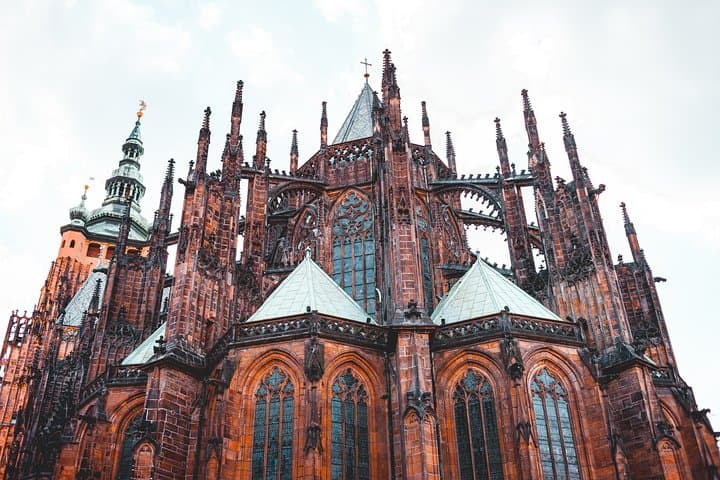


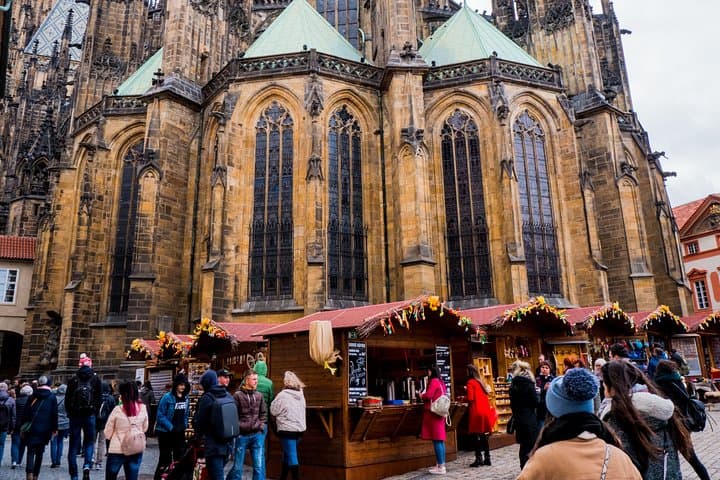
The path opens on a cool stone terrace above the Vltava: cathedral spires pierce a low sky and cobbled lanes funnel toward a fortress that has held Bohemian power for a thousand years.
The path opens on a cool stone terrace above the Vltava: cathedral spires pierce a low sky and cobbled lanes funnel toward a fortress that has held Bohemian power for a thousand years.
This self-guided audio walk begins at the Old Royal Palace and threads through Prague Castle’s compound—St. Vitus Cathedral with its soaring Gothic nave, the compact houses of Golden Lane, the austere facade of St. George’s Basilica and the frescoed Rosenberg Palace. Narration channels figures of the past, including Prince Dalibor, whose imprisonment and legend still linger in the castle tower that bears his name.
Geology and placement are part of the story: the Castle stands on a rocky promontory above the Vltava, a defensible site chosen in the 9th–10th centuries that grew into a royal and later presidential seat. Layers of Romanesque, Gothic and Renaissance architecture reveal cultural shifts, while small details—fresco ceilings, relic displays and stone staircases—speak to craft and patronage over centuries.
Practically, the tour is compact (about 39 minutes of narration) and built for offline use with maps and tips. Expect lots of short walking sections on uneven cobbles and shallow steps; many interiors require paid admission and timed entry. Download chapters before you go, start early to avoid peak crowds on the castle grounds, and leave time if you plan to enter St. Vitus or the Golden Lane houses. Comfortable shoes, a water bottle and a charged phone for maps make this an efficient, atmosphere-rich way to take the Castle on your own terms.