THE ADVENTURE COLLECTIVE® · Independent discovery and booking for outdoor travel

Escape Corralejo’s lights for a guided night under Fuerteventura’s volcanic sky. This small-group, 1.5–2 hour session uses binoculars, a telescope when conditions allow, and a trained Starlight Guide to reveal planets, constellations and shooting stars.
Escape Corralejo’s lights for a guided night under Fuerteventura’s volcanic sky. This small-group, 1.5–2 hour session uses binoculars, a telescope when conditions allow, and a trained Starlight Guide to reveal planets, constellations and shooting stars.
On a clear night at Pozo Negro the sky opens in slow motion: a cratered moon hangs above low volcanic ridges while the Milky Way slices a pale river across the vault of night. Guests recline on rugs around a rough stone circle as a Starlight Guide trained by the Canary Islands Astrophysics Institute points out planets, constellations and the occasional meteor.
Verified experiences and guided adventures in the surrounding area.
Operated by Stars by Night · Corralejo, Las Palmas
On a clear night at Pozo Negro the sky opens in slow motion: a cratered moon hangs above low volcanic ridges while the Milky Way slices a pale river across the vault of night. Guests recline on rugs around a rough stone circle as a Starlight Guide trained by the Canary Islands Astrophysics Institute points out planets, constellations and the occasional meteor.
Fuerteventura’s geology is blunt and volcanic—ancient lava flows and wind-smoothed basalt define the horizon, and the island’s relative isolation keeps light pollution low along this eastern shore. Cultural threads here run from indigenous Guanche star lore to modern astronomy outreach; local guides often blend myths and maps to make the night sky legible and memorable.
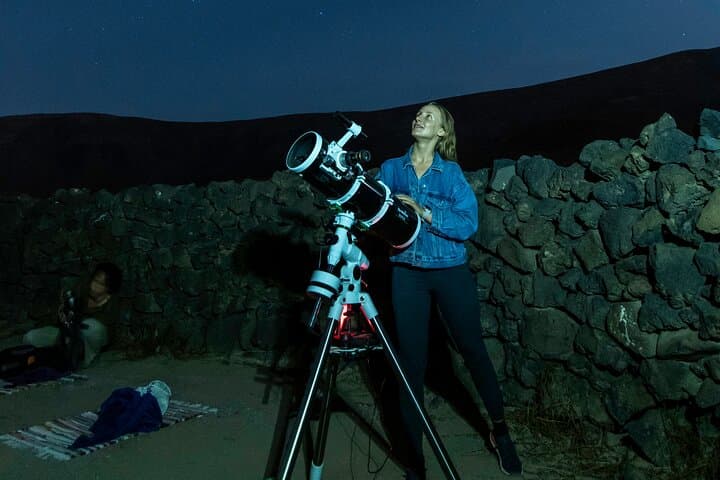
The outing is a small-group, 90–120 minute field session held after sunset (commonly Tuesdays, avoiding full moons). Equipment is basic but effective: binoculars, an optional telescope depending on conditions, laser pointers and blankets for each guest. The observation point is largely flat and described as wheelchair accessible, though transport logistics mean some guests may need to self-drive.
Practical guidance: dress in windproof layers—the Atlantic breeze cools quickly after dark; bring a headlamp with a red filter to preserve night vision; silence or dim phones; hydrate beforehand. If you want crisp planetary views, book around a new moon and choose nights labeled clear. For first-timers this is low-effort and high-reward: minimal hiking, maximum sky.
easy.
1.5–2 hours.
Minimal fitness required—mostly sitting or short walks on flat ground
Yes—families and children are welcome; the site is stroller-accessible and the format is low-effort, though young children should be supervised around equipment.
Visibility depends on moon phase and cloud cover—on clear, moonless nights the Milky Way is prominent; full or near-full moons will wash it out.
Compliant transport is offered, but guests using wheelchairs are advised to drive themselves because the van cannot always carry passengers plus wheelchairs and equipment.
Telescopes are provided when conditions allow; the guide will use binoculars and laser pointers if seeing conditions or logistics limit telescope use.
The Canaries combine Guanche celestial traditions with modern astrophysics; the guide’s Starlight accreditation links local outreach to the Canary Islands Astrophysics Institute.
Operators limit artificial light and ask guests to use red lights to protect night vision and local wildlife; low-impact practices help preserve the island’s dark-sky value.
Stars by Night operates guided outdoor trips and adventures with an emphasis on safety, stewardship, and memorable experiences.
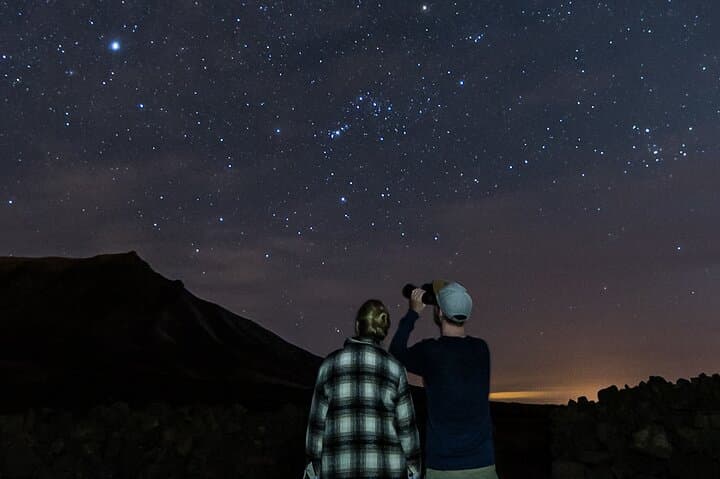
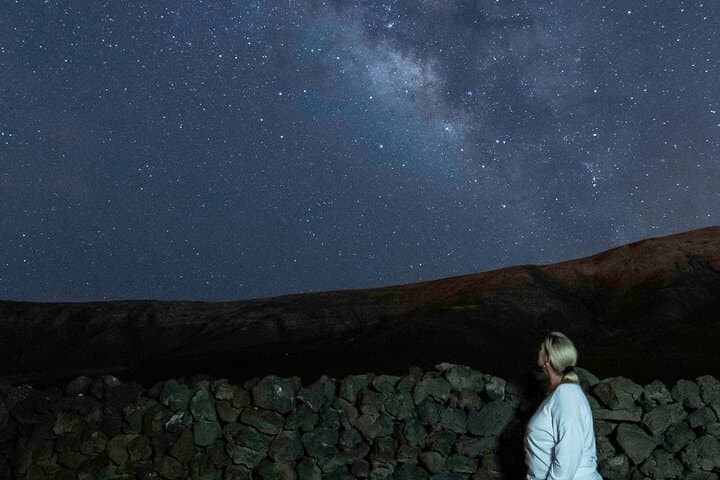
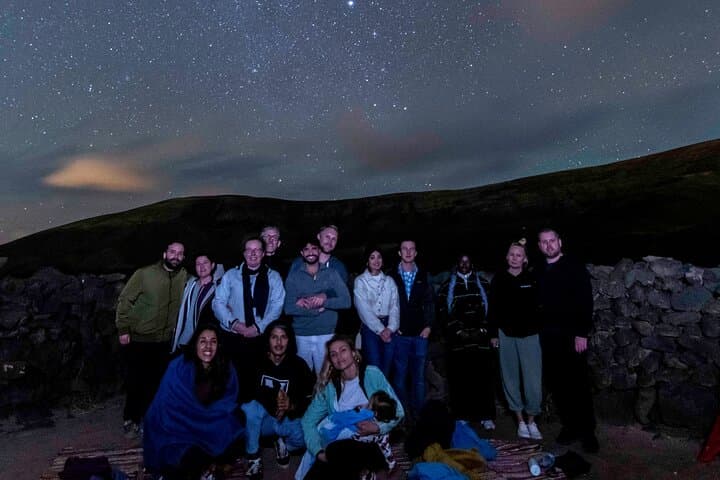
On a clear night at Pozo Negro the sky opens in slow motion: a cratered moon hangs above low volcanic ridges while the Milky Way slices a pale river across the vault of night. Guests recline on rugs around a rough stone circle as a Starlight Guide trained by the Canary Islands Astrophysics Institute points out planets, constellations and the occasional meteor.
On a clear night at Pozo Negro the sky opens in slow motion: a cratered moon hangs above low volcanic ridges while the Milky Way slices a pale river across the vault of night. Guests recline on rugs around a rough stone circle as a Starlight Guide trained by the Canary Islands Astrophysics Institute points out planets, constellations and the occasional meteor.
Fuerteventura’s geology is blunt and volcanic—ancient lava flows and wind-smoothed basalt define the horizon, and the island’s relative isolation keeps light pollution low along this eastern shore. Cultural threads here run from indigenous Guanche star lore to modern astronomy outreach; local guides often blend myths and maps to make the night sky legible and memorable.
The outing is a small-group, 90–120 minute field session held after sunset (commonly Tuesdays, avoiding full moons). Equipment is basic but effective: binoculars, an optional telescope depending on conditions, laser pointers and blankets for each guest. The observation point is largely flat and described as wheelchair accessible, though transport logistics mean some guests may need to self-drive.
Practical guidance: dress in windproof layers—the Atlantic breeze cools quickly after dark; bring a headlamp with a red filter to preserve night vision; silence or dim phones; hydrate beforehand. If you want crisp planetary views, book around a new moon and choose nights labeled clear. For first-timers this is low-effort and high-reward: minimal hiking, maximum sky.