THE ADVENTURE COLLECTIVE® · Independent discovery and booking for outdoor travel

Take control of a powered hang glider above Oahu’s famed North Shore. This 30-minute trike flight from Dillingham Airfield combines a short hands-on lesson with sweeping views of reef, surf breaks and coastline.
Take control of a powered hang glider above Oahu’s famed North Shore. This 30-minute trike flight from Dillingham Airfield combines a short hands-on lesson with sweeping views of reef, surf breaks and coastline.
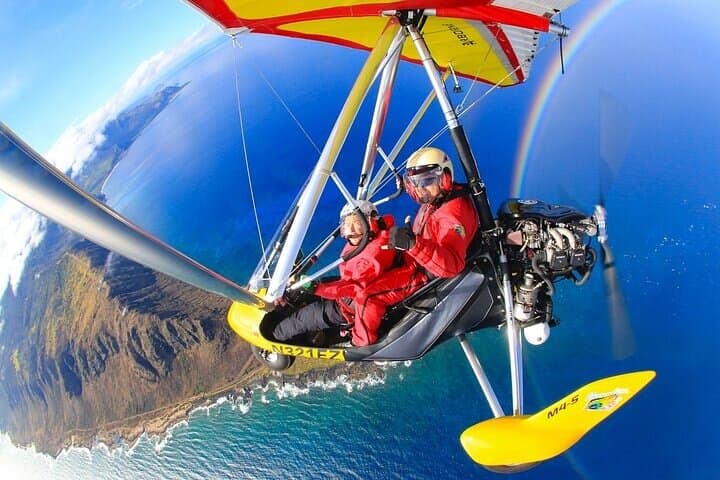
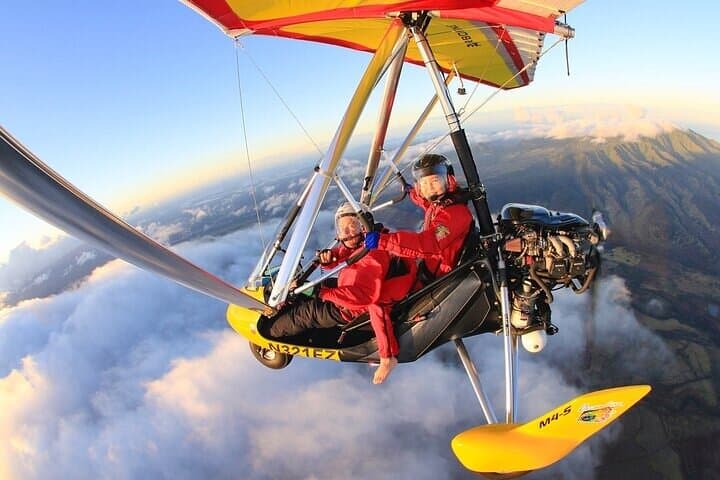
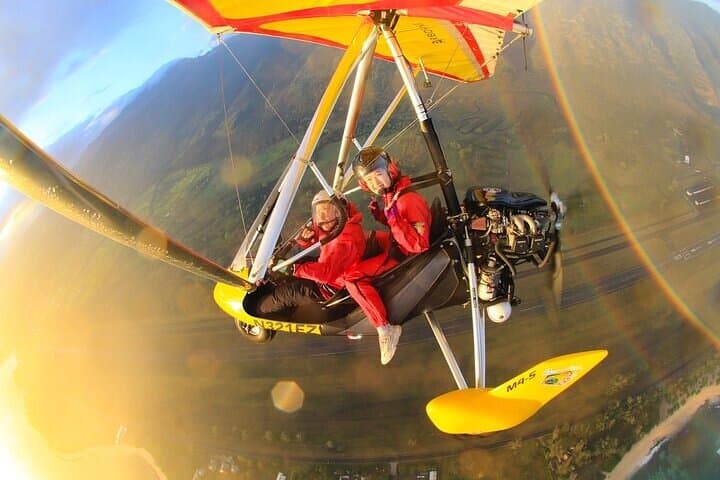
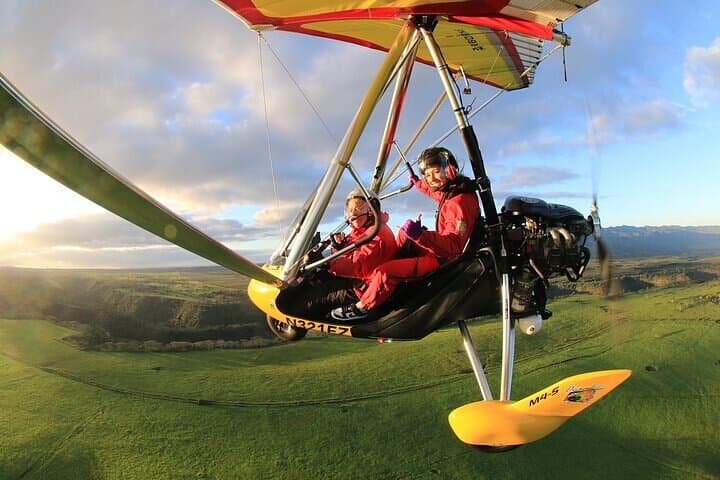
The trike lifts off like a bird that remembers where the wind wants to go. From Dillingham Airfield the Pacific stretches flat and blue, surf lines mark the reef breaks below, and the North Shore’s cliffs and beaches roll past as you ease the weight-shift wing into a turn. The roar of the 80-hp Rotax drops to a steady whisper; headset chatter and the pilot’s prompts are your map.
Verified experiences and guided adventures in the surrounding area.
Operated by Paradise Air Hang Gliding · Kahuku, Hawaii
The trike lifts off like a bird that remembers where the wind wants to go. From Dillingham Airfield the Pacific stretches flat and blue, surf lines mark the reef breaks below, and the North Shore’s cliffs and beaches roll past as you ease the weight-shift wing into a turn. The roar of the 80-hp Rotax drops to a steady whisper; headset chatter and the pilot’s prompts are your map.
Dillingham began as a military airstrip and evolved into one of Oahu’s small-aircraft hubs — a pragmatic place to learn to fly above the island’s volcanic slopes and fringing reefs. Geologically you’re over young basalt shields and coastal limestone benches; culturally you’re over surf towns where local history, plantation-era roads and Hawaiian place names still guide the shoreline.
This experience blends an introductory lesson with guided flight: pilots explain controls, safety checks and weight-shift technique before you take hands-on time. Flights cruise near 70 mph, offering clear sightlines to Waimea Bay, Turtle Beach and Kaʻena Point on a good day. Weather rules the day here — trade winds can be playful or bracing, and operators cancel in unstable conditions.
Practical notes: arrive early for briefing, bring reef-safe sunscreen and secure sunglasses, and expect to climb into a low cockpit. Helmets, headsets and flight suits are provided. The activity is accessible to most ages and fitness levels but carries standard aviation safety and weight considerations. Plan to pair the flight with a relaxed morning in Haleiwa — the town’s cafés and surf culture are an easy cool-down after flying.
easy.
30–45 minutes.
No special fitness required beyond being able to climb into a low cockpit and follow safety instructions; suitable for most ages.
The advertised airborne time is about 30 minutes; allow extra time for briefing, harnessing and debrief, totaling roughly 30–45 minutes.
Operators have minimum age allowances and ask for passenger weights to ensure safe weight-and-balance; disclose weight when booking and on arrival.
Flights are weather-dependent; the operator typically cancels for unsafe wind or low ceilings and offers full refunds if canceled at least 24 hours in advance or per their storm policy.
Yes — after pre-flight instruction most guests get hands-on control under the instructor’s supervision; you’ll practice weight-shift inputs while the pilot monitors safety.
Dillingham began as a World War II Army airfield and later transitioned to civilian aviation and recreational flight operations, making it a long-standing local aviation hub.
Respect nesting turtle zones and avoid reef-damaging sunscreens and trampling; operators encourage reef-safe products and minimal wildlife disturbance.
Paradise Air Hang Gliding operates guided outdoor trips and adventures with an emphasis on safety, stewardship, and memorable experiences.
The trike lifts off like a bird that remembers where the wind wants to go. From Dillingham Airfield the Pacific stretches flat and blue, surf lines mark the reef breaks below, and the North Shore’s cliffs and beaches roll past as you ease the weight-shift wing into a turn. The roar of the 80-hp Rotax drops to a steady whisper; headset chatter and the pilot’s prompts are your map.
The trike lifts off like a bird that remembers where the wind wants to go. From Dillingham Airfield the Pacific stretches flat and blue, surf lines mark the reef breaks below, and the North Shore’s cliffs and beaches roll past as you ease the weight-shift wing into a turn. The roar of the 80-hp Rotax drops to a steady whisper; headset chatter and the pilot’s prompts are your map.
Dillingham began as a military airstrip and evolved into one of Oahu’s small-aircraft hubs — a pragmatic place to learn to fly above the island’s volcanic slopes and fringing reefs. Geologically you’re over young basalt shields and coastal limestone benches; culturally you’re over surf towns where local history, plantation-era roads and Hawaiian place names still guide the shoreline.
This experience blends an introductory lesson with guided flight: pilots explain controls, safety checks and weight-shift technique before you take hands-on time. Flights cruise near 70 mph, offering clear sightlines to Waimea Bay, Turtle Beach and Kaʻena Point on a good day. Weather rules the day here — trade winds can be playful or bracing, and operators cancel in unstable conditions.
Practical notes: arrive early for briefing, bring reef-safe sunscreen and secure sunglasses, and expect to climb into a low cockpit. Helmets, headsets and flight suits are provided. The activity is accessible to most ages and fitness levels but carries standard aviation safety and weight considerations. Plan to pair the flight with a relaxed morning in Haleiwa — the town’s cafés and surf culture are an easy cool-down after flying.