THE ADVENTURE COLLECTIVE® · Independent discovery and booking for outdoor travel

See Porto’s rooftops, the Douro’s sweep, and landmark squares in a nimble three‑hour tuk‑tuk loop. This private tour pairs panoramic viewpoints with compact walks to key historic sites.
See Porto’s rooftops, the Douro’s sweep, and landmark squares in a nimble three‑hour tuk‑tuk loop. This private tour pairs panoramic viewpoints with compact walks to key historic sites.
The tuk‑tuk hums through Porto’s narrow streets as tiles and azulejo facades slide past — a compact, open-air theater of everyday life. You crest the hill toward Serra do Pilar and the River Douro dares you to look away: terraced vineyards, red roofs, and the sweep of boats at the riverbank unfold below.
Verified experiences and guided adventures in the surrounding area.
Operated by Green Tours · Porto, Porto
The tuk‑tuk hums through Porto’s narrow streets as tiles and azulejo facades slide past — a compact, open-air theater of everyday life. You crest the hill toward Serra do Pilar and the River Douro dares you to look away: terraced vineyards, red roofs, and the sweep of boats at the riverbank unfold below.
This short loop stitches together Porto’s layered history: Roman roots, medieval walls, and the 18th–19th century mercantile boom that left neoclassical Aliados and ornate Palácio da Bolsa. The city's geology — granite outcrops meeting the Douro estuary — shaped where people built and how neighborhoods stacked on slopes. Culture here is tactile: market voices at Bolhão, fado rhythms in tucked cafés, and the port wine cellars across the river that recall centuries of trade.
On this three‑hour private tour, expect quick stops at São Bento station, Porto Cathedral, the Clerigos Tower, and the Cais de Gaia viewpoint; some attractions are viewed from the vehicle depending on traffic and your choices. Guides mix concise history with local tips — where to taste francesinha or time a sunset at Passeio das Virtudes.
Practically: wear low‑profile shoes for quick walks, bring a wind layer for the riverfront, and keep a charged camera ready — vistas change with every turn. Mornings avoid the busiest streets; late afternoons give golden light but heavier traffic. For visitors who want context without a lot of walking, the tuk‑tuk is a nimble, readable way to orient yourself to Porto before wandering on foot.
easy.
3 hours.
Suitable for most fitness levels; involves short, low-impact walks at stops.
The tuk‑tuk is listed as wheelchair and stroller accessible; confirm specific accessibility needs at booking so the operator can prepare.
Admissions are generally not included—this tour focuses on viewpoints and exterior visits; the guide will advise if you choose to enter paid sites.
Infants must sit on an adult’s lap per operator policy; bring any required child restraints if preferred.
The tour may be canceled for unsafe weather with a full refund if canceled at least 24 hours prior; operators will usually offer alternatives when possible.
Porto’s growth accelerated in the 18th–19th centuries with maritime trade along the Douro; the riverside warehouses became the port wine lodges of Vila Nova de Gaia.
City preservation focuses on maintaining historic facades and managing tourism pressure in UNESCO areas; visitors are asked to respect signage and avoid littering.
Green Tours operates guided outdoor trips and adventures with an emphasis on safety, stewardship, and memorable experiences.
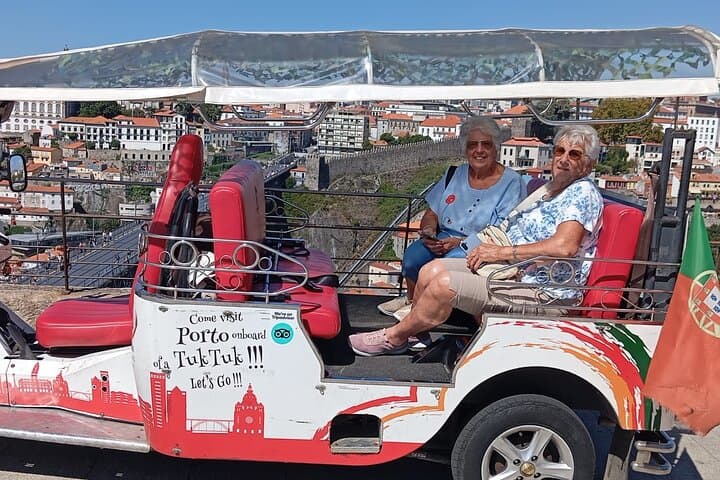
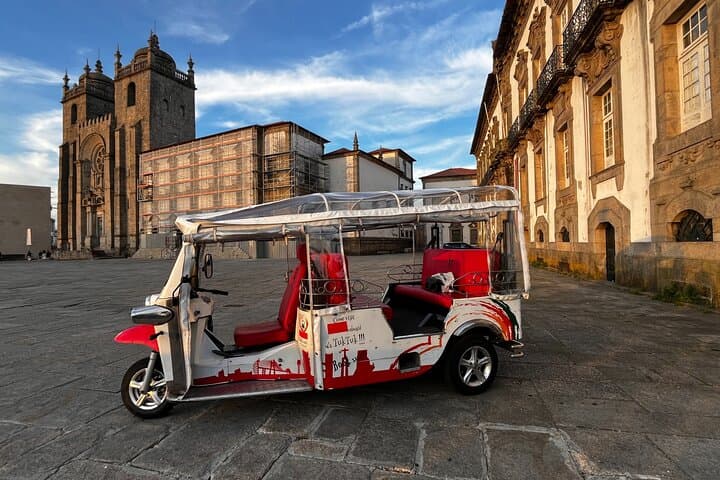
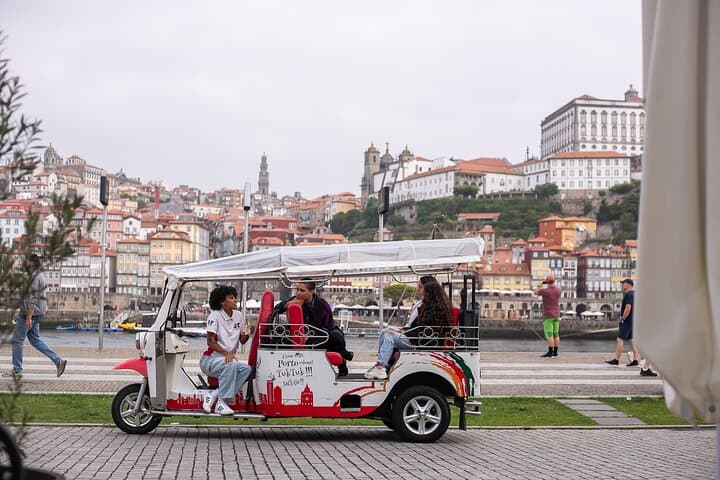
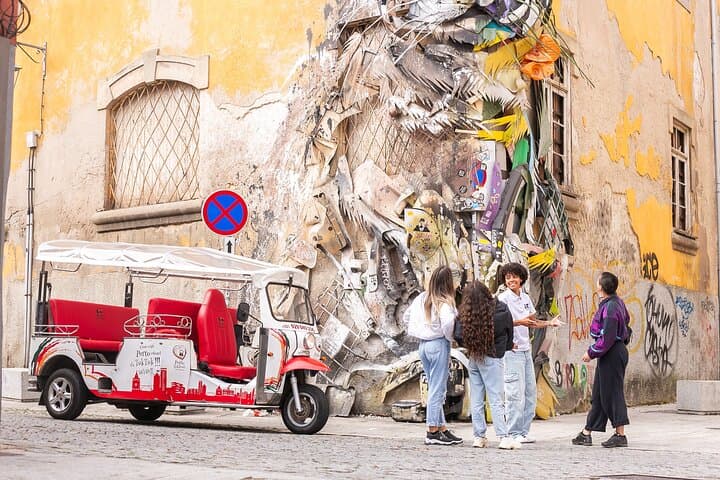
The tuk‑tuk hums through Porto’s narrow streets as tiles and azulejo facades slide past — a compact, open-air theater of everyday life. You crest the hill toward Serra do Pilar and the River Douro dares you to look away: terraced vineyards, red roofs, and the sweep of boats at the riverbank unfold below.
The tuk‑tuk hums through Porto’s narrow streets as tiles and azulejo facades slide past — a compact, open-air theater of everyday life. You crest the hill toward Serra do Pilar and the River Douro dares you to look away: terraced vineyards, red roofs, and the sweep of boats at the riverbank unfold below.
This short loop stitches together Porto’s layered history: Roman roots, medieval walls, and the 18th–19th century mercantile boom that left neoclassical Aliados and ornate Palácio da Bolsa. The city's geology — granite outcrops meeting the Douro estuary — shaped where people built and how neighborhoods stacked on slopes. Culture here is tactile: market voices at Bolhão, fado rhythms in tucked cafés, and the port wine cellars across the river that recall centuries of trade.
On this three‑hour private tour, expect quick stops at São Bento station, Porto Cathedral, the Clerigos Tower, and the Cais de Gaia viewpoint; some attractions are viewed from the vehicle depending on traffic and your choices. Guides mix concise history with local tips — where to taste francesinha or time a sunset at Passeio das Virtudes.
Practically: wear low‑profile shoes for quick walks, bring a wind layer for the riverfront, and keep a charged camera ready — vistas change with every turn. Mornings avoid the busiest streets; late afternoons give golden light but heavier traffic. For visitors who want context without a lot of walking, the tuk‑tuk is a nimble, readable way to orient yourself to Porto before wandering on foot.