THE ADVENTURE COLLECTIVE® · Independent discovery and booking for outdoor travel

Navigate Porto at your own pace with a private audio guide covering 17 highlights from azulejo-clad stations to riverside viewpoints. Flexible, informative, and ideal for independent travelers who want depth without a fixed schedule.
Navigate Porto at your own pace with a private audio guide covering 17 highlights from azulejo-clad stations to riverside viewpoints. Flexible, informative, and ideal for independent travelers who want depth without a fixed schedule.
You step off the tram into a sunlit square, headphones in place, and Porto unfurls like a city that kept its stories in stone and tile. The Douro dares you to follow its curve as riverfront houses lean toward the water, rabelo boats bobbing like punctuation marks. Each audio chapter places you before a façade, a bell tower, or a market stall and hands you the local line.
Verified experiences and guided adventures in the surrounding area.
Operated by Uvamai Niche Tourism · Porto, Porto
You step off the tram into a sunlit square, headphones in place, and Porto unfurls like a city that kept its stories in stone and tile. The Douro dares you to follow its curve as riverfront houses lean toward the water, rabelo boats bobbing like punctuation marks. Each audio chapter places you before a façade, a bell tower, or a market stall and hands you the local line.
Porto’s history is readable in azulejo — blue-and-white tiles that record trade, faith, and migration — and in the iron ribs of 19th-century bridges that link the two riverbanks. Geologically, the city sits on granite bluffs carved by the Douro; those steep streets and steps are part of its character and its challenge. Culturally, the route threads religious brotherhoods, medieval merchants, and the port-wine houses of Gaia into a walkable timeline.
The experience is practical as it is poetic: 17 mapped stops include São Bento station’s tiled murals, baroque churches, the Ribeira waterfront, and elevated gardens with city views. Narration offers architecture and social context you won’t find on every plaque — and you control pace and order. Links arrive before your start date and stay active for up to six days, so you can split the route.
Plan for cobbles, frequent stairs, and busy squares. Bring a full phone battery and earphones, wear sturdy shoes, and allow three to nine hours depending on linger time. Start early to beat crowds or late afternoon for softer light; the Douro rewards those who take the long way home.
moderate.
3–9 hours.
Suitable for travelers who can walk several miles over uneven ground and climb stairs; frequent breaks make the route accessible to most fit visitors.
You’ll get two private links before your start date: a SoundCloud playlist for audio and a Google My Maps link for the itinerary; open both in your phone browser.
The audio content is accessible and many central sites are reachable, but expect uneven pavements and staircases on some routes — plan an accessible path using the map in advance.
Yes—links remain valid until the tour is complete (maximum six days), so you can pause and resume as needed.
No — the audio guide provides context and suggests stops, but any paid admissions are your responsibility.
Porto’s riverside and tile-clad buildings reflect centuries of maritime trade and the rise of the port wine trade; the historic center is a UNESCO World Heritage site.
Respect tilework and church interiors by not touching azulejos and follow local signage; support independent vendors and avoid single-use plastics to reduce visitor impact.
Uvamai Niche Tourism operates guided outdoor trips and adventures with an emphasis on safety, stewardship, and memorable experiences.
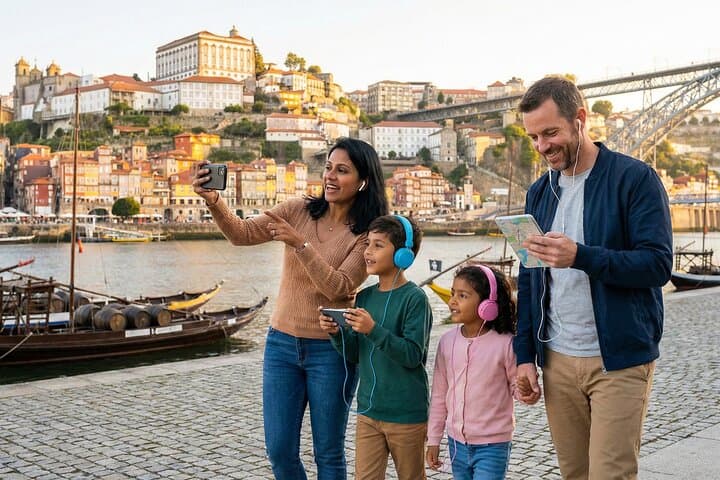
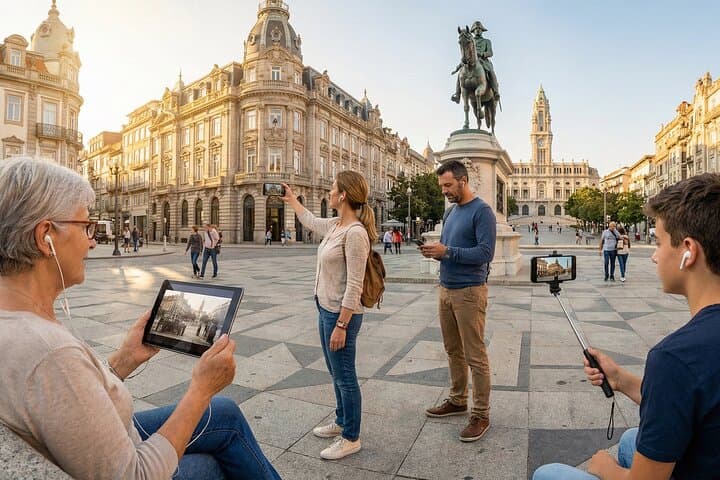


You step off the tram into a sunlit square, headphones in place, and Porto unfurls like a city that kept its stories in stone and tile. The Douro dares you to follow its curve as riverfront houses lean toward the water, rabelo boats bobbing like punctuation marks. Each audio chapter places you before a façade, a bell tower, or a market stall and hands you the local line.
You step off the tram into a sunlit square, headphones in place, and Porto unfurls like a city that kept its stories in stone and tile. The Douro dares you to follow its curve as riverfront houses lean toward the water, rabelo boats bobbing like punctuation marks. Each audio chapter places you before a façade, a bell tower, or a market stall and hands you the local line.
Porto’s history is readable in azulejo — blue-and-white tiles that record trade, faith, and migration — and in the iron ribs of 19th-century bridges that link the two riverbanks. Geologically, the city sits on granite bluffs carved by the Douro; those steep streets and steps are part of its character and its challenge. Culturally, the route threads religious brotherhoods, medieval merchants, and the port-wine houses of Gaia into a walkable timeline.
The experience is practical as it is poetic: 17 mapped stops include São Bento station’s tiled murals, baroque churches, the Ribeira waterfront, and elevated gardens with city views. Narration offers architecture and social context you won’t find on every plaque — and you control pace and order. Links arrive before your start date and stay active for up to six days, so you can split the route.
Plan for cobbles, frequent stairs, and busy squares. Bring a full phone battery and earphones, wear sturdy shoes, and allow three to nine hours depending on linger time. Start early to beat crowds or late afternoon for softer light; the Douro rewards those who take the long way home.