THE ADVENTURE COLLECTIVE® · Independent discovery and booking for outdoor travel

A gentle shore excursion from Kavala to the reed-choked lagoons of Lake Vistonida, where flamingos feed and a small island hosts the Floating Monastery of Saint Nicholas. Expect easy walks, birdwatching, and a quiet taste of coastal Thrace.
A gentle shore excursion from Kavala to the reed-choked lagoons of Lake Vistonida, where flamingos feed and a small island hosts the Floating Monastery of Saint Nicholas. Expect easy walks, birdwatching, and a quiet taste of coastal Thrace.
The day begins as the minibus leaves Kavala’s port and the shore slides into marsh and sky: low salt flats, reedbeds that sway like a restless sea, and a horizon split by a tiny island crowned with whitewashed walls. At Porto Lagos the air smells faintly of brine and frying fish, and wooden footbridges creak as you cross toward the Floating Monastery of Saint Nicholas.
Verified experiences and guided adventures in the surrounding area.
Operated by Avalon Travel Kefalonia · Kavala, Eastern Macedonia and Thrace
The day begins as the minibus leaves Kavala’s port and the shore slides into marsh and sky: low salt flats, reedbeds that sway like a restless sea, and a horizon split by a tiny island crowned with whitewashed walls. At Porto Lagos the air smells faintly of brine and frying fish, and wooden footbridges creak as you cross toward the Floating Monastery of Saint Nicholas.
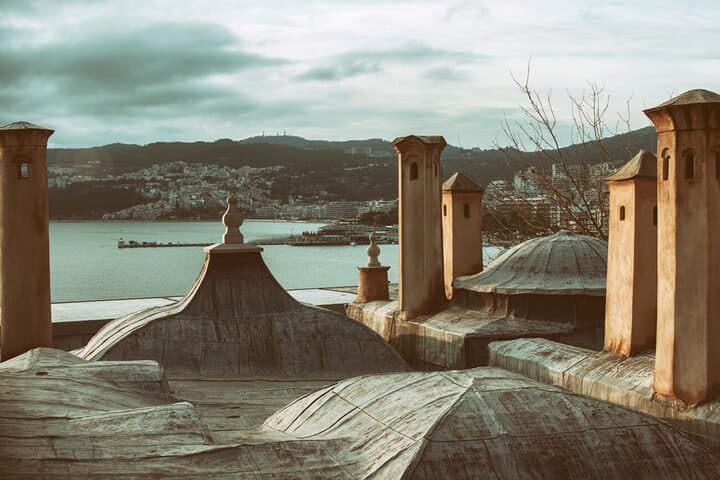
This stretch of the northern Aegean sits where Thracian plains meet coastal lagoon — a landscape shaped by sediment, wind and centuries of maritime trade. Porto Lagos and the nearby Church of Panagia Pantanassa reflect Byzantine and Ottoman-era layers; Kavala itself grew as a regional port and tobacco center, visible in its cobbled alleys and seaside cafés.
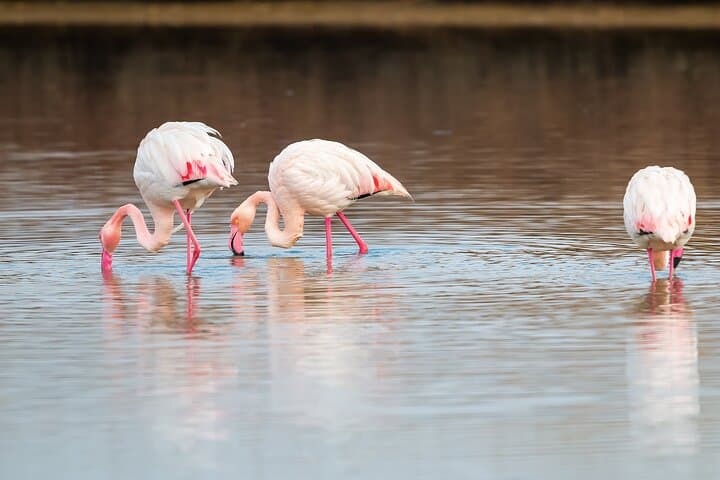
Geologically the lagoon is young and shallow, a mosaic of mudflats and reed beds that funnels migrants along the East Mediterranean flyway; flamingos pick at the shallows while herons stalk the margins. Local life revolves around the lake: small tavernas serve seafood, fishermen mend nets, and birdwatchers wait patiently with binoculars.
Practical guidance: the tour is roughly five hours with short, flat walks across stable wooden bridges; bring binoculars and a telephoto lens if you want close bird shots. Modest dress is requested for monastery visits—shoulders and knees covered—and comfortable shoes are recommended for damp boardwalks. Plan for variable light: mornings and late afternoons bring the best bird activity. Finally, respect nesting areas and keep a polite distance from flocks—this wetland is fragile and the birds depend on quiet observation.
easy.
5 hours.
Suitable for travelers with basic mobility; involves short, flat walks and standing while birdwatching.
Round-trip transfer from Kavala Port is approximately 2 hours total; the excursion itself lasts about five hours including stops.
Visitors cross wooden bridges to reach the monastery area; modest dress is required and access follows local religious protocols—your guide will advise on entry.
Wildlife sightings can’t be guaranteed, but Lake Vistonida is a regular stop for greater flamingos and other migratory species, especially during spring and autumn.
Yes—pathways are mostly flat and stroller-accessible, though some wooden bridges may be narrow; infant seats and stroller access are available.
The floating monastery and lakeside churches reflect the region’s Byzantine and Ottoman heritage; Kavala developed as a maritime trade hub and gateway to Thrace.
Lake Vistonida is an important wetland on migratory routes and benefits from protected-area designations; visitors should minimize disturbance by staying on paths and avoiding loud noises near bird concentrations.
Avalon Travel Kefalonia operates guided outdoor trips and adventures with an emphasis on safety, stewardship, and memorable experiences.
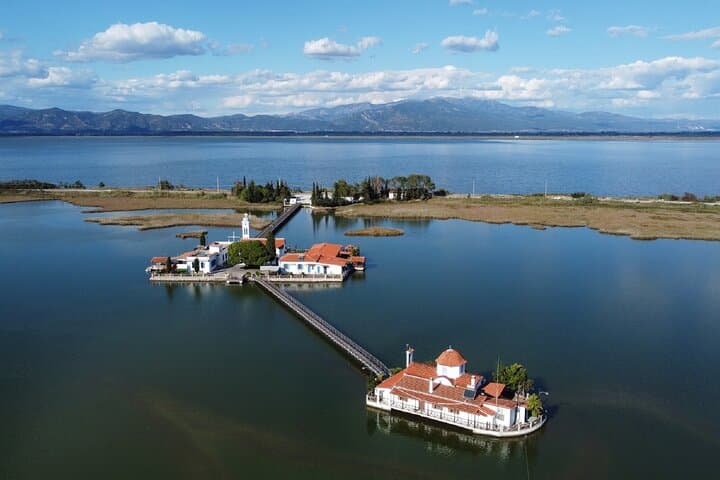
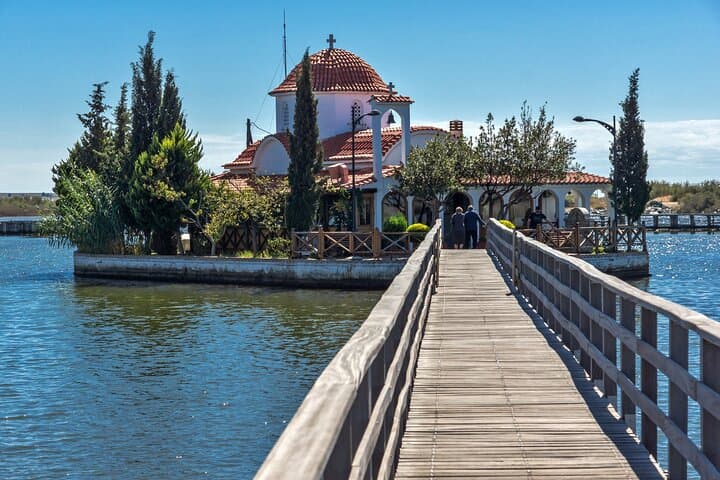
The day begins as the minibus leaves Kavala’s port and the shore slides into marsh and sky: low salt flats, reedbeds that sway like a restless sea, and a horizon split by a tiny island crowned with whitewashed walls. At Porto Lagos the air smells faintly of brine and frying fish, and wooden footbridges creak as you cross toward the Floating Monastery of Saint Nicholas.
The day begins as the minibus leaves Kavala’s port and the shore slides into marsh and sky: low salt flats, reedbeds that sway like a restless sea, and a horizon split by a tiny island crowned with whitewashed walls. At Porto Lagos the air smells faintly of brine and frying fish, and wooden footbridges creak as you cross toward the Floating Monastery of Saint Nicholas.
This stretch of the northern Aegean sits where Thracian plains meet coastal lagoon — a landscape shaped by sediment, wind and centuries of maritime trade. Porto Lagos and the nearby Church of Panagia Pantanassa reflect Byzantine and Ottoman-era layers; Kavala itself grew as a regional port and tobacco center, visible in its cobbled alleys and seaside cafés.
Geologically the lagoon is young and shallow, a mosaic of mudflats and reed beds that funnels migrants along the East Mediterranean flyway; flamingos pick at the shallows while herons stalk the margins. Local life revolves around the lake: small tavernas serve seafood, fishermen mend nets, and birdwatchers wait patiently with binoculars.
Practical guidance: the tour is roughly five hours with short, flat walks across stable wooden bridges; bring binoculars and a telephoto lens if you want close bird shots. Modest dress is requested for monastery visits—shoulders and knees covered—and comfortable shoes are recommended for damp boardwalks. Plan for variable light: mornings and late afternoons bring the best bird activity. Finally, respect nesting areas and keep a polite distance from flocks—this wetland is fragile and the birds depend on quiet observation.