THE ADVENTURE COLLECTIVE® · Independent discovery and booking for outdoor travel

Float without the plane: an 800-hp wind tunnel at iFLY Portland simulates free-fall with two guided flights and a certificate. This concise guide covers what to expect, safety rules, and local logistics so you can focus on the flight.
Float without the plane: an 800-hp wind tunnel at iFLY Portland simulates free-fall with two guided flights and a certificate. This concise guide covers what to expect, safety rules, and local logistics so you can focus on the flight.
You step into a windowed hangar on a grey Pacific Northwest morning and the building hums like a held breath. Inside, the wind is bottled and ordered: a vertical tunnel that will lift you cleanly off your feet. The instructor clips a helmet on, guides your posture, and the room compresses to the rhythm of the fans — the air demanding, playful, and precise.
Verified experiences and guided adventures in the surrounding area.
Operated by iFLY Indoor Skydiving · Portland, Oregon
You step into a windowed hangar on a grey Pacific Northwest morning and the building hums like a held breath. Inside, the wind is bottled and ordered: a vertical tunnel that will lift you cleanly off your feet. The instructor clips a helmet on, guides your posture, and the room compresses to the rhythm of the fans — the air demanding, playful, and precise.
Indoor skydiving borrows its language from high-altitude jumping but roots itself in wind-tunnel engineering developed in the 20th century for aviation and sport. In Portland, the tunnel sits on the edge of the Willamette Valley; to the east the Cascade Range carves the horizon and the region’s rain-fed temperate climate shapes an outdoors culture that prizes experiential thrills year-round.
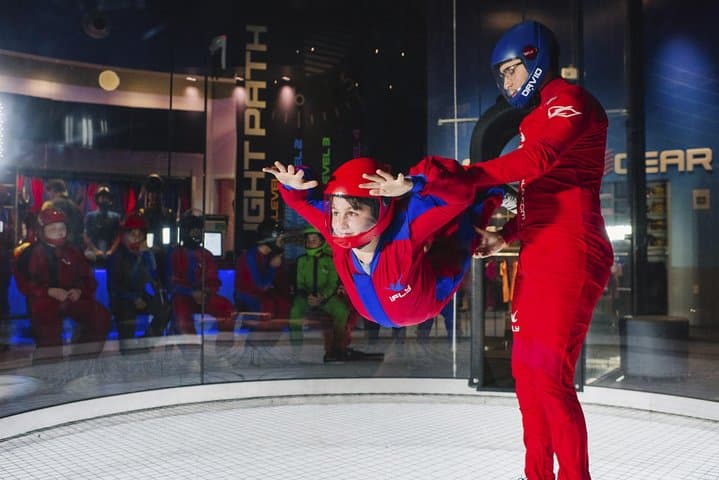
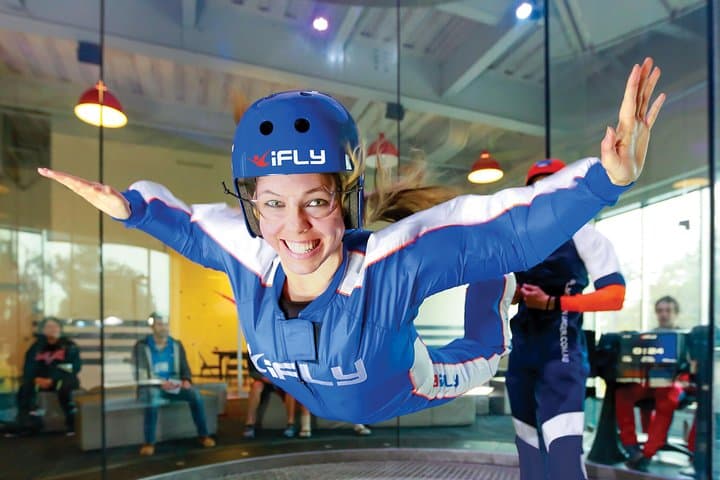
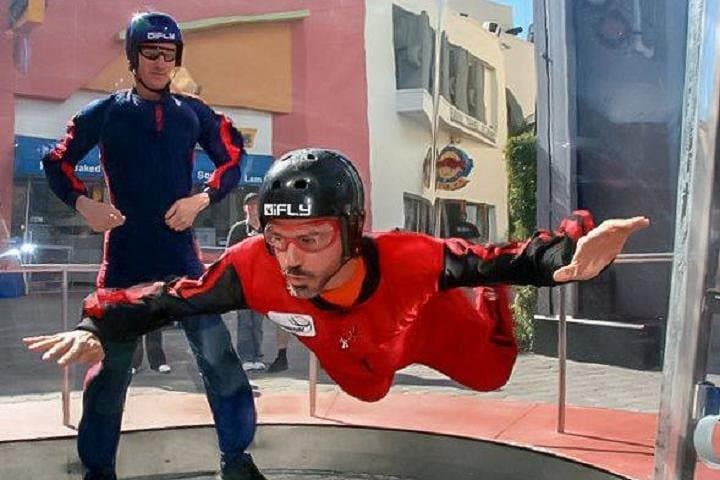
The session is short and structured: safety briefing, a practice 'arch' on the floor, fitted flight suit and goggles, then two 60-second one-on-one flights with a certified instructor. Expect controlled gusts of 130–175 mph that keep you suspended while an instructor fine-tunes body position and cues. People of all athletic backgrounds fly, though certain medical and weight restrictions apply.
Practical notes: arrive 10 minutes early, wear lace-up sneakers and long pants, and have a guardian if under 18. Bring a water bottle and plan for a 75-minute visit. If you want local coffee afterward, Tigard and Beaverton neighborhoods are minutes away. For first-timers, focus on breathing and posture — the tunnel rewards calm, steady body positioning more than bravado.
easy.
75 minutes.
Suitable for most fitness levels; you should be able to follow instructor cues and sit/stand without assistance
Each one-on-one wind tunnel flight lasts about 60 seconds; the full experience is approximately 75 minutes including briefing and gear.
Minimum age is 3; participants under 18 need a guardian to sign a waiver. Maximum documented weight is 300 lbs, with additional evaluation for 260–300 lb guests.
No — certified instructors provide training and guide you through both flights, so no prior experience is required.
Wear comfortable, collarless clothes and lace-up sneakers; the flight suit and goggles are provided and go over your clothes.
Wind tunnels were adapted from aviation and testing facilities; modern indoor skydiving for recreation expanded in the 1990s, bringing controlled free-fall to urban centers like Portland.
iFLY facilities are indoor and concentrate impact, but the wider Portland region emphasizes watershed protection and responsible outdoor recreation; follow local guidelines and limit single-use plastics.
iFLY Indoor Skydiving operates guided outdoor trips and adventures with an emphasis on safety, stewardship, and memorable experiences.
You step into a windowed hangar on a grey Pacific Northwest morning and the building hums like a held breath. Inside, the wind is bottled and ordered: a vertical tunnel that will lift you cleanly off your feet. The instructor clips a helmet on, guides your posture, and the room compresses to the rhythm of the fans — the air demanding, playful, and precise.
You step into a windowed hangar on a grey Pacific Northwest morning and the building hums like a held breath. Inside, the wind is bottled and ordered: a vertical tunnel that will lift you cleanly off your feet. The instructor clips a helmet on, guides your posture, and the room compresses to the rhythm of the fans — the air demanding, playful, and precise.
Indoor skydiving borrows its language from high-altitude jumping but roots itself in wind-tunnel engineering developed in the 20th century for aviation and sport. In Portland, the tunnel sits on the edge of the Willamette Valley; to the east the Cascade Range carves the horizon and the region’s rain-fed temperate climate shapes an outdoors culture that prizes experiential thrills year-round.
The session is short and structured: safety briefing, a practice 'arch' on the floor, fitted flight suit and goggles, then two 60-second one-on-one flights with a certified instructor. Expect controlled gusts of 130–175 mph that keep you suspended while an instructor fine-tunes body position and cues. People of all athletic backgrounds fly, though certain medical and weight restrictions apply.
Practical notes: arrive 10 minutes early, wear lace-up sneakers and long pants, and have a guardian if under 18. Bring a water bottle and plan for a 75-minute visit. If you want local coffee afterward, Tigard and Beaverton neighborhoods are minutes away. For first-timers, focus on breathing and posture — the tunnel rewards calm, steady body positioning more than bravado.