THE ADVENTURE COLLECTIVE® · Independent discovery and booking for outdoor travel

A direct private shuttle that takes you from Portillo Ski Center down from the high Andes into Santiago in roughly two hours. Expect mountain hairpins, variable winter road conditions, and luggage limits—book with weather and equipment needs in mind.
A direct private shuttle that takes you from Portillo Ski Center down from the high Andes into Santiago in roughly two hours. Expect mountain hairpins, variable winter road conditions, and luggage limits—book with weather and equipment needs in mind.
A thin ribbon of highway drops away from the high-altitude blue of Laguna del Inca and the driver eases the van down from the Andes into shifting light — snowfields give way to scrub and then to the wide valley that leads toward Santiago. The road moves with intent, cutting through steep passes and scrubby slopes, the mountains watching as passengers trade Alpine silence for city skyline in about two hours.
Verified experiences and guided adventures in the surrounding area.
Operated by Ruta Chile · Portillo, Valparaíso Region
A thin ribbon of highway drops away from the high-altitude blue of Laguna del Inca and the driver eases the van down from the Andes into shifting light — snowfields give way to scrub and then to the wide valley that leads toward Santiago. The road moves with intent, cutting through steep passes and scrubby slopes, the mountains watching as passengers trade Alpine silence for city skyline in about two hours.
Portillo sits high above the Aconcagua Valley, a compact ski village with a history tied to mountaineering and winter racing that dates to the mid-20th century. The route to Santiago follows old trade and mining corridors carved into volcanic and metamorphic rocks; expect steep cuttings, occasional hairpins and expansive views when the weather clears. Culturally, the drive is a transition from resort life — with international ski crowds, lodge culture, and alpine timing — into Chile’s capital with its museums, markets and food scene.
Practical guide: private transfers are direct and luggage-limited (one suitcase + one carry-on per traveler). Winter conditions can add time; drivers often adjust speed and routing to match visibility and surface conditions. Bring layers for the chilly mountain air, sunglasses for high-altitude glare, and a phone charger for the 90–150 minute drive. If you’re carrying sports equipment (skis, bikes, surfboards), confirm allowances before booking. Plan arrivals into Santiago with buffer time for traffic, and if you’re returning to Portillo, aim for daylight driving when possible.
This transfer is straightforward but seasonal—reliable, fast, and designed to move you between peaked mountain quiet and urban bustle with minimal fuss.
easy.
1.5–2.5 hours.
No special fitness required—suitable for travelers of all physical levels.
Typical driving time is about 1.5–2.5 hours depending on weather and traffic; allow extra time in winter or for heavy congestion near Santiago.
Oversized items may be restricted; operators normally allow standard ski equipment but request advance notice to confirm space and possible fees.
Pickup is arranged with the local provider—specify your exact accommodation or meeting point at Portillo when booking to get an exact time.
Contact the local operator as soon as possible; private transfers can often be rescheduled but cancellation and refund rules vary, so confirm provider policy.
Portillo grew as a mountaineering hub and ski center in the 1940s–60s, hosting early international ski competitions and serving climbers aiming for the Andes.
The Andean environments here are sensitive—stay on established roads and paths, pack out waste, and respect local wildlife and seasonal closures.
Ruta Chile operates guided outdoor trips and adventures with an emphasis on safety, stewardship, and memorable experiences.
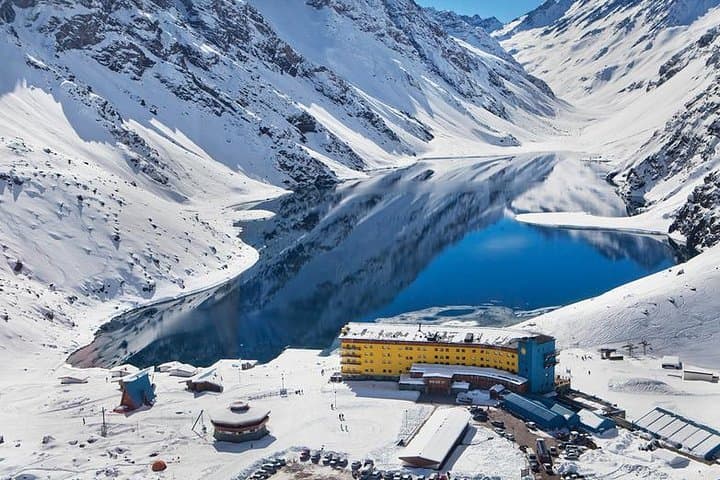

A thin ribbon of highway drops away from the high-altitude blue of Laguna del Inca and the driver eases the van down from the Andes into shifting light — snowfields give way to scrub and then to the wide valley that leads toward Santiago. The road moves with intent, cutting through steep passes and scrubby slopes, the mountains watching as passengers trade Alpine silence for city skyline in about two hours.
A thin ribbon of highway drops away from the high-altitude blue of Laguna del Inca and the driver eases the van down from the Andes into shifting light — snowfields give way to scrub and then to the wide valley that leads toward Santiago. The road moves with intent, cutting through steep passes and scrubby slopes, the mountains watching as passengers trade Alpine silence for city skyline in about two hours.
Portillo sits high above the Aconcagua Valley, a compact ski village with a history tied to mountaineering and winter racing that dates to the mid-20th century. The route to Santiago follows old trade and mining corridors carved into volcanic and metamorphic rocks; expect steep cuttings, occasional hairpins and expansive views when the weather clears. Culturally, the drive is a transition from resort life — with international ski crowds, lodge culture, and alpine timing — into Chile’s capital with its museums, markets and food scene.
Practical guide: private transfers are direct and luggage-limited (one suitcase + one carry-on per traveler). Winter conditions can add time; drivers often adjust speed and routing to match visibility and surface conditions. Bring layers for the chilly mountain air, sunglasses for high-altitude glare, and a phone charger for the 90–150 minute drive. If you’re carrying sports equipment (skis, bikes, surfboards), confirm allowances before booking. Plan arrivals into Santiago with buffer time for traffic, and if you’re returning to Portillo, aim for daylight driving when possible.
This transfer is straightforward but seasonal—reliable, fast, and designed to move you between peaked mountain quiet and urban bustle with minimal fuss.