THE ADVENTURE COLLECTIVE® · Independent discovery and booking for outdoor travel

Watch the Annapurna and Dhaulagiri ranges ignite at sunrise from Poon Hill, then trade alpine views for a restorative soak in Jhinu Danda’s hot spring. This practical 10-day route blends classic Himalayan viewpoints, village culture, and accessible trekking.
Watch the Annapurna and Dhaulagiri ranges ignite at sunrise from Poon Hill, then trade alpine views for a restorative soak in Jhinu Danda’s hot spring. This practical 10-day route blends classic Himalayan viewpoints, village culture, and accessible trekking.
A thin band of pre-dawn blue lifts above terraced fields as you climb the final wooden steps to Poon Hill. Cold mountain air sharpens every breath; behind you, the sleeping villages blur into shadow, ahead the Annapurna and Dhaulagiri ranges catch the first light and flare into hard, silver ridgelines.
Verified experiences and guided adventures in the surrounding area.
Operated by Happyland Treks · Ghorepani, Gandaki Province
A thin band of pre-dawn blue lifts above terraced fields as you climb the final wooden steps to Poon Hill. Cold mountain air sharpens every breath; behind you, the sleeping villages blur into shadow, ahead the Annapurna and Dhaulagiri ranges catch the first light and flare into hard, silver ridgelines.
This route traces classic Annapurna foothills: stone staircases, rhododendron forests, and Gurung villages that grew around trans-Himalayan trade routes. Geologically the landscape is young—steep valleys carved by glacial and monsoon runoff expose layered metamorphic rock and scree slopes. Culturally the trail threads local life: mani walls, small monasteries, and homestays where Gurung hospitality is direct and practical.
After sunrise at 3,210 m on Poon Hill the itinerary angles down through Ghorepani and Tadapani toward the Seti River, finishing with a soothing soak at Jhinu Danda’s natural hot spring—an earned, quiet ritual after days of ascent and descent.
Practical guidance: expect 4–7 hours of walking on trekking days with frequent elevation change and many stone steps. Tea-house accommodation is basic—bring a warm sleeping layer and small cash for extras. Hydrate conservatively at altitude; take the sunrise climb early to avoid crowds and strong midday sun. Footwear should have good ankle support for uneven steps. Porter service and local guides are common and recommended to ease logistics and support local economy.
moderate.
10 days.
Moderate endurance; you should be comfortable walking 4–7 hours daily on steep, stepped terrain and carrying a daypack.
The trek is rated moderate with long stair climbs but no technical sections; novices in reasonable fitness can complete it with rest days and a guide.
Yes—Annapurna Conservation Area Permit (ACAP) and a TIMS card are required and usually arranged by operators.
The natural pools are generally safe but unregulated; avoid immersion if you have open wounds and follow local hygiene rules—bring towel and swimwear.
Clear weather in fall (Sept–Nov) and spring (Mar–May) offers the best visibility; arrive before dawn to secure the viewpoint.
The trail follows traditional mule and porter routes into the Annapurna foothills used for centuries by Gurung communities and regional trade.
This trek passes through the Annapurna Conservation Area; stick to marked trails, avoid single-use plastics and support local lodges to fund conservation.
Happyland Treks operates guided outdoor trips and adventures with an emphasis on safety, stewardship, and memorable experiences.
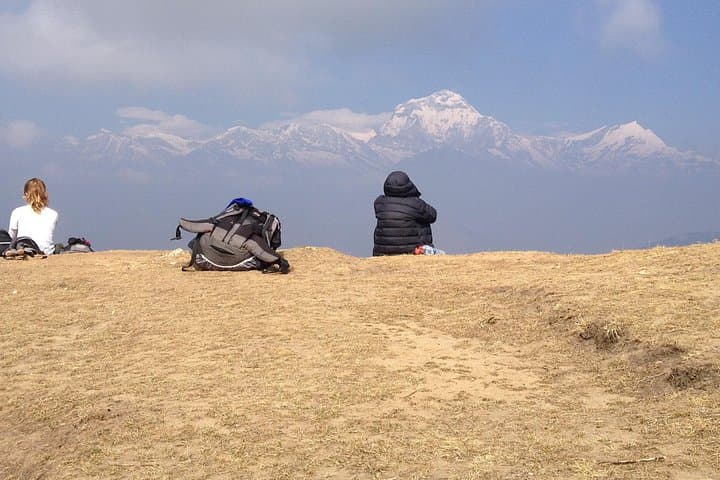
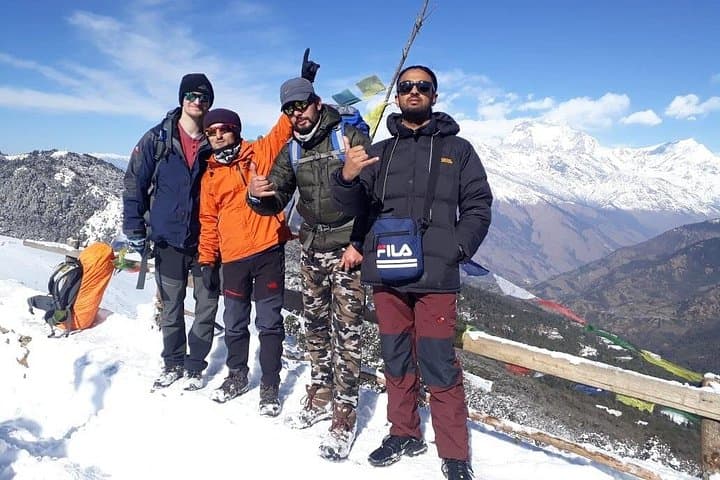
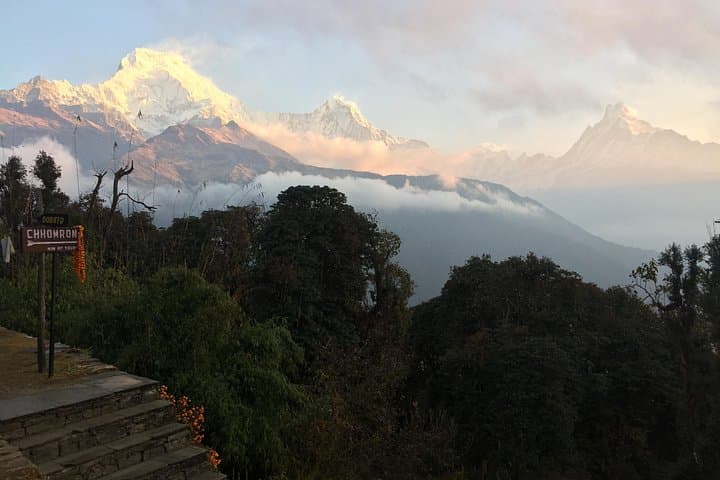
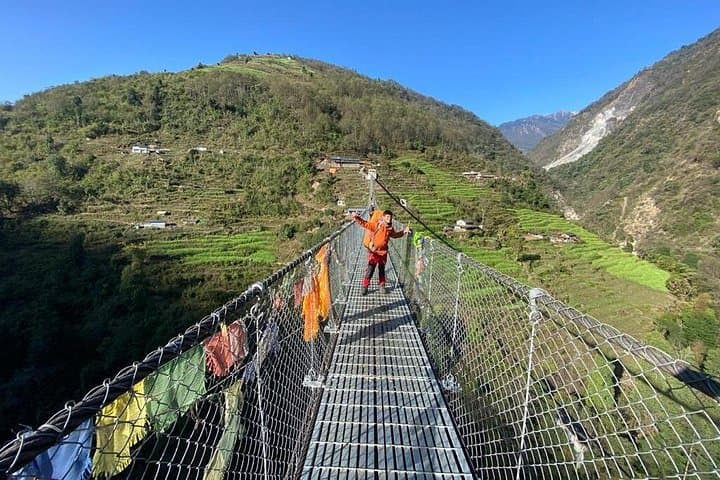
A thin band of pre-dawn blue lifts above terraced fields as you climb the final wooden steps to Poon Hill. Cold mountain air sharpens every breath; behind you, the sleeping villages blur into shadow, ahead the Annapurna and Dhaulagiri ranges catch the first light and flare into hard, silver ridgelines.
A thin band of pre-dawn blue lifts above terraced fields as you climb the final wooden steps to Poon Hill. Cold mountain air sharpens every breath; behind you, the sleeping villages blur into shadow, ahead the Annapurna and Dhaulagiri ranges catch the first light and flare into hard, silver ridgelines.
This route traces classic Annapurna foothills: stone staircases, rhododendron forests, and Gurung villages that grew around trans-Himalayan trade routes. Geologically the landscape is young—steep valleys carved by glacial and monsoon runoff expose layered metamorphic rock and scree slopes. Culturally the trail threads local life: mani walls, small monasteries, and homestays where Gurung hospitality is direct and practical.
After sunrise at 3,210 m on Poon Hill the itinerary angles down through Ghorepani and Tadapani toward the Seti River, finishing with a soothing soak at Jhinu Danda’s natural hot spring—an earned, quiet ritual after days of ascent and descent.
Practical guidance: expect 4–7 hours of walking on trekking days with frequent elevation change and many stone steps. Tea-house accommodation is basic—bring a warm sleeping layer and small cash for extras. Hydrate conservatively at altitude; take the sunrise climb early to avoid crowds and strong midday sun. Footwear should have good ankle support for uneven steps. Porter service and local guides are common and recommended to ease logistics and support local economy.