THE ADVENTURE COLLECTIVE® · Independent discovery and booking for outdoor travel

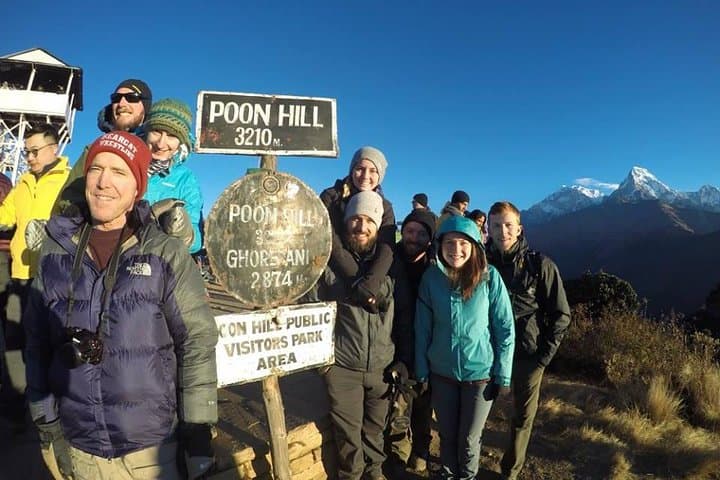
A short multi-day trek from Pokhara to Poon Hill delivers one of the Annapurna region’s most famous sunrises. Expect stone stairways, rhododendron forests, teahouse stays, and panoramic mountain views at 3,210 m.
A short multi-day trek from Pokhara to Poon Hill delivers one of the Annapurna region’s most famous sunrises. Expect stone stairways, rhododendron forests, teahouse stays, and panoramic mountain views at 3,210 m.
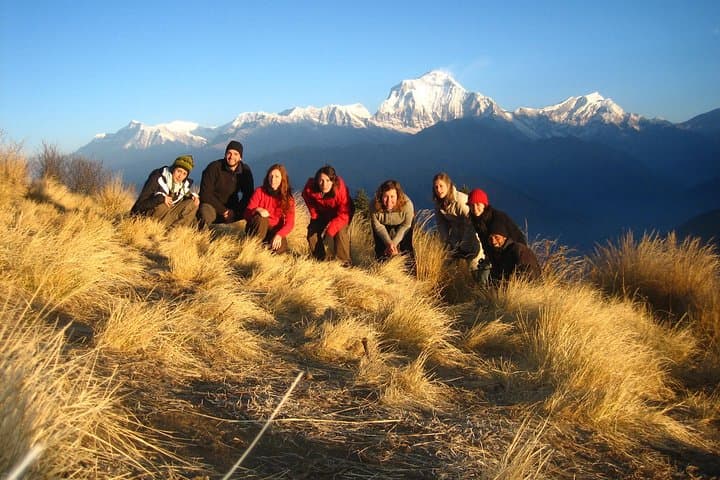
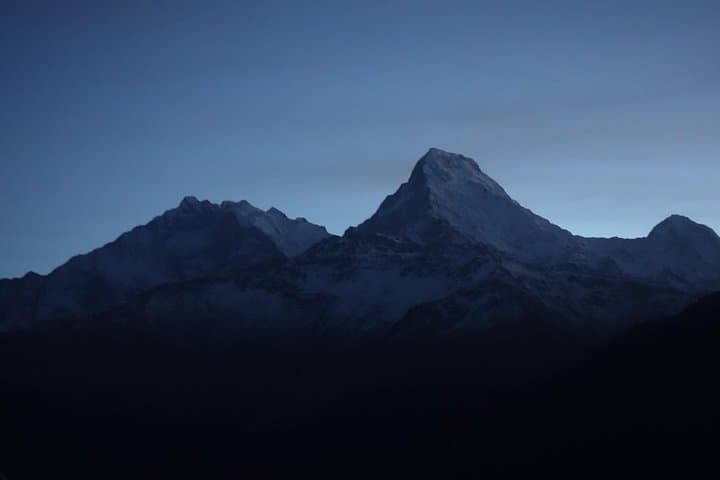
You wake before dawn, wrapped in a cold mountain hush, and walk up a narrow stone stair that opens onto Poon Hill’s rim just as the sky begins to burn. Fingers of orange light push across the Annapurna and Dhaulagiri massifs; the peaks seem to lean forward, daring you to watch longer.
Verified experiences and guided adventures in the surrounding area.
Operated by Green Valley Nepal Treks & Research Hub Pvt Ltd · Ghorepani, Gandaki Province
You wake before dawn, wrapped in a cold mountain hush, and walk up a narrow stone stair that opens onto Poon Hill’s rim just as the sky begins to burn. Fingers of orange light push across the Annapurna and Dhaulagiri massifs; the peaks seem to lean forward, daring you to watch longer.
The route follows old trade and shepherd trails through rhododendron and oak forest, past Magar and Gurung villages whose stone houses and terraced fields anchor the landscape. Geologically, the trail climbs the foothills of the Greater Himalaya—granite ridges and glacial-fed valleys that funnel monsoon water into the Modi Khola.
Locally the trek is part cultural exchange, part daily life: teahouses run by families, prayer flags flapping at village shrines, and piles of mani stones at passes. Ghorepani and nearby Ulleri were once stopping points for mule caravans; today hikers fill the guesthouses instead.
Practically, expect steady uphill on stone stairways and forest paths to a highest point near 3,210 m, with short, exposed sections at viewpoints. Good footwear, layered clothing for early-morning cold, and water management are essential. Altitude is moderate—take time on the first day climbing from Nayapul to Ulleri and listen to your body. Most groups complete the loop in 4–7 days, returning to Pokhara for a deserved lakeside rest.
Sunrise on Poon Hill is the highlight, but the quieter benefits are the forest walks, village interactions, and the way the mountains look different as the day warms—instant reminders that a long hike can also be gentle and arresting in equal measure.
moderate.
6–7 days.
Suitable for people with regular aerobic fitness; be prepared for long days of uphill walking on stone steps and basic teahouse accommodation.
Yes. Trekkers need an Annapurna Conservation Area Permit (ACAP) and a TIMS card; operators usually arrange these as part of the booking.
Spring (Mar–May) and fall (Sep–Nov) offer the clearest skies and stable weather, with spring giving rhododendron blooms and fall providing the best long-range visibility.
The highest point is about 3,210 m—altitude can affect people differently. Allow gradual ascent, stay hydrated, and descend if symptoms worsen.
Most itineraries include shared transfer or bus service to Pokhara; flights between Pokhara and Kathmandu are available and take about 25–30 minutes (weather permitting).
Ghorepani and surrounding villages sit on former trade and herding routes used by Magar and Gurung communities; teahouses evolved where caravan traffic once paused.
The trek runs through the Annapurna Conservation Area—follow marked trails, minimize single-use plastics, and respect village water sources and waste practices.
Green Valley Nepal Treks & Research Hub Pvt Ltd operates guided outdoor trips and adventures with an emphasis on safety, stewardship, and memorable experiences.
You wake before dawn, wrapped in a cold mountain hush, and walk up a narrow stone stair that opens onto Poon Hill’s rim just as the sky begins to burn. Fingers of orange light push across the Annapurna and Dhaulagiri massifs; the peaks seem to lean forward, daring you to watch longer.
You wake before dawn, wrapped in a cold mountain hush, and walk up a narrow stone stair that opens onto Poon Hill’s rim just as the sky begins to burn. Fingers of orange light push across the Annapurna and Dhaulagiri massifs; the peaks seem to lean forward, daring you to watch longer.
The route follows old trade and shepherd trails through rhododendron and oak forest, past Magar and Gurung villages whose stone houses and terraced fields anchor the landscape. Geologically, the trail climbs the foothills of the Greater Himalaya—granite ridges and glacial-fed valleys that funnel monsoon water into the Modi Khola.
Locally the trek is part cultural exchange, part daily life: teahouses run by families, prayer flags flapping at village shrines, and piles of mani stones at passes. Ghorepani and nearby Ulleri were once stopping points for mule caravans; today hikers fill the guesthouses instead.
Practically, expect steady uphill on stone stairways and forest paths to a highest point near 3,210 m, with short, exposed sections at viewpoints. Good footwear, layered clothing for early-morning cold, and water management are essential. Altitude is moderate—take time on the first day climbing from Nayapul to Ulleri and listen to your body. Most groups complete the loop in 4–7 days, returning to Pokhara for a deserved lakeside rest.
Sunrise on Poon Hill is the highlight, but the quieter benefits are the forest walks, village interactions, and the way the mountains look different as the day warms—instant reminders that a long hike can also be gentle and arresting in equal measure.