THE ADVENTURE COLLECTIVE® · Independent discovery and booking for outdoor travel

Climb before dawn to the 3,210 m Poon Hill viewpoint and watch Annapurna and Dhaulagiri ignite in alpenglow. This compact multi-day trek pairs steep stone staircases, rhododendron forests, and Gurung village culture with approachable high-mountain views.
Climb before dawn to the 3,210 m Poon Hill viewpoint and watch Annapurna and Dhaulagiri ignite in alpenglow. This compact multi-day trek pairs steep stone staircases, rhododendron forests, and Gurung village culture with approachable high-mountain views.
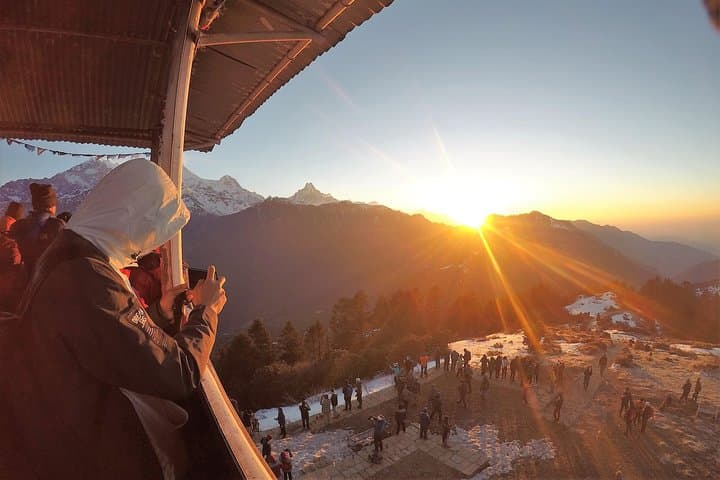
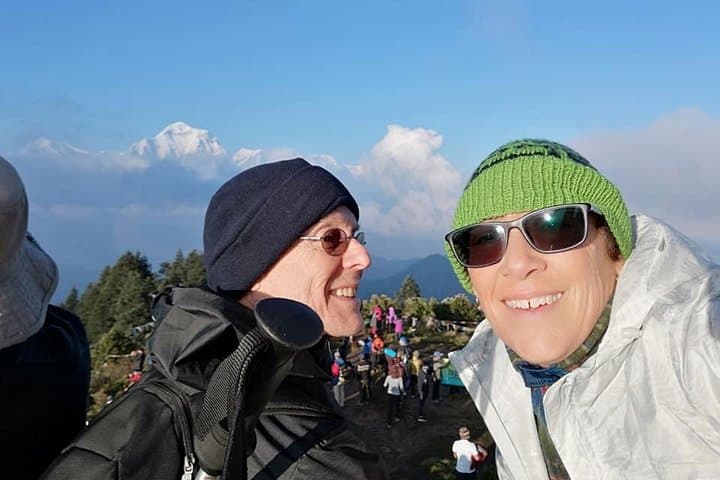
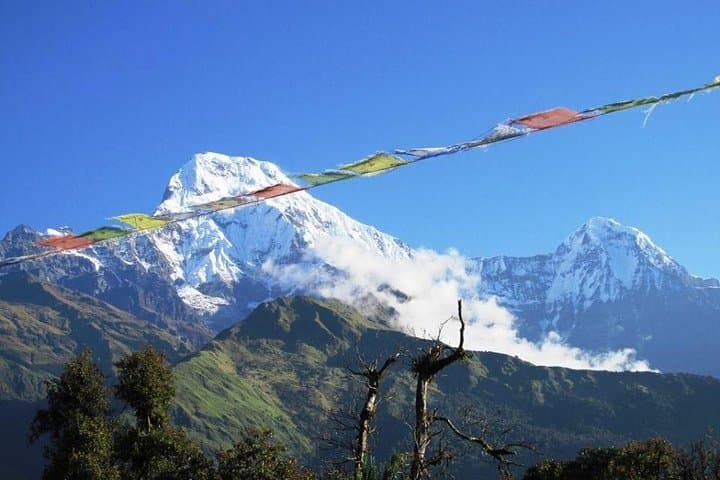
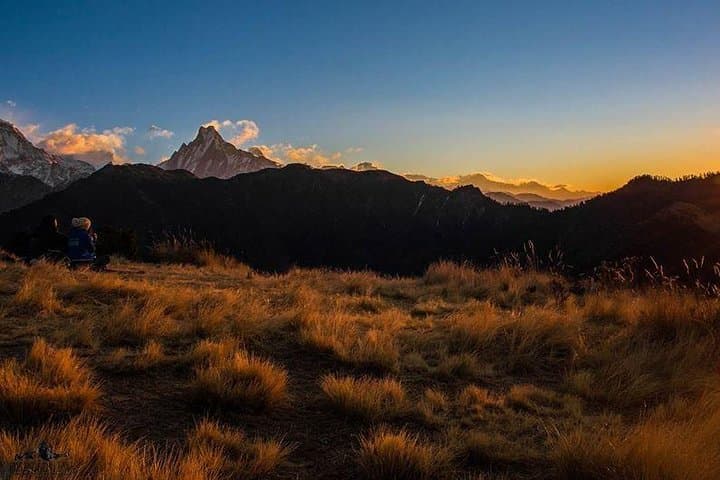
Dawn arrives cold and sharp at Poon Hill. You leave Ghorepani before most lodges have stirred, headlamp bobbing, and climb the final switchbacks to the 3,210 m viewpoint as a thin line of light slices the ridgeline. The first alpenglow spills across Annapurna, Dhaulagiri and Machhapuchhre; details on the faces of the giants appear like pages turning.
Verified experiences and guided adventures in the surrounding area.
Operated by Thirdpole Treks & Travels - Kathmandu to Pokhara/Chitwan bus tickets reservations · Ghorepani, Gandaki Province
Dawn arrives cold and sharp at Poon Hill. You leave Ghorepani before most lodges have stirred, headlamp bobbing, and climb the final switchbacks to the 3,210 m viewpoint as a thin line of light slices the ridgeline. The first alpenglow spills across Annapurna, Dhaulagiri and Machhapuchhre; details on the faces of the giants appear like pages turning.
The route follows ancient mule and village tracks used for generations by Gurung and Magar communities. Geologically the trail traces the foothills of the Greater Himalaya—terraced farmland, steep stone staircases (some sections exceed 3,000 steps from Nayapul to Ulleri), and rhododendron-clad ridges that bloom riotously in spring. Ghandruk’s museum preserves Gurung dress and military history—many locals still share stories of service in the Gurkha regiments.
Expect forested climbs, exposed ridgewalks, and sudden panoramic clearings. Birdlife is abundant in the understory; the path often smells of earth and pine. Lodges and tea-houses provide basic meals and warm rooms; nights are cold at altitude.
Practical guidance: plan 4–6 hours walking on main days, carry an ACAP permit and TIMS card, and allow time for short acclimatization. Hike early for views and softer light; descend cautiously on steep stone staircases. Hydrate, layer for sub-zero mornings, and opt for a local guide—he or she will read the weather and village schedules. This is compact high-country trekking: immersive, accessible, and deeply tied to local culture.
moderate.
5–6 days.
Good aerobic fitness for sustained hikes of 4–6 hours per day and comfortable carrying a daypack; acclimatization ability is helpful
Yes—an Annapurna Conservation Area Permit (ACAP) and a TIMS (Trekker Information Management System) card are required and usually arranged in Pokhara or through your operator.
Moderate—non-technical but steep in places. Beginners with good fitness and sensible pacing can complete it with a local guide and 4–6 hours daily hiking.
Spring (March–May) and fall (September–November) offer the clearest views and stable weather; winter is colder with possible snow, summer brings monsoon rains and cloud cover.
Yes; many operators offer porters or luggage transport between major points, but daypacks should be carried by trekkers—confirm arrangements when booking.
The trail links Gurung and Magar villages long involved in trans-Himalayan trade and military service; Ghandruk preserves Gurung wartime and cultural artifacts.
The trek runs inside the Annapurna Conservation Area—stick to trails, minimize single-use plastics, and support local lodges that follow waste-management practices.
Thirdpole Treks & Travels - Kathmandu to Pokhara/Chitwan bus tickets reservations operates guided outdoor trips and adventures with an emphasis on safety, stewardship, and memorable experiences.
Dawn arrives cold and sharp at Poon Hill. You leave Ghorepani before most lodges have stirred, headlamp bobbing, and climb the final switchbacks to the 3,210 m viewpoint as a thin line of light slices the ridgeline. The first alpenglow spills across Annapurna, Dhaulagiri and Machhapuchhre; details on the faces of the giants appear like pages turning.
Dawn arrives cold and sharp at Poon Hill. You leave Ghorepani before most lodges have stirred, headlamp bobbing, and climb the final switchbacks to the 3,210 m viewpoint as a thin line of light slices the ridgeline. The first alpenglow spills across Annapurna, Dhaulagiri and Machhapuchhre; details on the faces of the giants appear like pages turning.
The route follows ancient mule and village tracks used for generations by Gurung and Magar communities. Geologically the trail traces the foothills of the Greater Himalaya—terraced farmland, steep stone staircases (some sections exceed 3,000 steps from Nayapul to Ulleri), and rhododendron-clad ridges that bloom riotously in spring. Ghandruk’s museum preserves Gurung dress and military history—many locals still share stories of service in the Gurkha regiments.
Expect forested climbs, exposed ridgewalks, and sudden panoramic clearings. Birdlife is abundant in the understory; the path often smells of earth and pine. Lodges and tea-houses provide basic meals and warm rooms; nights are cold at altitude.
Practical guidance: plan 4–6 hours walking on main days, carry an ACAP permit and TIMS card, and allow time for short acclimatization. Hike early for views and softer light; descend cautiously on steep stone staircases. Hydrate, layer for sub-zero mornings, and opt for a local guide—he or she will read the weather and village schedules. This is compact high-country trekking: immersive, accessible, and deeply tied to local culture.