THE ADVENTURE COLLECTIVE® · Independent discovery and booking for outdoor travel

Witness a Himalayan sunrise from Poon Hill and walk through rhododendron forests, stone staircases and Gurung villages on a compact four-day loop from Pokhara. This trek pairs dramatic panoramas with accessible teahouse accommodation and manageable daily mileage.
Witness a Himalayan sunrise from Poon Hill and walk through rhododendron forests, stone staircases and Gurung villages on a compact four-day loop from Pokhara. This trek pairs dramatic panoramas with accessible teahouse accommodation and manageable daily mileage.
Before the sun clears the ridge, headlamps bob as hikers climb the final switchbacks to Poon Hill. Cold air sharpens the peaks; Annapurna and Dhaulagiri rise like slow-moving walls that push the light forward. That sunrise — rivers of gold spilling over jagged summits — is the reason most come here, but the trek’s character is found between the viewpoints: stair-stepped fields, rhododendron forest, and villages where children run to watch foreign boots arrive.
Verified experiences and guided adventures in the surrounding area.
Operated by Crystal Holidays Nepal · Pokhara, Gandaki Province
Before the sun clears the ridge, headlamps bob as hikers climb the final switchbacks to Poon Hill. Cold air sharpens the peaks; Annapurna and Dhaulagiri rise like slow-moving walls that push the light forward. That sunrise — rivers of gold spilling over jagged summits — is the reason most come here, but the trek’s character is found between the viewpoints: stair-stepped fields, rhododendron forest, and villages where children run to watch foreign boots arrive.
Geologically, this route crosses the southern foothills of the High Himalaya, where folded rock and glacial erosion carve deep valleys and create abrupt elevation gains. Culturally the trail threads through Gurung and Magar communities; Ghandruk is a living museum of traditional stone houses, local songs, and wartime history — many locals served in Gurkha regiments. The trek’s teahouse network and Annapurna Conservation Area policies shape camping-free, community-supported travel.
Practically, the itinerary is straightforward: drive Pokhara→Nayapul, then 3–6 hours hiking day-to-day with the steep Ulleri stone staircase (~3,000 steps) and a high point at Poon Hill ~3,210 m. Trails are packed earth and stone; expect mud during monsoon and icy patches in winter. Permits (ACAP & TIMS), a guide for this private trip, and guest-house lodging are standard. Pack warm layers for pre-dawn summits, sturdy boots for uneven stone, and a light daypack; hydrate and pace on the long descents. With moderate fitness, this four-day loop delivers peak Himalayan views without technical climbing, and it leaves room for quiet village conversations that linger long after the photos fade.
moderate.
4 days.
Should be comfortable hiking 4–6 hours per day on uneven trails and climbing long stair sections; basic cardio and leg strength recommended
Guides are recommended for route knowledge, permit handling and local support; this product includes an English-speaking trekking guide and private transfers.
You need an Annapurna Conservation Area Project (ACAP) permit and a TIMS card; this tour includes those permits.
Temperatures at 3,200 m can drop below freezing before sunrise (often -5 to 0°C in shoulder seasons); wind and exposure can make it feel colder.
Teahouses are basic guest houses offering shared or private rooms with simple meals; expect limited hot water and a communal dining area.
This region is home to Gurung and Magar communities whose mountain agriculture and service in Gurkha regiments shaped local culture and settlement patterns.
The Annapurna Conservation Area focuses on permit-managed access and community-based tourism; minimize waste, use local teahouses and follow trail etiquette to reduce impact.
Crystal Holidays Nepal operates guided outdoor trips and adventures with an emphasis on safety, stewardship, and memorable experiences.

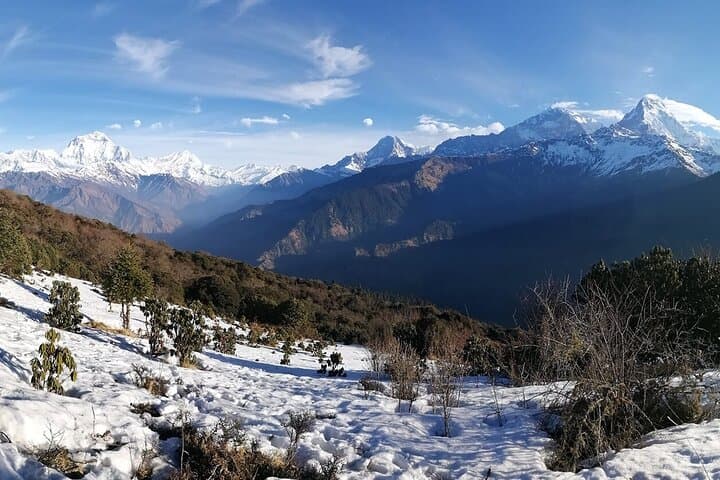
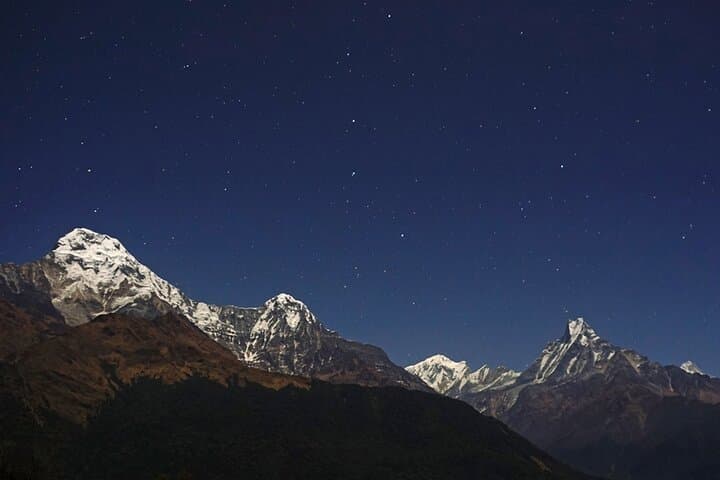

Before the sun clears the ridge, headlamps bob as hikers climb the final switchbacks to Poon Hill. Cold air sharpens the peaks; Annapurna and Dhaulagiri rise like slow-moving walls that push the light forward. That sunrise — rivers of gold spilling over jagged summits — is the reason most come here, but the trek’s character is found between the viewpoints: stair-stepped fields, rhododendron forest, and villages where children run to watch foreign boots arrive.
Before the sun clears the ridge, headlamps bob as hikers climb the final switchbacks to Poon Hill. Cold air sharpens the peaks; Annapurna and Dhaulagiri rise like slow-moving walls that push the light forward. That sunrise — rivers of gold spilling over jagged summits — is the reason most come here, but the trek’s character is found between the viewpoints: stair-stepped fields, rhododendron forest, and villages where children run to watch foreign boots arrive.
Geologically, this route crosses the southern foothills of the High Himalaya, where folded rock and glacial erosion carve deep valleys and create abrupt elevation gains. Culturally the trail threads through Gurung and Magar communities; Ghandruk is a living museum of traditional stone houses, local songs, and wartime history — many locals served in Gurkha regiments. The trek’s teahouse network and Annapurna Conservation Area policies shape camping-free, community-supported travel.
Practically, the itinerary is straightforward: drive Pokhara→Nayapul, then 3–6 hours hiking day-to-day with the steep Ulleri stone staircase (~3,000 steps) and a high point at Poon Hill ~3,210 m. Trails are packed earth and stone; expect mud during monsoon and icy patches in winter. Permits (ACAP & TIMS), a guide for this private trip, and guest-house lodging are standard. Pack warm layers for pre-dawn summits, sturdy boots for uneven stone, and a light daypack; hydrate and pace on the long descents. With moderate fitness, this four-day loop delivers peak Himalayan views without technical climbing, and it leaves room for quiet village conversations that linger long after the photos fade.