THE ADVENTURE COLLECTIVE® · Independent discovery and booking for outdoor travel

Watch dawn split the Annapurna range from Poon Hill on a compact 4-day trek that links Ulleri, Ghorepani, Tadapani and the Gurung village of Ghandruk. Expect rhododendron forests, stone staircases and sunrise views at 3,210 m with home-style guesthouse stays.
Watch dawn split the Annapurna range from Poon Hill on a compact 4-day trek that links Ulleri, Ghorepani, Tadapani and the Gurung village of Ghandruk. Expect rhododendron forests, stone staircases and sunrise views at 3,210 m with home-style guesthouse stays.
The sky goes from ink to fire as you climb the last switchbacks to Poon Hill—breath visible, headlamp bobbing, Annapurna’s ridgelines cutting a clean horizon. For a brief, electric hour the mountains claim the light, and valleys below fold into shadow while rhododendron trunks stand like sentries along the trail.
Verified experiences and guided adventures in the surrounding area.
Operated by Couch Adventure Nepal (CAN) · Pokhara, Gandaki Province
The sky goes from ink to fire as you climb the last switchbacks to Poon Hill—breath visible, headlamp bobbing, Annapurna’s ridgelines cutting a clean horizon. For a brief, electric hour the mountains claim the light, and valleys below fold into shadow while rhododendron trunks stand like sentries along the trail.
This four-day loop threads traditional villages and pine-scented slopes in the Annapurna foothills. The route follows ancient mule trails that carried salt and grain between valleys; today those same paths connect Gurung communities where stone houses and narrow lanes preserve a living mountain culture. Geologically the trail rides the southern skirts of the Greater Himalaya—steep terraced slopes, river-carved gullies and moraine-sourced scree near higher passes.
Expect packed stone steps at Ulleri, dense rhododendron and oak forests on the Ghorepani approach, and a short but exposed ascent to Poon Hill at 3,210 m for sunrise. Villages like Ghandruk offer a close look at Gurung life and a small cultural museum. The Annapurna Conservation Area requires permits (ACAP and TIMS) to protect trails and biodiversity.
Practical edge: plan for significant elevation gain over short days (Nayapul to Ulleri ~1,100 m gain; Ghorepani to Poon Hill ~400 m), pack layered insulation for pre-dawn cold, and carry water treatment—guest houses provide simple meals and bunks but weather can turn fast. Start the ascent to Poon Hill well before sunrise to avoid crowds, and allow time to rest after reaching high point to reduce altitude strain. With steady pacing this trek is accessible, richly scenic, and deeply rooted in local mountain life.
moderate.
4 days (approx. 4–6 hours walking most days).
Moderate fitness for sustained uphill sections and steps; ability to hike 4–6 hours a day with a light daypack is recommended.
Yes—Annapurna Conservation Area Permit (ACAP) and a TIMS card are required; the tour includes permit arrangements in the price listed.
Poon Hill reaches 3,210 m, which can cause mild altitude effects for some; stay hydrated, ascend slowly, and report symptoms to your guide.
Overnight stays are in local guest houses with shared facilities—simple rooms, hot meals when possible, and basic bedding.
Yes—private round-trip transfer from Pokhara’s Lakeside to Nayapul and back is included per the itinerary.
The trail follows historic mule tracks and links Gurung villages that have traded across valleys for centuries; the Annapurna Conservation Area established community-based protection of the landscape.
Permits fund the Annapurna Conservation Area Project (ACAP) which supports trail maintenance and local livelihoods; follow leave-no-trace and avoid single-use plastics.
Couch Adventure Nepal (CAN) operates guided outdoor trips and adventures with an emphasis on safety, stewardship, and memorable experiences.
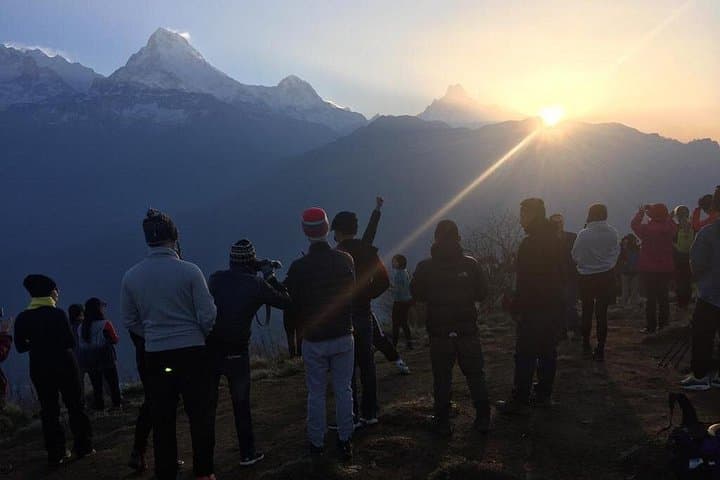
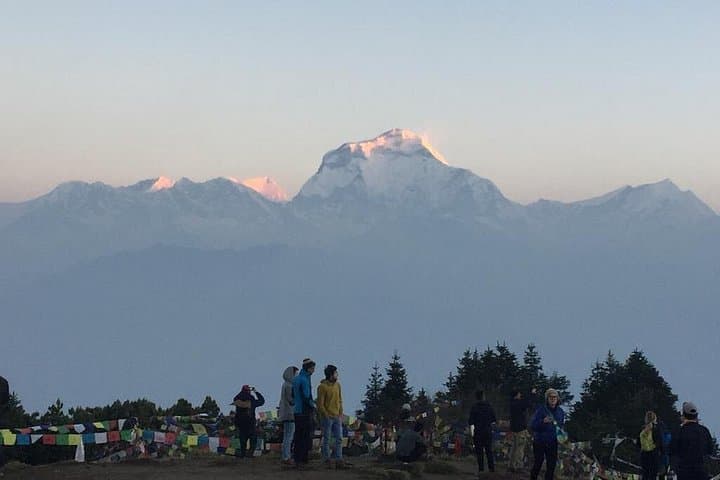
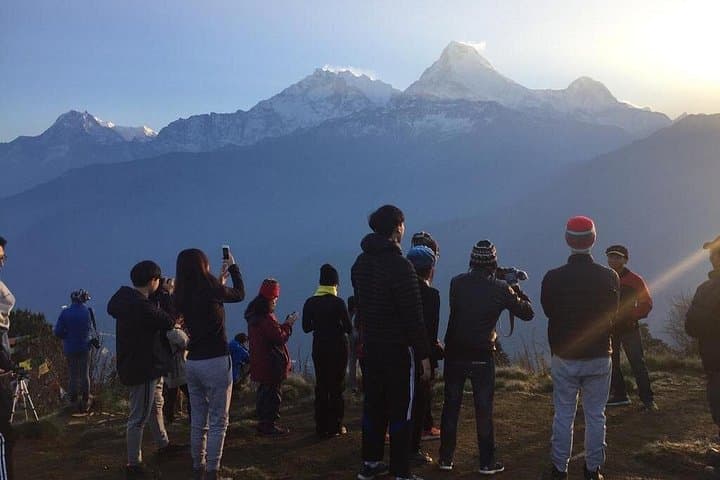
The sky goes from ink to fire as you climb the last switchbacks to Poon Hill—breath visible, headlamp bobbing, Annapurna’s ridgelines cutting a clean horizon. For a brief, electric hour the mountains claim the light, and valleys below fold into shadow while rhododendron trunks stand like sentries along the trail.
The sky goes from ink to fire as you climb the last switchbacks to Poon Hill—breath visible, headlamp bobbing, Annapurna’s ridgelines cutting a clean horizon. For a brief, electric hour the mountains claim the light, and valleys below fold into shadow while rhododendron trunks stand like sentries along the trail.
This four-day loop threads traditional villages and pine-scented slopes in the Annapurna foothills. The route follows ancient mule trails that carried salt and grain between valleys; today those same paths connect Gurung communities where stone houses and narrow lanes preserve a living mountain culture. Geologically the trail rides the southern skirts of the Greater Himalaya—steep terraced slopes, river-carved gullies and moraine-sourced scree near higher passes.
Expect packed stone steps at Ulleri, dense rhododendron and oak forests on the Ghorepani approach, and a short but exposed ascent to Poon Hill at 3,210 m for sunrise. Villages like Ghandruk offer a close look at Gurung life and a small cultural museum. The Annapurna Conservation Area requires permits (ACAP and TIMS) to protect trails and biodiversity.
Practical edge: plan for significant elevation gain over short days (Nayapul to Ulleri ~1,100 m gain; Ghorepani to Poon Hill ~400 m), pack layered insulation for pre-dawn cold, and carry water treatment—guest houses provide simple meals and bunks but weather can turn fast. Start the ascent to Poon Hill well before sunrise to avoid crowds, and allow time to rest after reaching high point to reduce altitude strain. With steady pacing this trek is accessible, richly scenic, and deeply rooted in local mountain life.