THE ADVENTURE COLLECTIVE® · Independent discovery and booking for outdoor travel

Short on time but want classic Himalayan sunrise and village culture? This five-day Poon Hill trek from Pokhara delivers dramatic Annapurna views, rhododendron forests and a relaxing hot-spring finish—without technical climbing.
Short on time but want classic Himalayan sunrise and village culture? This five-day Poon Hill trek from Pokhara delivers dramatic Annapurna views, rhododendron forests and a relaxing hot-spring finish—without technical climbing.
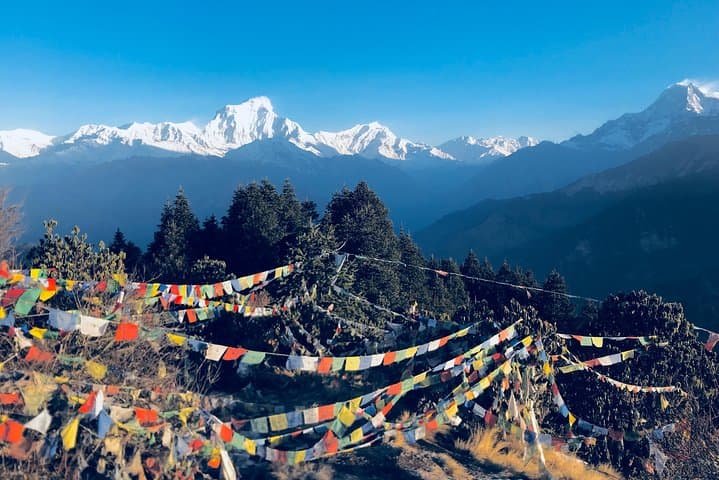
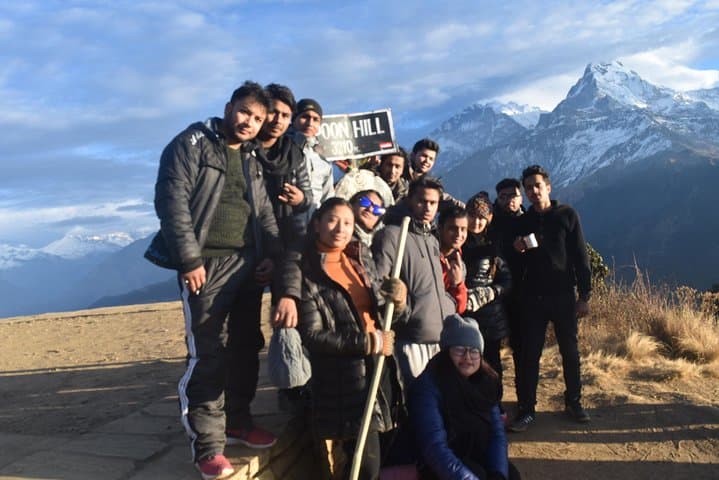
A cold headlamp beam cuts through bamboo and rhododendron as you climb before dawn; the ridge opens and the first light unspools across a skyline of serrated peaks. Poon Hill’s viewpoint — the short, steep knob above Ghorepani — is where trekkers gather to watch Annapurna, Dhaulagiri and Machapuchare catch fire.
Verified experiences and guided adventures in the surrounding area.
Operated by Trekking Guide in Pokhara · Ghorepani, Gandaki Province
A cold headlamp beam cuts through bamboo and rhododendron as you climb before dawn; the ridge opens and the first light unspools across a skyline of serrated peaks. Poon Hill’s viewpoint — the short, steep knob above Ghorepani — is where trekkers gather to watch Annapurna, Dhaulagiri and Machapuchare catch fire.
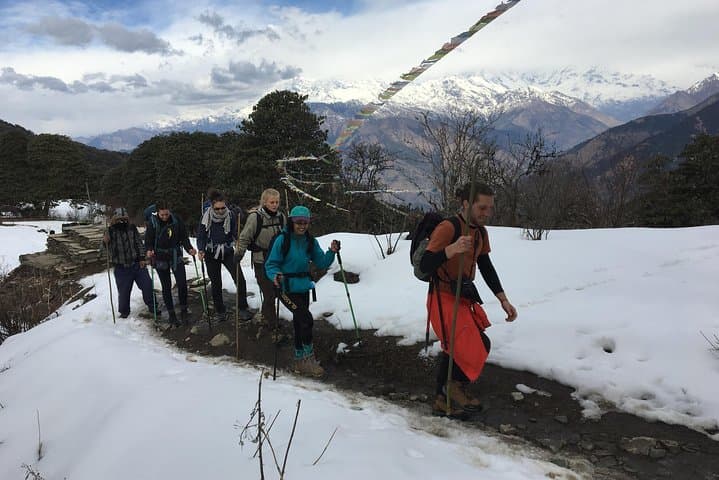
This five-day tea-house trek follows traditional mountain trails through terraced farms, pine and the world’s largest rhododendron forest, with village stops in Ulleri, Ghorepani, Tadapani and Jhinu Danda. Geologically the route skirts the southern flanks of the high Himalaya, offering sweeping views of the Annapurna massif and glimpses of Manaslu on clearer days. Culturally, the trail threads Gurung and Magar villages where woodcraft, terrace agriculture and Buddhist shrines mark daily life.
Practically: the trek uses established guesthouses, so camping gear isn’t required but a permit and TIMS card are issued in Pokhara before departure. Expect daily walking of 3–6 hours; the high point is Poon Hill (~3,210 m) reached by a 30–90 minute pre-sunrise climb from Ghorepani. Trails vary from packed stone steps to muddy forest paths; some days include sustained uphill sections (300–900 m gain).
Hydrate, layer for sudden cold at dawn, and carry cash—lodges don’t take cards. The Jhinu hot springs below Modi Khola are a practical reward for sore muscles; soak times and temperatures vary seasonally. With moderate fitness and basic trekking footwear, this route is an accessible Himalayan primer that combines big mountain views, village life and a restorative hot-spring finish.
moderate.
5 days.
Moderate fitness with experience on sustained uphill and downhill walking; able to handle 4–6 hours hiking on uneven terrain.
Poon Hill’s viewpoint is about 3,210 m; for most fit walkers this altitude poses limited risk if you ascend gradually and stay hydrated—monitor symptoms and descend if you feel unwell.
No — this fixed-departure itinerary uses tea-house accommodation and meals are provided, so only personal day gear and warm layers are required.
Spring (March–May) and autumn (Sept–Nov) offer the clearest mountain views and stable weather; winter is colder but less crowded, while monsoon months can be wet and slippery.
The Jhinu Danda hot springs are visited on day four; access is public and a small fee or tip is customary—bring a towel and simple swimwear.
The trail follows centuries-old mule routes linking Annapurna villages; Gurung and Magar communities along the route maintain agricultural terraces and traditional crafts.
Stick to established trails, minimize single-use plastics in tea-houses and avoid disturbing village water sources; local lodges rely on trekkers for sustainable income.
Trekking Guide in Pokhara operates guided outdoor trips and adventures with an emphasis on safety, stewardship, and memorable experiences.

A cold headlamp beam cuts through bamboo and rhododendron as you climb before dawn; the ridge opens and the first light unspools across a skyline of serrated peaks. Poon Hill’s viewpoint — the short, steep knob above Ghorepani — is where trekkers gather to watch Annapurna, Dhaulagiri and Machapuchare catch fire.
A cold headlamp beam cuts through bamboo and rhododendron as you climb before dawn; the ridge opens and the first light unspools across a skyline of serrated peaks. Poon Hill’s viewpoint — the short, steep knob above Ghorepani — is where trekkers gather to watch Annapurna, Dhaulagiri and Machapuchare catch fire.
This five-day tea-house trek follows traditional mountain trails through terraced farms, pine and the world’s largest rhododendron forest, with village stops in Ulleri, Ghorepani, Tadapani and Jhinu Danda. Geologically the route skirts the southern flanks of the high Himalaya, offering sweeping views of the Annapurna massif and glimpses of Manaslu on clearer days. Culturally, the trail threads Gurung and Magar villages where woodcraft, terrace agriculture and Buddhist shrines mark daily life.
Practically: the trek uses established guesthouses, so camping gear isn’t required but a permit and TIMS card are issued in Pokhara before departure. Expect daily walking of 3–6 hours; the high point is Poon Hill (~3,210 m) reached by a 30–90 minute pre-sunrise climb from Ghorepani. Trails vary from packed stone steps to muddy forest paths; some days include sustained uphill sections (300–900 m gain).
Hydrate, layer for sudden cold at dawn, and carry cash—lodges don’t take cards. The Jhinu hot springs below Modi Khola are a practical reward for sore muscles; soak times and temperatures vary seasonally. With moderate fitness and basic trekking footwear, this route is an accessible Himalayan primer that combines big mountain views, village life and a restorative hot-spring finish.