THE ADVENTURE COLLECTIVE® · Independent discovery and booking for outdoor travel

Summit Poon Hill for a sunrise over the Annapurna and Dhaulagiri ranges on a manageable 4-night trek from Pokhara. This teahouse route mixes stone stair climbs, forested stretches and village culture with big mountain views.
Summit Poon Hill for a sunrise over the Annapurna and Dhaulagiri ranges on a manageable 4-night trek from Pokhara. This teahouse route mixes stone stair climbs, forested stretches and village culture with big mountain views.
Dawn arrives cold and sharp on Poon Hill. Headlamps bob up a stone-stepped ridge; breath fogs in the thin air as the eastern horizon lightens and the Annapurna and Dhaulagiri ranges—massive and patient—turn from blue to bronze.
Verified experiences and guided adventures in the surrounding area.
Operated by Dadhi Ram Thapa · Pokhara, Gandaki Province
Dawn arrives cold and sharp on Poon Hill. Headlamps bob up a stone-stepped ridge; breath fogs in the thin air as the eastern horizon lightens and the Annapurna and Dhaulagiri ranges—massive and patient—turn from blue to bronze.
This 4-night, 5-day itinerary moves from Pokhara through Nayapul and Ulleri, climbs forested steps to Ghorepani, then an early-morning push to the 3,210 m viewpoint at Poon Hill for a classic Himalayan sunrise. Geologically, you’re in the Lesser Himalaya: layered slate, granite intrusions, and steep river-cut valleys shaped by monsoon-runoff and ancient uplift. Culturally, the trail threads Gurung and Magar villages where terraced fields, prayer flags, and tea-house hospitality form the backbone of local life.
Expect mixed terrain—well-maintained stone stairs, narrow forest tracks, occasional muddy sections after rain—and steady daily ascents that total modest elevation gains per day but reach nearly 3,200 m at the high point. Teahouses provide basic rooms and hot meals; nights are communal and a good place to test high-altitude sleep tactics.
Practical guidance: start the Poon Hill push before 4:00 AM for sunrise and calmer skies; layer for wind and rapid temperature swings; drink regularly and monitor for mild altitude symptoms. A local guide simplifies permits, navigation and cultural context, and teahouse lodging removes heavy camping gear. The route is reachable for fit walkers who can handle 4–6 hours of walking a day and dozens of stone steps—rewarding for its panoramas, village contact, and that unforgettable first light over the Annapurnas.
moderate.
4–5 days.
Suitable for travelers who can walk 4–6 hours a day on uneven terrain and climb long stone stair sections; basic cardiovascular fitness recommended.
You need an Annapurna Conservation Area Permit (ACAP) and a Trekkers’ Information Management System (TIMS) card—guides usually arrange these before departure.
Poon Hill tops at 3,210 m; most trekkers experience mild symptoms if unaccustomed—allow for steady pacing and hydrate; severe AMS is uncommon on this route.
Rooms are basic with shared bathrooms in lower-altitude stops; heating and hot water are limited—bring a warm sleeping layer.
Clear views are most reliable in spring (Mar–May) and fall (Sep–Nov), though mornings can be spectacular in other seasons too.
The trail runs through Gurung and Magar villages historically tied to hill agriculture and local trade routes feeding into Pokhara’s valleys.
Travelers should minimize single-use plastics, respect teahouse waste rules, and support local communities by using licensed guides and paying fair prices.
Dadhi Ram Thapa operates guided outdoor trips and adventures with an emphasis on safety, stewardship, and memorable experiences.
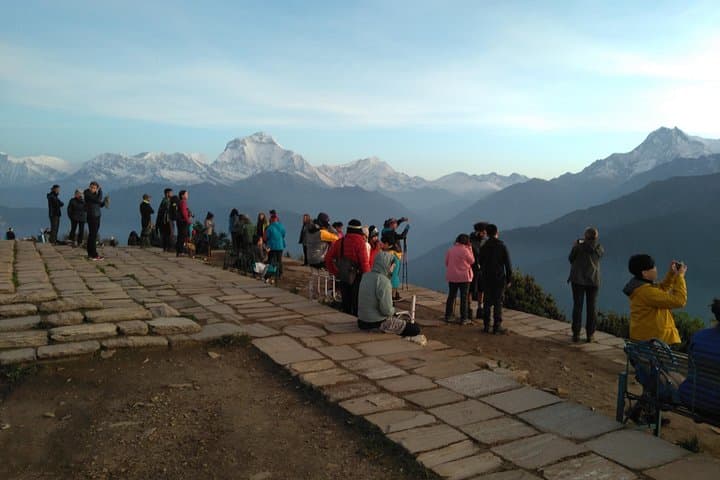
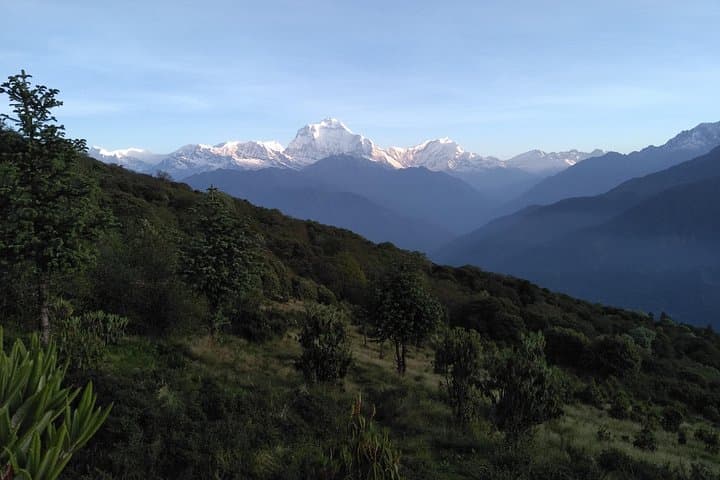
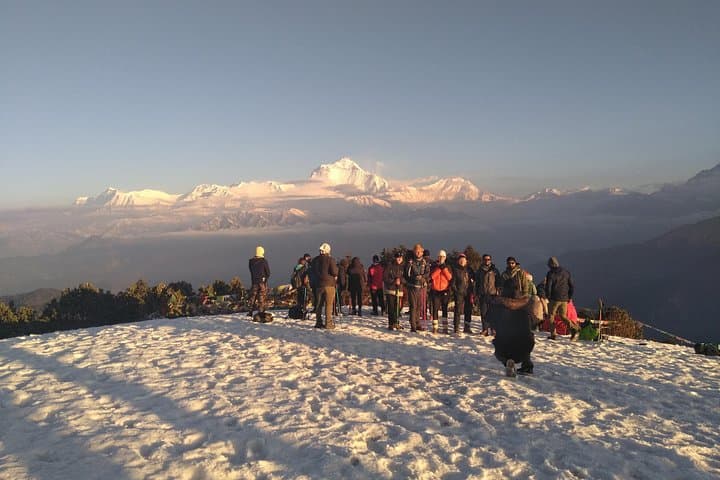
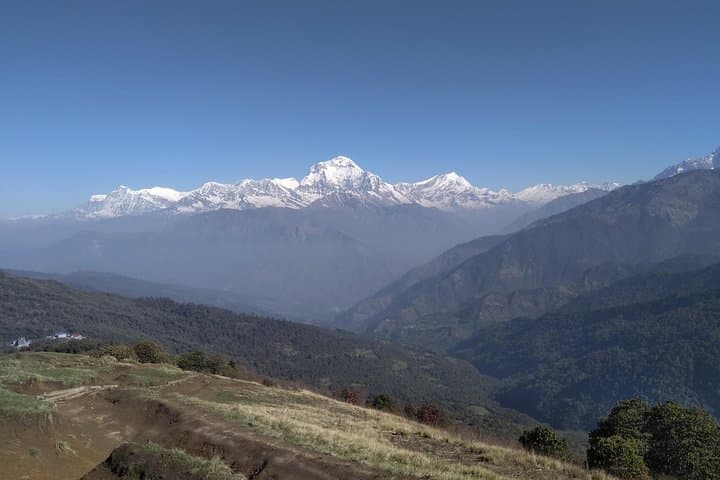
Dawn arrives cold and sharp on Poon Hill. Headlamps bob up a stone-stepped ridge; breath fogs in the thin air as the eastern horizon lightens and the Annapurna and Dhaulagiri ranges—massive and patient—turn from blue to bronze.
Dawn arrives cold and sharp on Poon Hill. Headlamps bob up a stone-stepped ridge; breath fogs in the thin air as the eastern horizon lightens and the Annapurna and Dhaulagiri ranges—massive and patient—turn from blue to bronze.
This 4-night, 5-day itinerary moves from Pokhara through Nayapul and Ulleri, climbs forested steps to Ghorepani, then an early-morning push to the 3,210 m viewpoint at Poon Hill for a classic Himalayan sunrise. Geologically, you’re in the Lesser Himalaya: layered slate, granite intrusions, and steep river-cut valleys shaped by monsoon-runoff and ancient uplift. Culturally, the trail threads Gurung and Magar villages where terraced fields, prayer flags, and tea-house hospitality form the backbone of local life.
Expect mixed terrain—well-maintained stone stairs, narrow forest tracks, occasional muddy sections after rain—and steady daily ascents that total modest elevation gains per day but reach nearly 3,200 m at the high point. Teahouses provide basic rooms and hot meals; nights are communal and a good place to test high-altitude sleep tactics.
Practical guidance: start the Poon Hill push before 4:00 AM for sunrise and calmer skies; layer for wind and rapid temperature swings; drink regularly and monitor for mild altitude symptoms. A local guide simplifies permits, navigation and cultural context, and teahouse lodging removes heavy camping gear. The route is reachable for fit walkers who can handle 4–6 hours of walking a day and dozens of stone steps—rewarding for its panoramas, village contact, and that unforgettable first light over the Annapurnas.