THE ADVENTURE COLLECTIVE® · Independent discovery and booking for outdoor travel

A compact Himalayan classic: this private 3-day trek from Pokhara climbs through rhododendron forests and stone steps to Poon Hill for a sunrise panorama of Annapurna and Dhaulagiri. Ideal for travelers with moderate fitness who want big mountain views in a short itinerary.
A compact Himalayan classic: this private 3-day trek from Pokhara climbs through rhododendron forests and stone steps to Poon Hill for a sunrise panorama of Annapurna and Dhaulagiri. Ideal for travelers with moderate fitness who want big mountain views in a short itinerary.
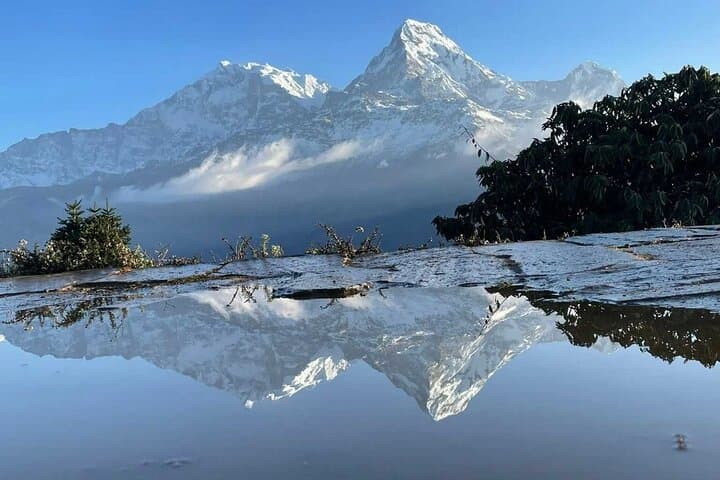
Before dawn the ridge breathes cold and slow; headlamps bob like distant fireflies as you climb the final slope to Poon Hill. At 3,210 meters the horizon opens—Annapurna South, Machapuchare’s knife-edge, and the broad sweep of Dhaulagiri step into light while the valley below holds its last stars.
Verified experiences and guided adventures in the surrounding area.
Operated by AM Travels and Tours · Ghorepani, Gandaki Province
Before dawn the ridge breathes cold and slow; headlamps bob like distant fireflies as you climb the final slope to Poon Hill. At 3,210 meters the horizon opens—Annapurna South, Machapuchare’s knife-edge, and the broad sweep of Dhaulagiri step into light while the valley below holds its last stars.
This short, classic trek follows routes long used by Gurung and Magar villagers moving between terraced fields and summer pastures. Geologically the trail threads upper Siwalik foothills into steep schist and gneiss slopes carved by monsoon rivers; rhododendron trunks and stone staircases—Ulleri’s famed 3,000-plus steps—mark the human scale on raw relief. Tea houses in Ghorepani and Tikhedhunga continue a hospitality tradition that supports local communities and keeps the route welcoming.
Expect mixed terrain: well-stepped stone paths, muddy descents after rain, and a steady net elevation gain from Nayapul to Poon Hill of roughly 1,200–1,400 m depending on your start. Mornings are cold and clear; afternoons bring sun and the chance of fleeting cloud over the peaks.
Practically: start pre-dawn for the sunrise summit, carry layers (it’s freezing at sunrise), and bring a headlamp, poles, and water-treatment or a refillable bottle—guesthouses refill on request. Guides navigate permits (TIMS and Annapurna Conservation Area entry) and local logistics; moderate fitness and steady pacing make this achievable for most hikers. The payoff is immediate: an alpine panorama that rewards effort and a cultural thread of lodge-to-lodge warmth on the descent back to Pokhara.
Yes—trekkers need an Annapurna Conservation Area Permit (ACAP) and a TIMS card; these are often handled by your operator or guide.
Spring (March–May) and autumn (September–November) offer the clearest mountain views and stable trail conditions; spring also brings rhododendron blooms.
It’s moderate: steep sections and long stone steps require good knees and stamina, but the route is well-marked and supported by lodges and guides.
Poon Hill reaches ~3,210 m—acute altitude sickness is unlikely for most people but stay hydrated, ascend steadily, and communicate symptoms to your guide.
AM Travels and Tours operates guided outdoor trips and adventures with an emphasis on safety, stewardship, and memorable experiences.



Before dawn the ridge breathes cold and slow; headlamps bob like distant fireflies as you climb the final slope to Poon Hill. At 3,210 meters the horizon opens—Annapurna South, Machapuchare’s knife-edge, and the broad sweep of Dhaulagiri step into light while the valley below holds its last stars.
Before dawn the ridge breathes cold and slow; headlamps bob like distant fireflies as you climb the final slope to Poon Hill. At 3,210 meters the horizon opens—Annapurna South, Machapuchare’s knife-edge, and the broad sweep of Dhaulagiri step into light while the valley below holds its last stars.
This short, classic trek follows routes long used by Gurung and Magar villagers moving between terraced fields and summer pastures. Geologically the trail threads upper Siwalik foothills into steep schist and gneiss slopes carved by monsoon rivers; rhododendron trunks and stone staircases—Ulleri’s famed 3,000-plus steps—mark the human scale on raw relief. Tea houses in Ghorepani and Tikhedhunga continue a hospitality tradition that supports local communities and keeps the route welcoming.
Expect mixed terrain: well-stepped stone paths, muddy descents after rain, and a steady net elevation gain from Nayapul to Poon Hill of roughly 1,200–1,400 m depending on your start. Mornings are cold and clear; afternoons bring sun and the chance of fleeting cloud over the peaks.
Practically: start pre-dawn for the sunrise summit, carry layers (it’s freezing at sunrise), and bring a headlamp, poles, and water-treatment or a refillable bottle—guesthouses refill on request. Guides navigate permits (TIMS and Annapurna Conservation Area entry) and local logistics; moderate fitness and steady pacing make this achievable for most hikers. The payoff is immediate: an alpine panorama that rewards effort and a cultural thread of lodge-to-lodge warmth on the descent back to Pokhara.