THE ADVENTURE COLLECTIVE® · Independent discovery and booking for outdoor travel

Witness a Himalayan sunrise from Poon Hill on a condensed two-day trek from Pokhara—stone steps, rhododendron forests and guest‑house nights deliver big mountain views with compact logistics. Perfect for travelers seeking a short, high-reward Himalayan experience.
Witness a Himalayan sunrise from Poon Hill on a condensed two-day trek from Pokhara—stone steps, rhododendron forests and guest‑house nights deliver big mountain views with compact logistics. Perfect for travelers seeking a short, high-reward Himalayan experience.
Before dawn, a headlamp-lit line of trekkers threads up the stone steps toward Poon Hill. The air is thin and cold at 3,210 m; stars give way to a raw horizon and, minutes later, a sweep of white peaks—Annapurna South, Hiunchuli, Dhaulagiri—catch the first light. That concentrated sunrise moment is the trip’s reason for being, but the route itself is a concise crash course in Annapurna’s landscape.
Verified experiences and guided adventures in the surrounding area.
Operated by Couch Adventure Nepal (CAN) · Pokhara, Gandaki Province
Before dawn, a headlamp-lit line of trekkers threads up the stone steps toward Poon Hill. The air is thin and cold at 3,210 m; stars give way to a raw horizon and, minutes later, a sweep of white peaks—Annapurna South, Hiunchuli, Dhaulagiri—catch the first light. That concentrated sunrise moment is the trip’s reason for being, but the route itself is a concise crash course in Annapurna’s landscape.
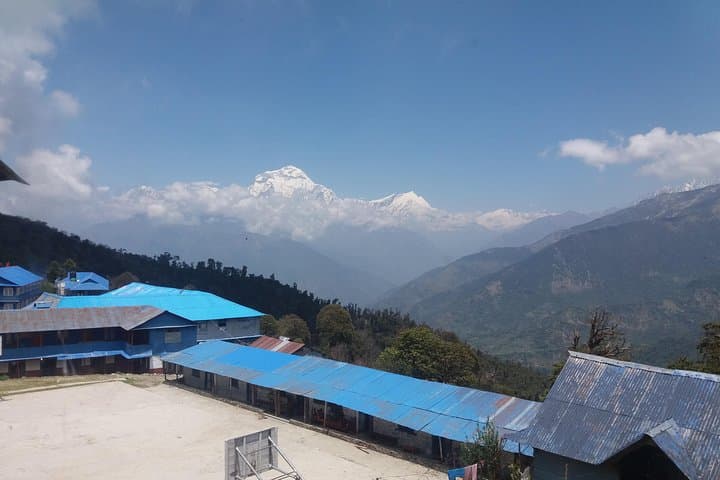
The two-day loop begins with a three-hour jeep ride from Pokhara to Tirkhedhunga (≈1,480 m) and a steady climb through rhododendron forests and terraced villages to Ghorepani (≈2,800 m). The geology here is Himalayan fold and fault: steep valley walls, layered metamorphic rock, and narrow ridgelines that frame broad panoramic bowls. Culturally, the trail passes Gurung and Magar villages where tea houses offer dal bhat and a place to dry boots; these settlements evolved alongside traditional mule and porter routes used for seasonal trade.
Practical guidance: expect long stair sections and uneven stone steps—moderate fitness is required. The climb to Poon Hill is typically started before 4:00 a.m. for sunrise; bring a headlamp, warm layers, and waterproofs. TIMS card and permits are standard and often handled by operators. Accommodation is in basic guest houses—book or confirm transfers as the itinerary includes a 4WD connection back to Pokhara.
Plan for altitude acclimatization even on short treks, hydrate, and pace uphill to reduce strain. Weather shifts quickly: clear sun can give way to wind or fog that hides the view but exposes intimate forest light and birdlife. For travelers wanting a compact, high-reward Himalayan experience, this two-day trek delivers big mountain panoramas with minimal logistics.
moderate.
2 days.
Moderate cardiovascular fitness and comfort with sustained uphill hiking and long stair sections
Yes—trekkers require a TIMS card and entry to the Annapurna Conservation Area; many operators include these in the package.
The summit trek is steep with many stone steps but short; overall the two-day itinerary is moderate and suitable for hikers with basic fitness.
Clear mountain views are most reliable in spring (March–May) and fall (September–November); winters are cold and summers bring monsoon clouds.
Yes—this trip includes one night in a Ghorepani guest house; expect simple rooms and communal dining.
The trail passes Gurung and Magar communities that historically sat on mule trade routes; teahouses expanded with trekking growth in the late 20th century.
The Annapurna Conservation Area Project (ACAP) manages permits and conservation; travelers should pack out waste and respect local water and wood use limits.
Couch Adventure Nepal (CAN) operates guided outdoor trips and adventures with an emphasis on safety, stewardship, and memorable experiences.
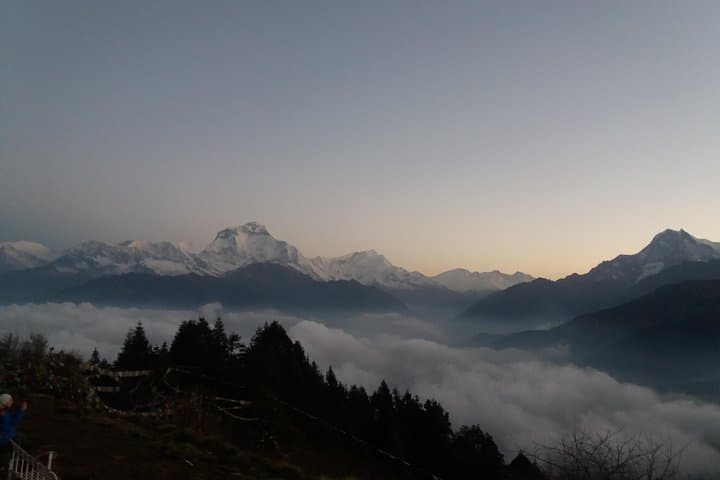
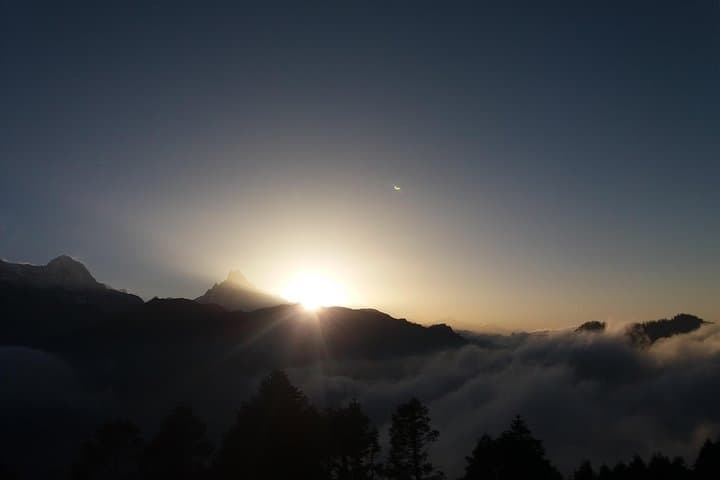
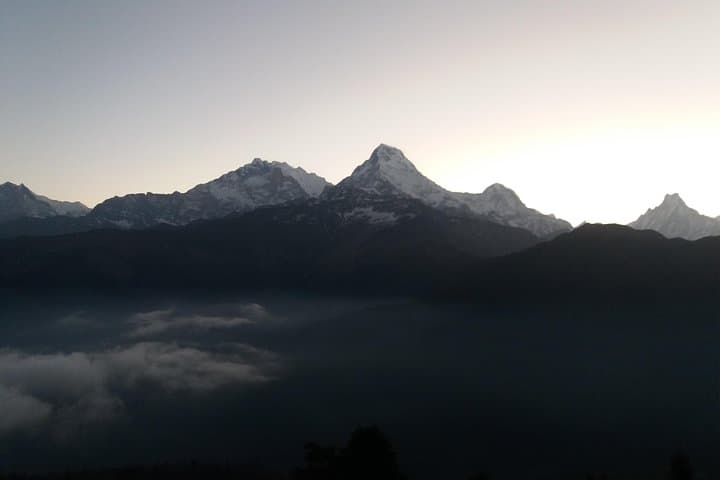
Before dawn, a headlamp-lit line of trekkers threads up the stone steps toward Poon Hill. The air is thin and cold at 3,210 m; stars give way to a raw horizon and, minutes later, a sweep of white peaks—Annapurna South, Hiunchuli, Dhaulagiri—catch the first light. That concentrated sunrise moment is the trip’s reason for being, but the route itself is a concise crash course in Annapurna’s landscape.
Before dawn, a headlamp-lit line of trekkers threads up the stone steps toward Poon Hill. The air is thin and cold at 3,210 m; stars give way to a raw horizon and, minutes later, a sweep of white peaks—Annapurna South, Hiunchuli, Dhaulagiri—catch the first light. That concentrated sunrise moment is the trip’s reason for being, but the route itself is a concise crash course in Annapurna’s landscape.
The two-day loop begins with a three-hour jeep ride from Pokhara to Tirkhedhunga (≈1,480 m) and a steady climb through rhododendron forests and terraced villages to Ghorepani (≈2,800 m). The geology here is Himalayan fold and fault: steep valley walls, layered metamorphic rock, and narrow ridgelines that frame broad panoramic bowls. Culturally, the trail passes Gurung and Magar villages where tea houses offer dal bhat and a place to dry boots; these settlements evolved alongside traditional mule and porter routes used for seasonal trade.
Practical guidance: expect long stair sections and uneven stone steps—moderate fitness is required. The climb to Poon Hill is typically started before 4:00 a.m. for sunrise; bring a headlamp, warm layers, and waterproofs. TIMS card and permits are standard and often handled by operators. Accommodation is in basic guest houses—book or confirm transfers as the itinerary includes a 4WD connection back to Pokhara.
Plan for altitude acclimatization even on short treks, hydrate, and pace uphill to reduce strain. Weather shifts quickly: clear sun can give way to wind or fog that hides the view but exposes intimate forest light and birdlife. For travelers wanting a compact, high-reward Himalayan experience, this two-day trek delivers big mountain panoramas with minimal logistics.