THE ADVENTURE COLLECTIVE® · Independent discovery and booking for outdoor travel

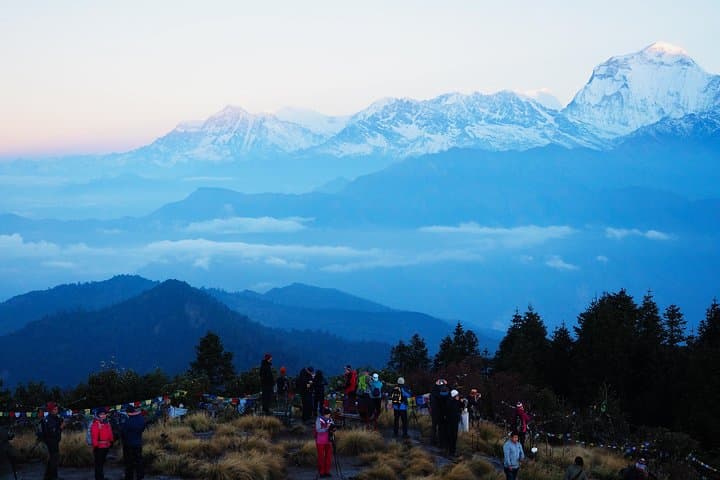
A classic short Annapurna trek that climbs through rhododendron forests to Poon Hill for sunrise views of Annapurna and Dhaulagiri. Expect 5–8 hour walking days, guesthouse nights, and dramatic mountain panoramas.
A classic short Annapurna trek that climbs through rhododendron forests to Poon Hill for sunrise views of Annapurna and Dhaulagiri. Expect 5–8 hour walking days, guesthouse nights, and dramatic mountain panoramas.
You push off at dawn from Pokhara, a wash of lake mist behind the van, and the road unspools toward terraced hills that rise like pages toward the Himalaya. By the time you step onto the trail at Nayapul the air tightens; rhododendron trunks press the path into a green corridor and the slopes begin to speak in stone steps and rushing streams.
Verified experiences and guided adventures in the surrounding area.
Operated by Trekking Organizer Company in Nepal · Pokhara, Gandaki Province
You push off at dawn from Pokhara, a wash of lake mist behind the van, and the road unspools toward terraced hills that rise like pages toward the Himalaya. By the time you step onto the trail at Nayapul the air tightens; rhododendron trunks press the path into a green corridor and the slopes begin to speak in stone steps and rushing streams.
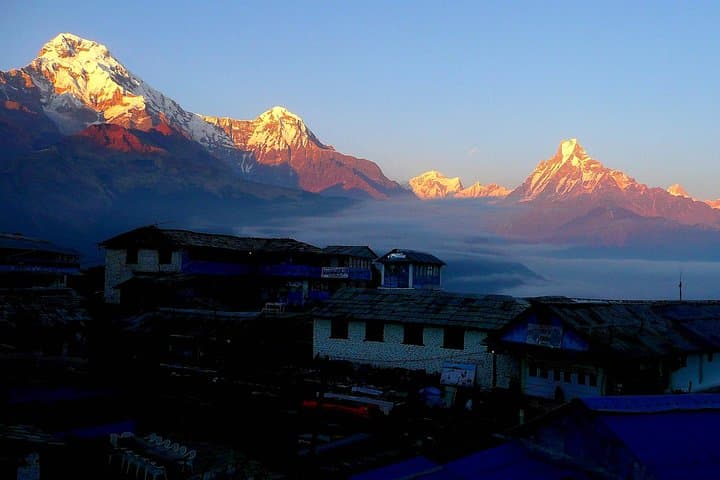
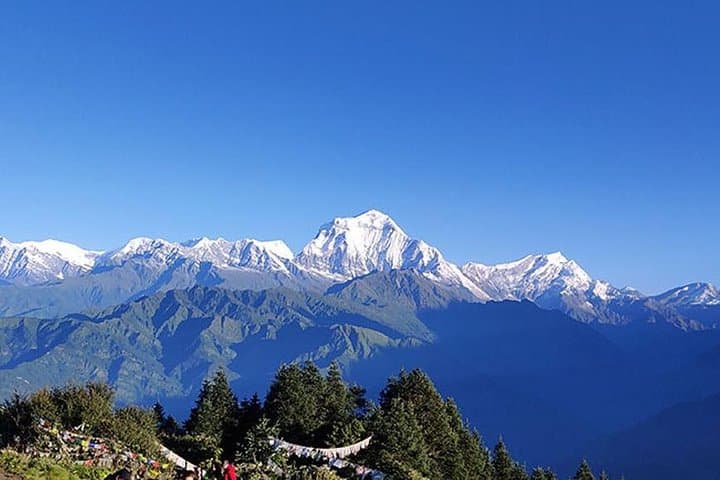
This 5–6 day route centers on Ghorepani and Poon Hill, a classic Annapurna viewpoint used for decades by Gurung and Magar villages. Geologically the area is young: steeply uplifted sedimentary layers folded by the collision of the Indian and Eurasian plates, giving the sharp profiles of Annapurna and Dhaulagiri across the phalanx of peaks.
Culture is immediate on the tea-house circuit—stone houses, carved wooden windows, and community mani walls mark centuries of mountain life. Expect simple guesthouse meals, local hospitality, and the steady rhythm of pack animals and porters.
Practically: trekking days range 5–8 hours with key altitude points at Tikhedhunga (1,570 m), Ghorepani (2,870 m) and an early climb to Poon Hill for sunrise (about 1–1.5 hours from Ghorepani). Trails are mixed dirt, stone steps and forest tracks; total ascent on the steeper days can be 1,000–1,300 m. TIMS and entry fees are typically handled by operators.
Bring sturdy boots, layered clothing for sharp temperature swings, and allow time to move deliberately on stone stair sections. Morning windows reward patience: the first light will lift the Annapurna range like a curtain, and the mountains will not wait long.
moderate.
5–6 days.
Suitable for hikers with regular cardio fitness; expect sustained uphill sections and long days at moderate altitude.
Yes—foreign trekkers require a TIMS card and Annapurna Conservation Area permit; reputable operators usually arrange these before departure.
You reach around 2,870 m at Ghorepani; acclimatize by moving deliberately, staying hydrated, and watching for symptoms—serious illness is uncommon at this elevation but possible.
Nights are in tea houses (simple guesthouses) offering shared rooms and hot meals; bring cash and modest expectations for creature comforts.
Clear views are most reliable in spring (March–May) and autumn (September–November), while monsoon brings green forests and winter can mean snow at higher spots.
The Ghorepani–Poon Hill corridor has long been a trade and grazing route for Gurung and Magar communities; villages developed along its trails to support traders and porters.
The trek passes through the Annapurna Conservation Area—stick to marked trails, avoid single-use plastics, and use local guides to support community-managed conservation.
Trekking Organizer Company in Nepal operates guided outdoor trips and adventures with an emphasis on safety, stewardship, and memorable experiences.
You push off at dawn from Pokhara, a wash of lake mist behind the van, and the road unspools toward terraced hills that rise like pages toward the Himalaya. By the time you step onto the trail at Nayapul the air tightens; rhododendron trunks press the path into a green corridor and the slopes begin to speak in stone steps and rushing streams.
You push off at dawn from Pokhara, a wash of lake mist behind the van, and the road unspools toward terraced hills that rise like pages toward the Himalaya. By the time you step onto the trail at Nayapul the air tightens; rhododendron trunks press the path into a green corridor and the slopes begin to speak in stone steps and rushing streams.
This 5–6 day route centers on Ghorepani and Poon Hill, a classic Annapurna viewpoint used for decades by Gurung and Magar villages. Geologically the area is young: steeply uplifted sedimentary layers folded by the collision of the Indian and Eurasian plates, giving the sharp profiles of Annapurna and Dhaulagiri across the phalanx of peaks.
Culture is immediate on the tea-house circuit—stone houses, carved wooden windows, and community mani walls mark centuries of mountain life. Expect simple guesthouse meals, local hospitality, and the steady rhythm of pack animals and porters.
Practically: trekking days range 5–8 hours with key altitude points at Tikhedhunga (1,570 m), Ghorepani (2,870 m) and an early climb to Poon Hill for sunrise (about 1–1.5 hours from Ghorepani). Trails are mixed dirt, stone steps and forest tracks; total ascent on the steeper days can be 1,000–1,300 m. TIMS and entry fees are typically handled by operators.
Bring sturdy boots, layered clothing for sharp temperature swings, and allow time to move deliberately on stone stair sections. Morning windows reward patience: the first light will lift the Annapurna range like a curtain, and the mountains will not wait long.