THE ADVENTURE COLLECTIVE® · Independent discovery and booking for outdoor travel

A compact, family-friendly Himalayan trek that climbs from Pokhara’s valley to the breezy viewpoint of Poon Hill. Expect stone staircases, rhododendron forest, and a sunrise that frames Annapurna and Machapuchare.
A compact, family-friendly Himalayan trek that climbs from Pokhara’s valley to the breezy viewpoint of Poon Hill. Expect stone staircases, rhododendron forest, and a sunrise that frames Annapurna and Machapuchare.
At 03:30 the dark ridge before Ghorepani feels alive—headlamps bob, the cold bites, and the silhouette of Machapuchare (Fishtail) sharpens as the sky lightens. By the time you reach Poon Hill (3,210 m) the air has thinned into a crisp hush; the peaks push color across the horizon and the valley below exhales mist toward India.
Verified experiences and guided adventures in the surrounding area.
Operated by Osho world Adventure · Ghorepani, Gandaki Province
At 03:30 the dark ridge before Ghorepani feels alive—headlamps bob, the cold bites, and the silhouette of Machapuchare (Fishtail) sharpens as the sky lightens. By the time you reach Poon Hill (3,210 m) the air has thinned into a crisp hush; the peaks push color across the horizon and the valley below exhales mist toward India.
This five-day short trek follows old mule tracks and stone staircases through the lower Annapurna foothills, rising from roughly 900 m in Pokhara to 3,210 m at Poon Hill. The route threads rhododendron and oak forest, crosses suspension bridges over the Modi and Bhurungdi rivers, and passes traditional Gurung villages such as Ulleri and Ghorepani. Geologically the Annapurna Massif is young, uplifted by the collision of the Indian and Eurasian plates—sharp ridgelines and moraine-carved valleys punctuate the route. Culturally, this area is part of the Annapurna Conservation Area; village teahouses operate the hospitality economy and maintain long-standing trekking traditions.
Expect 4–7 hours of walking on trekking days, frequent stone steps, and variable weather—sunny mornings can turn into wet afternoons in monsoon season. Practicalities are straightforward: Annapurna Conservation Area Permit (ACAP) and TIMS are required (typically included), and guides/porters are common. Bring sturdy footwear, layered clothing for pre-dawn cold, and a headlamp for early starts. Hydrate and pace the ascent to Poon Hill; the pay-off is an unobstructed sunrise panorama of Dhaulagiri, Annapurna and Machapuchare.
This trek fits first-time trekkers with moderate fitness and families who want a short, scenic Himalayan walk without technical terrain.
moderate.
5 days.
Good aerobic base for consecutive 4–7 hour walking days; able to manage steep stone stairs and 2,300 m net elevation gain over the trek.
Yes—an Annapurna Conservation Area Permit (ACAP) and TIMS are required; most operators include these in the package.
Poon Hill reaches 3,210 m; acclimatize by moving slowly, staying hydrated, and watching for symptoms—inform your guide if you feel unwell.
No technical experience is needed; however, walkers should be comfortable with multi-day hikes and steep stone staircases.
Yes—local, government-registered guides and Sherpa porters are commonly available and often included in organized treks.
The trail runs through Gurung communities that historically controlled trade and seasonal movement across the mid-hills; the Annapurna Conservation Area Authority now manages permits and conservation programs.
ACAP works with villages to manage waste and trekking impact—carry out plastics, use teahouse refills, and support locally run accommodations.
Osho world Adventure operates guided outdoor trips and adventures with an emphasis on safety, stewardship, and memorable experiences.


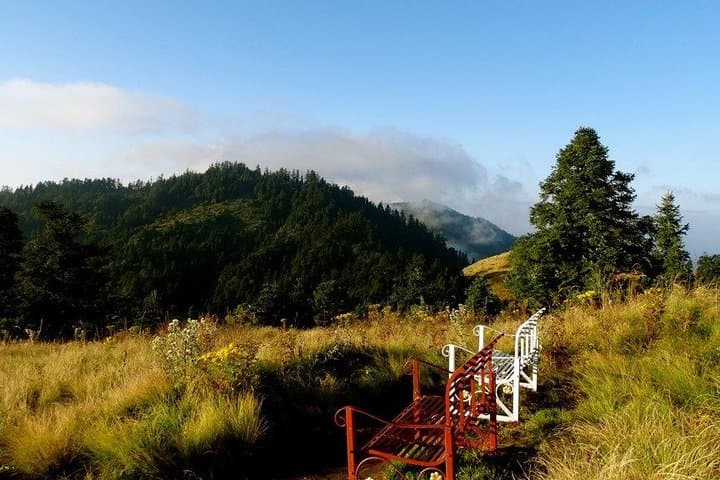

At 03:30 the dark ridge before Ghorepani feels alive—headlamps bob, the cold bites, and the silhouette of Machapuchare (Fishtail) sharpens as the sky lightens. By the time you reach Poon Hill (3,210 m) the air has thinned into a crisp hush; the peaks push color across the horizon and the valley below exhales mist toward India.
At 03:30 the dark ridge before Ghorepani feels alive—headlamps bob, the cold bites, and the silhouette of Machapuchare (Fishtail) sharpens as the sky lightens. By the time you reach Poon Hill (3,210 m) the air has thinned into a crisp hush; the peaks push color across the horizon and the valley below exhales mist toward India.
This five-day short trek follows old mule tracks and stone staircases through the lower Annapurna foothills, rising from roughly 900 m in Pokhara to 3,210 m at Poon Hill. The route threads rhododendron and oak forest, crosses suspension bridges over the Modi and Bhurungdi rivers, and passes traditional Gurung villages such as Ulleri and Ghorepani. Geologically the Annapurna Massif is young, uplifted by the collision of the Indian and Eurasian plates—sharp ridgelines and moraine-carved valleys punctuate the route. Culturally, this area is part of the Annapurna Conservation Area; village teahouses operate the hospitality economy and maintain long-standing trekking traditions.
Expect 4–7 hours of walking on trekking days, frequent stone steps, and variable weather—sunny mornings can turn into wet afternoons in monsoon season. Practicalities are straightforward: Annapurna Conservation Area Permit (ACAP) and TIMS are required (typically included), and guides/porters are common. Bring sturdy footwear, layered clothing for pre-dawn cold, and a headlamp for early starts. Hydrate and pace the ascent to Poon Hill; the pay-off is an unobstructed sunrise panorama of Dhaulagiri, Annapurna and Machapuchare.
This trek fits first-time trekkers with moderate fitness and families who want a short, scenic Himalayan walk without technical terrain.